
The Dazzling 'Evening Star'
Venus is often called the 'Evening Star' or 'Morning Star' because its orbit keeps it close to the sun from our perspective, making it visible only around sunrise or sunset. It’s the brightest natural object in the night sky after the Moon, and this month,
it reaches what astronomers call its 'greatest brilliancy'. This isn't because Venus is fully illuminated. In fact, through a telescope, it would appear as a distinct crescent, similar to the Moon. Its incredible brightness is a combination of two factors: it is relatively close to Earth in its orbit, and the crescent phase is large enough to reflect an immense amount of sunlight back at us. This peak brightness, reaching a magnitude of -4.8, is far more luminous than the brightest star, Sirius.
When and Where to Look From India
Throughout September 2026, Venus will be the showstopper in the evening sky. To see it, you’ll need to look towards the west-southwest in the hour after sunset. The planet will be low on the horizon, so a clear view without tall buildings or trees is essential. The key date for its absolute peak brightness is around September 18-22. However, the planet will appear exceptionally bright for several days before and after this period, so you have plenty of opportunities. Another can't-miss date is September 14, when a slender crescent Moon will pass incredibly close to Venus, creating a breathtaking pairing.
A Rare Treat: The Lunar Occultation
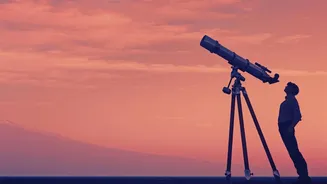
The close pass on September 14 is more than just a pretty alignment; for observers in India, it will be a lunar occultation. This rare event happens when the Moon passes directly in front of a planet, temporarily hiding it from view. For a short time, you'll be able to watch Venus disappear behind the Moon’s unlit edge and reappear from its bright, sunlit side about an hour later. What makes this particular occultation so special is that both the Moon and Venus will be in a crescent phase, creating a stunning 'double crescent' effect for those watching with binoculars or a small telescope. This daylight event requires caution, but offers a truly unique astronomical sight.
A Simple Viewing Plan
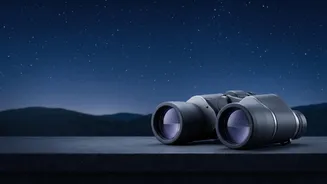
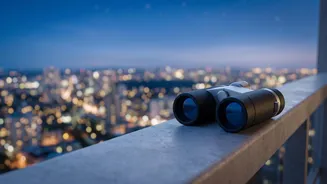
You don’t need any special equipment to enjoy the spectacle of Venus. Its brilliance makes it unmistakable, even from light-polluted cities. Find a spot with an unobstructed western horizon and start looking about 30 to 45 minutes after the sun has fully set. Venus will be the first and brightest 'star' to appear in the deepening twilight. Give your eyes about 15 minutes to adjust to the darkness; this will help you see the planet more clearly and perhaps even spot dimmer stars nearby. While your eyes are all you need, a pair of binoculars will enhance the view, potentially revealing the planet's beautiful crescent shape.
Tips for Capturing the Moment
Photographing Venus is possible even with a smartphone. To get the best shot, especially of the Moon-Venus pairing on September 14, find a stable surface for your phone or use a small tripod to prevent blurring. Engage your phone’s 'Night Mode' or 'Pro Mode' if it has one. In pro mode, you can manually adjust the ISO (keep it low) and exposure time (try a few seconds) to get a clear image without blowing out the brightness of Venus. Try to frame the shot with a silhouette of a tree or a building to add context and a sense of scale to your celestial portrait.