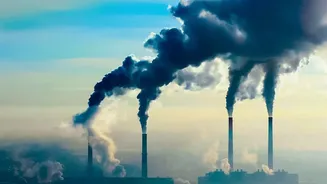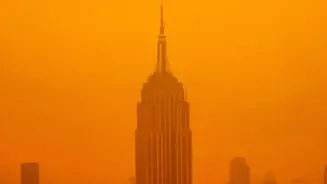




The haze blanketing India's cities is more than a health crisis; it's a profound economic problem. Toxic air is quietly chipping away at the nation's GDP, inflating healthcare costs, and straining household budgets in ways that are too large to ignore.
The Impact on National GDP
The macroeconomic cost of air pollution is significant and well-documented. According to a World Bank policy research paper, high levels of fine particulate matter (PM2.5) reduce India's year-on-year GDP growth by 0.56 percentage points. This isn't a one-time loss; it's a persistent drag on the economy that compounds over time. Another report from The Lancet stated that the economic loss from premature deaths and morbidity was equivalent to 1.36% of India's GDP in 2019 alone. This translates into billions of dollars lost. These figures demonstrate that the damage caused by year-to-year changes in air pollution manifests directly in lower economic growth than the country could otherwise achieve.
The Soaring Healthcare Bill
One of the most direct economic consequences of foul air is the pressure it puts on healthcare systems. Air pollution is a major driver of respiratory and cardiovascular diseases, leading to increased hospital admissions, medication costs, and chronic care needs. Data from insurance providers shows a dramatic rise in pollution-associated health claims, which increased more than fourfold in just three years as of 2026. This surge in claims, driven primarily by heart conditions and respiratory infections, pushes up costs for both public health budgets and private households. With out-of-pocket payments accounting for nearly half of India's total health expenditure, the financial burden of treating pollution-driven illness falls heavily on individuals and families.
Lost Labour and Productivity
The economic drain extends deep into the workforce. Air pollution impacts labour productivity in two key ways: absenteeism and 'presenteeism'. One study estimated that Indian businesses lose around $95 billion annually, or about 3% of the country's GDP, due to lost productivity, work absences, and premature deaths. Absenteeism from pollution-related sickness leads to lost workdays, with one analysis noting 1.3 billion working days are lost each year. Perhaps even more insidious is presenteeism, where employees are at work but not fully functional due to illness, a factor that drives a significant portion of productivity loss, particularly in cognition-intensive sectors like IT.
A Household Budget Crisis
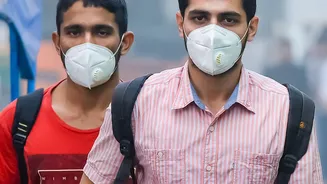
The economic costs are not just abstract national figures; they are a reality for households across the country. A rapid survey in late 2024 found that over 65% of people suffering from respiratory illnesses missed at least one day of school or work. For daily wage earners, a sick day means lost income. For salaried employees, it can mean a depleted sick leave balance and reduced performance. Furthermore, households bear the cost of coping mechanisms, from purchasing masks and air purifiers to increased medical bills for doctor visits and long-term medication for chronic conditions like asthma. These costs are a growing concern not just in megacities but in Tier-II and Tier-III cities as well, which now account for over half of all pollution-associated insurance claims.
The Cost of Inaction vs. Action
The economic case for clean air is becoming irrefutable. The annual losses attributed to air pollution are enormous, with some estimates suggesting the cost is equivalent to 150% of India's yearly healthcare budget. The open question is whether to continue paying to treat the damage or to invest in preventing it. Experts argue that spending on clean air should be classified as essential health spending. Every rupee spent on reducing emissions from transport, industry, and power plants can lower hospital admissions, protect wages, and strengthen economic growth simultaneously. The economics strongly favour prevention, with targeted clean air interventions having the potential to unlock significant economic opportunities and job creation.