



A Tale of Two Clocks
To understand this cosmic oddity, we first need to clarify what we mean by a ‘day’ and a ‘year’. For any planet, a year is the time it takes to complete one full orbit around its star. Here on Earth, that’s roughly 365 days. A day, on the other hand,
is the time it takes for a planet to complete one full rotation on its own axis. For us, that's about 24 hours. These two motions—orbiting and spinning—are independent. On Earth, we have a neat system where our planet spins hundreds of times during its single journey around the Sun. But in the vastness of space, there's no rule that says this has to be the case. Venus is the ultimate proof of that.
Venus by the Numbers
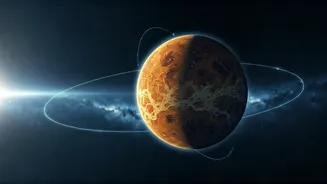
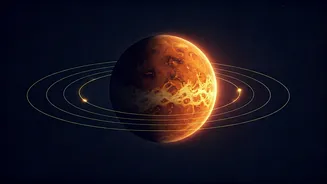
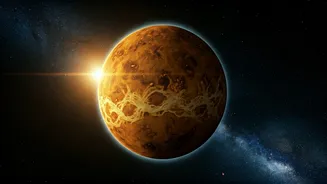
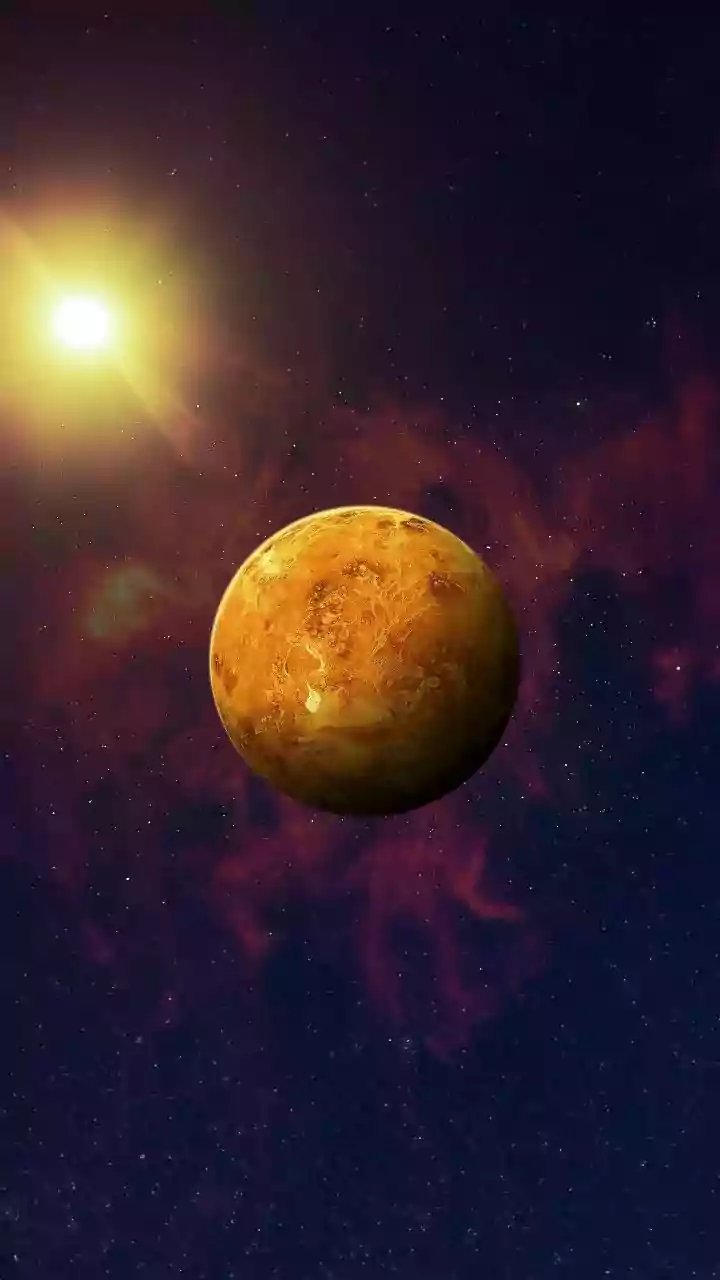
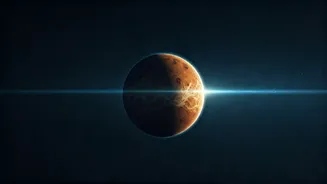
Let’s look at the statistics that make Venus so strange. Venus takes about 225 Earth days to complete one orbit around the Sun. So, a Venusian year is 225 Earth days long. However, it rotates on its axis incredibly slowly. One full rotation on its axis (a sidereal day) takes a staggering 243 Earth days. This means that a day on Venus is actually longer than its year. To put it simply: the planet finishes its trip around the Sun before it has even finished spinning once. If you could stand on Venus, you'd celebrate your first birthday before you even experienced a full day-night cycle from the planet’s own perspective.
A Planet Spinning Backwards
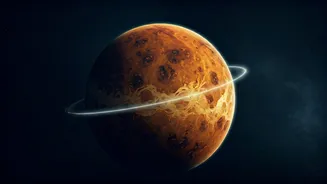
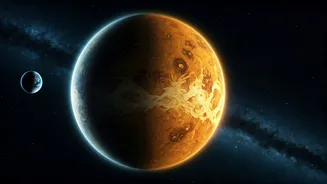
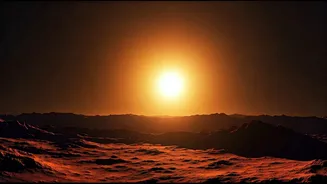
To make things even stranger, Venus spins backwards. Unlike Earth and most other planets in our solar system, which rotate counter-clockwise on their axis, Venus spins clockwise. This is known as retrograde rotation. The practical effect of this is bizarre: on Venus, the Sun would appear to rise in the west and set in the east. This retrograde spin also complicates the concept of a ‘day’. While its sidereal day (one full 360-degree turn) is 243 Earth days, the time from one sunrise to the next (a solar day) is much shorter, around 117 Earth days. This is because its backward spin and its orbit around the Sun work against each other, creating this unusual solar cycle. Still, even a 117-day wait for sunrise is a mind-boggling concept.
The Great Slowdown Mystery
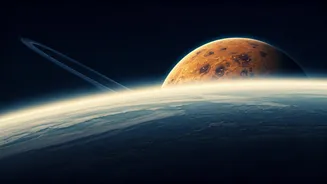
Why is Venus so different? Scientists don't have a single, definitive answer, but there are two leading theories. The first involves a catastrophic past. It’s possible that early in its history, Venus was struck by a massive asteroid or another planet-sized object. Such a powerful collision could have not only slowed its rotation to a near-standstill but also flipped it over, causing its retrograde spin. A second, more recent theory points to Venus's crushing atmosphere. The planet’s atmosphere is 90 times denser than Earth’s and is in a state of ‘super-rotation’, whipping around the planet in just four Earth days. Scientists believe that powerful tidal forces generated by this thick, heavy, and fast-moving atmosphere, in combination with the Sun’s gravitational pull, have acted as a powerful brake over billions of years, slowing the planet's spin to its current crawl.
A Hothouse World of Extremes
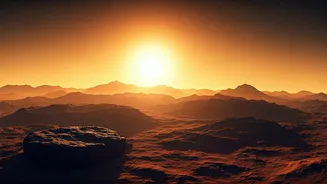
This slow rotation contributes to Venus's status as the most inhospitable planet in our solar system. The extremely long days and nights create dramatic temperature differences, but the planet’s thick, carbon-dioxide-rich atmosphere traps heat in a runaway greenhouse effect. This makes Venus the hottest planet, with surface temperatures averaging a blistering 465°C—hot enough to melt lead. The slow spin means any part of the planet facing the Sun bakes for months on end, contributing to this hellish environment. It's a stark reminder that even a planet so similar to Earth in size can evolve into a completely alien world.