


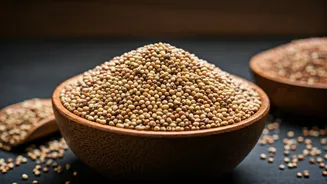


Decoding the 'Premium' Promise
Walk down any grocery aisle and you'll see packets of millets with alluring labels like 'premium', 'organic', or 'hand-pounded'. It’s easy to assume these come with guaranteed health benefits, but the term 'premium' is not a regulated standard. It can
refer to anything from the grain's variety, its organic certification, or simply a sophisticated packaging design. While some premium brands do offer superior products, the price tag alone isn't a reliable indicator of quality. The most important factors are often related to how the millet was processed and its freshness, things you can learn to identify yourself.
The Polished vs. Unpolished Debate
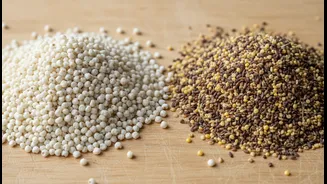
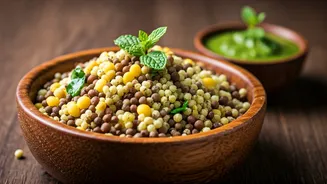
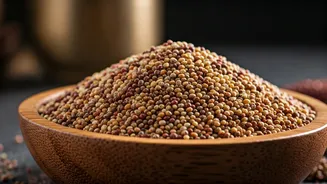
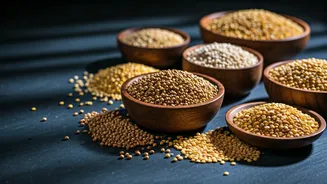
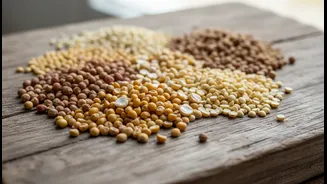
The single most important factor determining a millet's nutritional value is whether it is polished or unpolished. Unpolished millets retain their outer bran layer, which is a powerhouse of dietary fibre, essential minerals like iron and magnesium, and B vitamins. This bran layer is what gives unpolished millets their characteristically earthy colours—foxtail millet is yellowish, kodo is reddish-brown, and others are greyish. Polishing strips away this nutrient-rich layer to make the grains look whiter, smoother, and more uniform, appealing to consumers accustomed to white rice. While polished millets cook faster and may have a milder taste, they are nutritionally inferior, having lost a significant portion of their fibre and minerals. For managing blood sugar, digestion, and overall health, unpolished millets are the undisputed winners.
Your Guide to Visual and Sensory Checks
You don't need a lab to judge millet quality. Your senses are your best tools. First, look for uniformity in grain size and colour, which indicates a good harvest. Check for the absence of dust, stones, and other debris. A key identifier for unpolished millets is a tiny black dot on each grain, often called the 'millet eye'. Its presence confirms the germ is intact. Adulterants like broken rice, which can be shaped to resemble millets, will not have this dot. Next, trust your nose. Good quality millets should have a fresh, subtly nutty aroma. If you detect a musty, stale, or oily smell, the grains may be old. Millets contain natural oils that can go rancid over time, so freshness is crucial.
Does Organic Certification Matter?
An 'organic' label indicates that the millets were grown without synthetic pesticides and fertilisers. For many consumers, this is a significant factor for peace of mind and for supporting sustainable farming practices. While organic farming is beneficial for the environment and avoids chemical residues, it doesn't automatically mean the millet is unpolished. A polished organic millet is still nutritionally compromised compared to a non-organic unpolished one. Therefore, while choosing organic is a valid preference, it should be a secondary consideration after confirming that the millet retains its bran layer. The ideal choice is an unpolished, organic millet, but if you have to prioritise, choose unpolished every time.
Understanding Millet Varieties
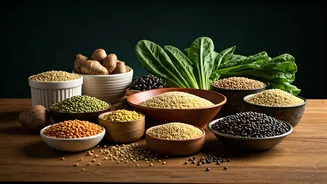
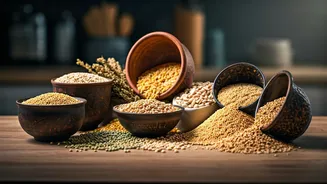
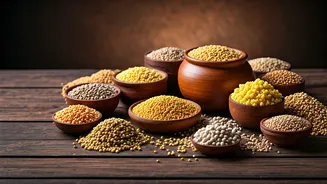
The 'premium' tag might also refer to a specific type of millet. India boasts a rich diversity, including major millets like Jowar (sorghum), Bajra (pearl millet), and Ragi (finger millet), along with numerous 'minor' millets like Foxtail, Kodo, and Barnyard millet. Each has a unique nutritional profile. Ragi, for instance, is famously high in calcium, while Bajra is rich in iron. Minor millets like Browntop are prized for having the highest dietary fibre content. No single millet is 'the best'; a balanced diet benefits from incorporating a variety of them. Choosing different types based on their specific benefits—like Jowar for its cooling properties in summer or Bajra for warmth in winter—is a smarter approach than sticking to one 'premium' type.