





A Vital Link to Earth Goes Silent
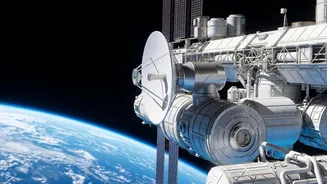
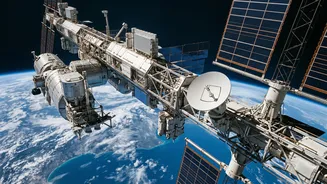
The International Space Station (ISS) isn't just a habitat; it's a bustling hub of science and research that relies on constant contact with mission control on Earth. That connection is made possible by a network of antennas, including the Space-to-Ground
Antenna (SGANT). Operating in the S-band frequency range, this system is a workhorse, responsible for transmitting telemetry, tracking, and command data—essentially, the station's health and status updates. When one of these vital communication links malfunctions, it's not just an inconvenience; it can impact the flow of crucial information. NASA and its partners decided a spacewalk was necessary to replace the faulty unit and restore full communications capability.
The International Repair Team
The complex task fell to a duo of highly trained astronauts: Anil Menon of NASA and Sophie Adenot of the European Space Agency (ESA). This joint operation highlights the collaborative nature of the ISS program, which brings together five space agencies from around the globe. For the August 25th spacewalk, Menon, designated as crew member 1 in the suit with red stripes, was conducting his third extravehicular activity (EVA). Adenot, in the unmarked suit, was on her second career spacewalk. Their mission was a follow-up to an earlier EVA on August 18th, during which they successfully removed the failed antenna but ran out of time to install its replacement.
A Choreographed Dance in Zero Gravity
An extravehicular activity, or EVA, is one of the most physically and mentally demanding tasks an astronaut can perform. Lasting for six hours and 30 minutes, this spacewalk was a meticulously planned operation. The spacewalk began at 8:27 a.m. EDT as the astronauts exited the Quest airlock into the vacuum of space. Menon was positioned at the end of the Canadarm2 robotic arm, which maneuvered him and the spare antenna into position, while Adenot traversed the station's exterior using handrails. Together, they worked to mount the new antenna to the station's truss structure and connect the critical power and data cables, a task that requires immense precision while wearing bulky, pressurized gloves.
The Hidden Dangers of Spacewalking
Working outside the ISS is fraught with peril. Astronauts face extreme temperature swings, from scorching highs of 120°C in sunlight to freezing lows of -150°C in shadow. Their suits are miniature spaceships, providing oxygen and protection, but the risk of a puncture from micrometeoroids or space debris traveling at immense speeds is a constant threat. The physical toll is also significant. Fighting against the stiff, pressurized gloves for hours can lead to exhaustion and even injury. Astronauts undergo extensive training on Earth in massive pools like the Neutral Buoyancy Laboratory to simulate the weightless environment and rehearse every step of their intricate tasks.
Mission Success and a Stronger Connection
At 2:57 p.m. EDT, after six and a half hours of intense work, Menon and Adenot concluded their spacewalk. The installation was a success. Initial checks from flight controllers on the ground confirmed good power and data transmission from the newly installed antenna. The astronauts also moved the failed unit to a permanent spare-parts platform. This successful repair not only restored a critical communication link but also demonstrated the robust capabilities of the international partnership and the resilience required for maintaining humanity's outpost in orbit.