




Why Less is Always More
The first rule of saffron is restraint. While it's tempting to be generous with such a beautiful spice, using too much is a common mistake that can backfire. Saffron is incredibly potent, and an excess can make a dish taste bitter, medicinal, or overpowering
rather than fragrant and luxurious. Just a few threads are often enough to impart its signature golden hue and complex, hay-like aroma to a dish serving four to six people. A small amount of high-quality saffron, particularly potent varieties like Kashmiri saffron, contains concentrated flavour compounds. The goal is a delicate balance, not a dominant flavour, making it a spice where using a small quantity correctly is key to success.
The Crucial Art of Blooming
Simply tossing dry saffron threads into your cooking is the most frequent and wasteful mistake. The spice's flavour, colour, and aroma compounds—crocin, picrocrocin, and safranal—are locked inside the dried threads and need liquid to be released. This process is called 'blooming'. To do it, lightly crush the desired threads in a small mortar or with the back of a spoon. Then, steep them in a few tablespoons of warm—not boiling—liquid for at least 15-20 minutes. Boiling water can destroy the delicate aromatic compounds, so aim for a temperature that's warm to the touch. The choice of liquid depends on your recipe: use warm water for rice dishes like pulao, and warm milk for desserts like kheer or for layering in biryani, as fat helps carry the aroma even further. Once bloomed, the vibrant liquid and the softened threads are added to the dish, usually towards the end of the cooking process to preserve the aroma.
A Modern Twist: The Ice Method
While warm liquid is the traditional way to bloom saffron, a more modern technique favoured by some chefs involves using ice. To try this, place your crushed saffron threads in a small bowl and put an ice cube directly on top. As the ice melts slowly at room temperature, it creates a gradual, cold infusion. Proponents of this method believe it coaxes out the spice's compounds more gently, resulting in a slightly more intense aroma and a deeper, more vibrant colour. This method takes longer, up to an hour depending on the size of the ice cube, so it requires patience. While tests show the difference might be subtle, it's a worthwhile experiment for dishes where colour and aroma are paramount. If you're short on time, the classic warm water method works perfectly well.
Saffron's Starring Roles in Indian Cuisine
Saffron, or 'kesar', is a cornerstone of festive and celebratory Indian food, particularly in Mughlai-influenced cuisine. Its most iconic use is in biryani, where saffron-infused milk is drizzled over layers of rice and meat to create signature golden streaks and a pervasive aroma. It's also essential in many desserts. In kheer, firni, and ras malai, it lends a beautiful colour and flavour that complements the richness of the milk. Kesar pista kulfi, a traditional Indian ice cream, relies on saffron for its characteristic flavour profile. Other beloved dishes include Kesar Pulao, a simple yet elegant rice dish, and sweets like Kesar Peda and Shrikhand. It can even be the star of a simple, comforting glass of Kesar Doodh (saffron milk).
Buying and Storing for Maximum Value
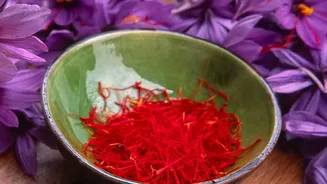
To ensure you're getting the most from your investment, it's important to buy and store saffron correctly. Always opt for whole threads over powder, as pre-ground saffron loses its aroma quickly and is more easily adulterated with other substances like turmeric or safflower. Real saffron threads are deep red, often with a slightly lighter orange tip, and have a distinct trumpet shape. They should have a strong floral and hay-like aroma. A simple home test is to place a few threads in cool water; real saffron will release its golden colour slowly, while fakes often bleed a bright red dye almost instantly. To preserve its potency, store your saffron in an airtight container away from light, heat, and moisture. Stored properly, a small quantity of high-quality saffron will last a long time, ready to elevate your next special meal.