





Your Phone is a Personal Planetarium
Gone are the days when amateur astronomy required complex star charts and expensive equipment. Today, a new generation of mobile applications can identify stars, planets, and constellations in real-time. By using your phone's GPS and compass, these apps
create an augmented reality window into the cosmos. Simply point your device at a bright dot in the sky, and the app will tell you if you're looking at the planet Jupiter, the star Sirius, or even a fast-moving satellite. This technology makes stargazing more accessible and interactive than ever before, providing a wealth of information at your fingertips.
How to Spot the International Space Station
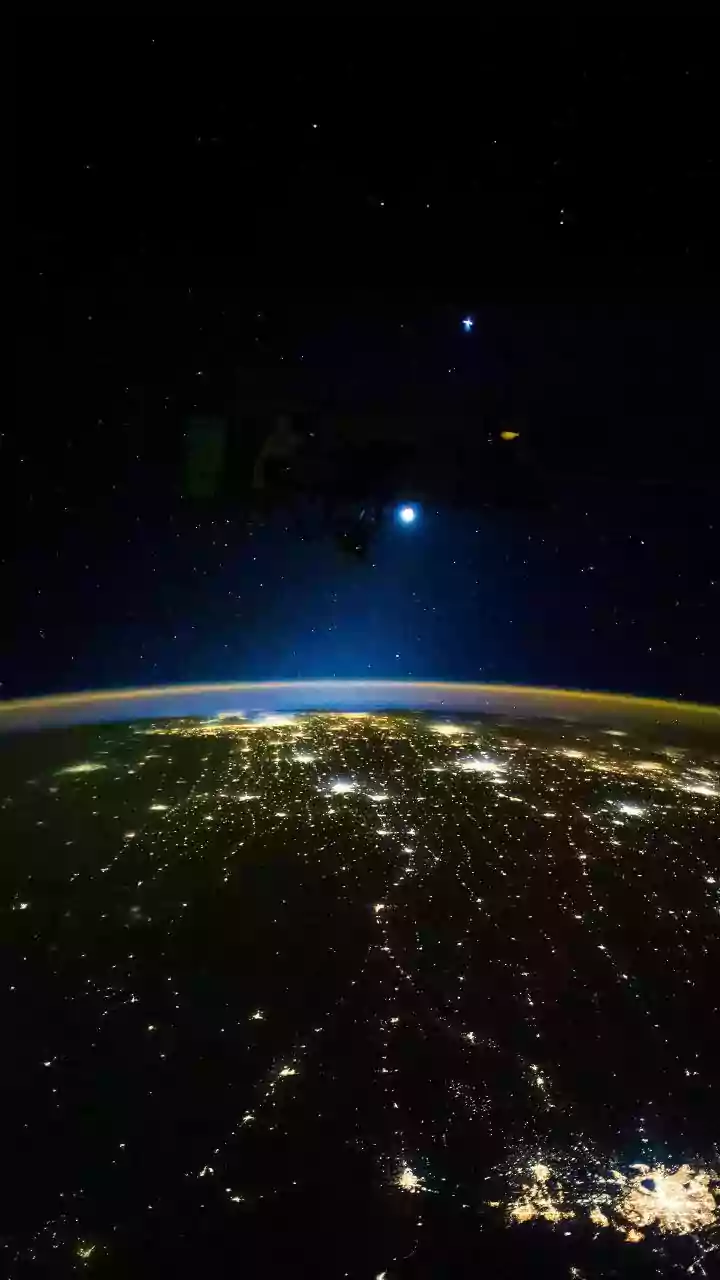
One of the most thrilling sights for a beginner is watching the International Space Station (ISS) glide silently across the sky. It looks like a bright, steady star moving much faster than an airplane. Apps are essential for this task, as the ISS is only visible for a few minutes at a time during specific windows. Apps like NASA's official Spot The Station, ISS Detector, and Satellite Tracker will send you notifications for upcoming passes over your location. They provide precise details: where to look, how long the pass will last, and a real-time map of the station's trajectory across your sky. Receiving an alert, stepping outside, and seeing it appear right on schedule is a truly magical experience.
Best All-Rounder for Beginners: Stellarium Mobile
For those who want a comprehensive tool, Stellarium is widely regarded as one of the best starting points. Originally a popular desktop program, its mobile version is powerful and user-friendly. The free version offers a huge catalogue of stars, planets, nebulae, and constellations. Its core feature is simple: point your phone at the sky to identify what you're seeing. The app can also simulate the sky for any date and location, making it useful for planning. It even includes a 'night mode' that uses a red interface to help preserve your night vision while you observe.
Easy AR and Great Visuals: Star Walk 2 and SkyView Lite
If you're looking for an intuitive and visually engaging experience, Star Walk 2 is a fantastic choice for beginners. It features a beautiful interface and an augmented reality (AR) view that overlays celestial information on your real-world surroundings. Its "What's New" feed keeps you updated on upcoming astronomical events. Another excellent, user-friendly option is SkyView Lite. It offers a simple point-and-identify function that makes it easy for anyone to start exploring immediately. Both apps excel at making stargazing feel less like a technical hobby and more like an interactive discovery, perfect for casual observers and families.
Tips for a Better Viewing Experience
While these apps are powerful, your viewing experience still depends on a few key factors. First, find the darkest spot you can. Light pollution from cities can wash out all but the brightest objects. Give your eyes at least 15-20 minutes to fully adapt to the darkness. Second, check the weather forecast. An app like Astrospheric can provide forecasts specifically for astronomers, showing cloud cover, transparency, and 'seeing' conditions. Finally, while it's tempting to keep your eyes glued to your screen, remember to look up. Use the app to identify an object, then put the phone away and enjoy the view with your own eyes. The app is a map, but the sky is the destination.