





What is Bodyweight HIIT?
High-Intensity Interval Training, or HIIT, is a workout style that alternates between short, all-out bursts of intense exercise and brief periods of rest or lower-intensity movement. The goal is to push your heart rate to at least 80% of its maximum capacity
during the work intervals. When you use your own body as resistance—think push-ups, squats, and jumps—it becomes bodyweight HIIT. This makes it an incredibly flexible and accessible form of exercise that can be done anywhere, from your living room to a hotel room, without needing a single piece of equipment.
The Efficiency Advantage: More Results, Less Time
The primary appeal of HIIT is its unmatched efficiency. For those who feel they 'don't have time' to work out, it's a powerful solution. Research shows that HIIT can deliver similar, and in some cases superior, fitness and fat loss results in a fraction of the time compared to traditional, steady-state cardio like jogging. A 20-minute HIIT session can be as effective for fat loss as a 40-minute run. This is due to a phenomenon known as Excess Post-exercise Oxygen Consumption (EPOC), or the 'afterburn effect'. The intense effort creates a metabolic disturbance that causes your body to continue burning calories at an elevated rate for hours after your workout has finished. This makes it a complete workout that combines cardiovascular benefits with strength training in as little as 15 to 30 minutes.
Your Core Bodyweight Exercises
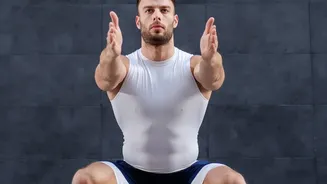
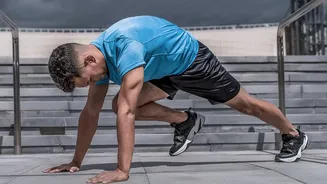
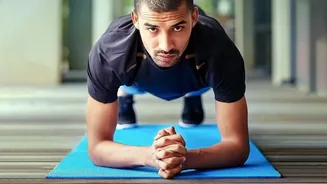
The beauty of bodyweight HIIT lies in its simplicity. You only need a few foundational movements to build a challenging full-body workout. Focus on executing these with proper form and explosive power during your work intervals. 1. Burpees: The ultimate full-body move. From a standing position, drop into a squat, place your hands on the floor, kick your feet back into a plank, perform a push-up, then reverse the motion to return to a standing position, finishing with a jump. 2. High Knees: A simple but effective cardio drill. Stand in place and run, driving your knees up towards your chest as high and as fast as you can. 3. Mountain Climbers: From a plank position, alternate driving your knees toward your chest as if you are running horizontally. Keep your core tight and your back flat. 4. Jump Squats: Perform a regular bodyweight squat, but explode upwards into a jump at the top of the movement. Land softly and immediately lower into your next squat to absorb the impact. 5. Push-Ups: A classic for upper body and core strength. If a standard push-up is too difficult, modify by dropping to your knees.
Putting It All Together: A 20-Minute Routine
Ready to try it? A great starting point for a HIIT workout is a 2:1 work-to-rest ratio. This means you work twice as long as you rest. You can adjust this based on your fitness level; beginners might start with a 1:2 ratio (e.g., 20 seconds of work, 40 seconds of rest). Here is a simple and effective 20-minute bodyweight circuit: Warm-Up (3 minutes): Start with light cardio like jogging in place, arm circles, and dynamic stretches. The Circuit (15 minutes): Perform each of the five exercises listed above for 40 seconds, followed by 20 seconds of rest. Once you complete all five, that's one round. Rest for 60 seconds, then repeat the entire circuit for a total of three rounds. * Cool-Down (2 minutes): Finish with static stretching, holding each stretch for 20-30 seconds to improve flexibility and aid recovery.
Safety and Consistency First
While HIIT is highly effective, its intensity requires caution. Always warm up properly before starting and cool down afterward. When you're new to the movements, prioritize correct form over speed. It's better to do fewer reps perfectly than many reps with poor technique, which can lead to injury. Because it's so demanding, you shouldn't do HIIT workouts every day. Aim for 2-3 sessions per week on non-consecutive days to give your body adequate time to recover and rebuild. The most important rule is to listen to your body. Modify exercises when needed, rest when you feel pain, and celebrate the progress you make along the way.