




The Patient: A Critical Robotic Arm
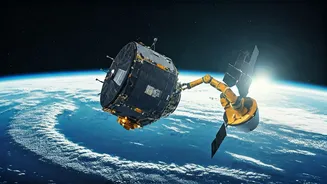
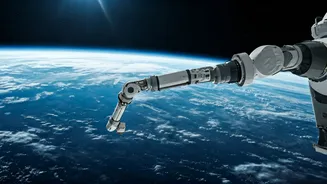
The robot in question was the iconic Canadarm2, a 58-foot-long remote manipulator that has been a workhorse for the International Space Station (ISS) for over 25 years. Since its installation in 2001, this Canadian-built arm has been crucial for a variety
of tasks: capturing and docking cargo spacecraft, moving supplies, supporting astronauts during other spacewalks, and performing station maintenance. In late May 2026, however, flight controllers noticed a problem. A wrist joint on the arm was drawing more electrical current than usual and had stopped moving as commanded. After analysis, NASA and the Canadian Space Agency determined the joint had failed and needed to be replaced.
The Orbital Repair Team
The complex task fell to NASA astronauts Chris Williams and Jessica Meir, flight engineers for the station's Expedition 74 crew. For Meir, this was her fifth spacewalk, bringing her total time working in the vacuum of space to over 36 hours. For Williams, it was his second. On June 30, 2026, the pair switched their spacesuits to battery power and ventured outside the Quest airlock, officially beginning a meticulously planned Extravehicular Activity (EVA) that would last for seven hours and 20 minutes. Their primary and sole objective was to replace the faulty 200-pound wrist joint with a spare that was already stored on the station's exterior truss.
Surgery in Zero Gravity
Performing such a delicate repair while wearing bulky, pressurized spacesuits is an immense challenge. The astronauts first had to detach the arm's 'hand,' known as the Latching End Effector, to gain access to the faulty joint. They then used specialized pistol grip tools to carefully unbolt the failed component and maneuver the replacement into position. The work required precision and strength, and was not without minor issues. At one point, Meir encountered a stubborn fastener that was spinning freely, but she managed to resolve it by applying direct force to seat the bolt correctly. After four and a half hours of focused effort, the new joint was successfully installed.
Teamwork Across Earth and Space
While Williams and Meir performed the hands-on work, the entire operation was a massive collaborative effort. Inside the station, fellow astronauts Jack Hathaway and Sophie Adenot assisted the spacewalkers with their suits and operated the Canadarm2 itself, carefully maneuvering it into position for the repair. Meanwhile, in Mission Control in Houston, Canadian Space Agency astronaut Jenni Gibbons was the voice on the radio, guiding the duo through the procedure step-by-step. Her call of, "That is a good install, you guys. I know that was tough. Wonderful work," marked a moment of relief and success for the entire international team.
A Successful Diagnosis
With the new joint bolted in place, the moment of truth arrived. Ground controllers in Houston sent the commands to power up the Canadarm2. Initial tests immediately confirmed that the arm was receiving both power and data, indicating a successful repair. Following this success, Williams and Meir brought the faulty joint back inside the airlock with them; it will be sent back to Earth for inspection and potential refurbishment for future use. The fully functional Canadarm2 will now undergo further checkouts before resuming its critical duties. Astronaut Jessica Meir celebrated the achievement, noting it was completed "just in time for Canada Day," a nod to the arm's origins.