


A World of Water and Mystery
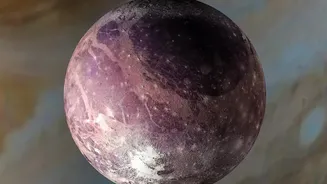
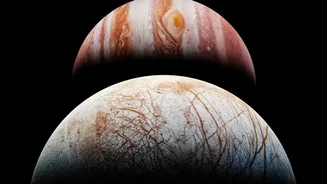
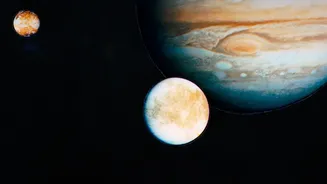
Slightly smaller than Earth's own moon, Europa is a world encased in a shell of ice. Scientists have strong evidence that beneath this frozen crust, which could be anywhere from 3 to 30 kilometres thick, lies a vast, global ocean of liquid saltwater.
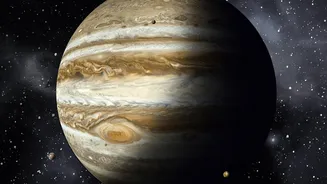
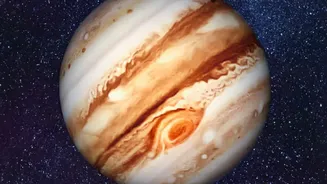
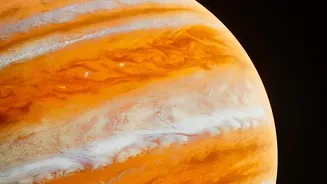
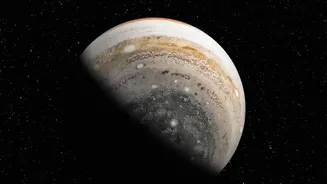
In fact, this subsurface ocean is estimated to contain more than twice the amount of water found in all of Earth's oceans combined. The potential for life hinges on three key ingredients: liquid water, essential chemical elements, and an energy source. Europa appears to have all three. Its enormous ocean provides the water, while its rocky seafloor could supply chemical nutrients through hydrothermal vents, similar to those that teem with life on Earth. The energy comes from Jupiter itself; the gas giant's immense gravity pulls and flexes Europa's interior, generating heat.
The Long Journey to Jupiter
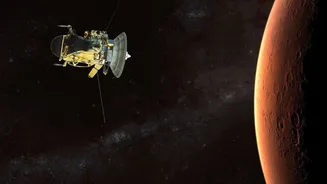
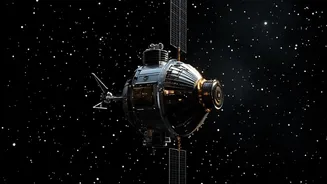
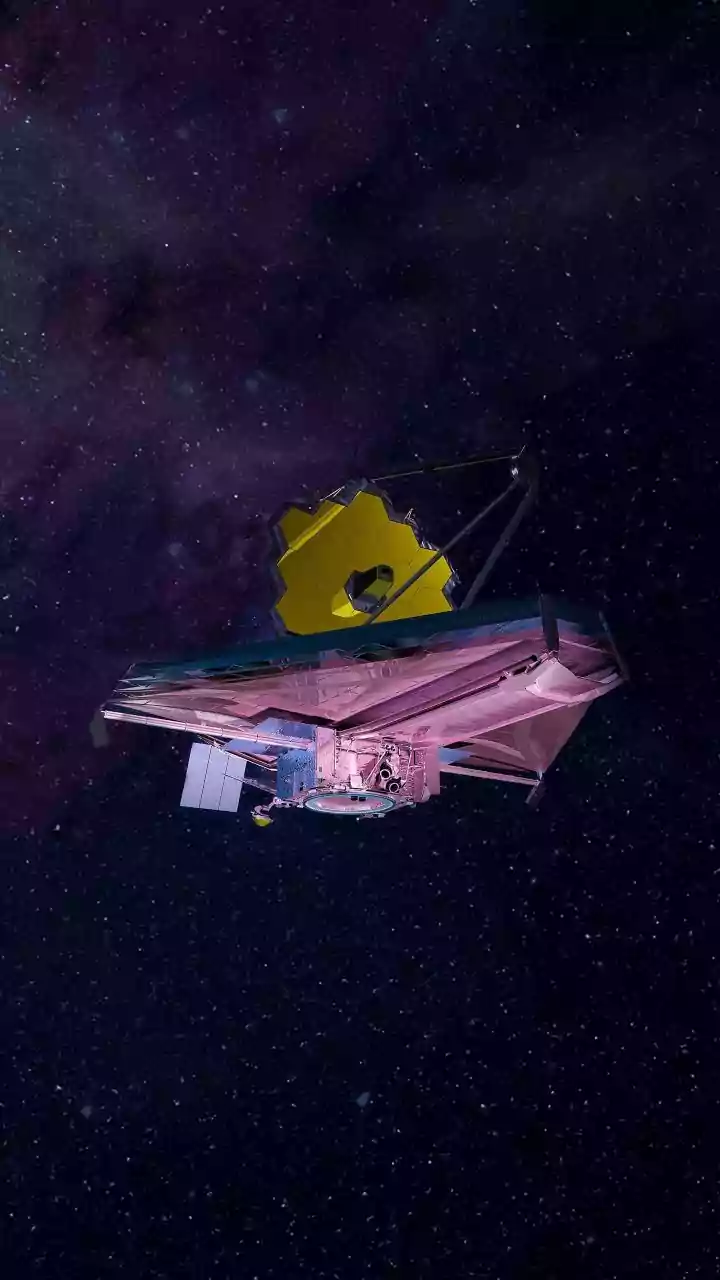
The Europa Clipper spacecraft, the largest interplanetary vehicle ever built by NASA, began its monumental journey in October 2024. Launched aboard a SpaceX Falcon Heavy rocket, it is now on a 2.9-billion-kilometre trek to the Jovian system, with an arrival planned for April 2030. The mission is not a direct flight. To build up the necessary speed to reach Jupiter, the probe is performing a series of gravity assists. It completed a flyby of Mars in March 2025 and is scheduled for a crucial Earth flyby in December 2026. These manoeuvres use the planets' gravity to slingshot the spacecraft, conserving fuel and enabling its long-haul mission. From its launch to its arrival, the entire cruise phase will take five and a half years.
How to Hunt for Life Without Landing
Europa Clipper will not land on the moon, nor will it orbit Europa directly due to the intense radiation from Jupiter. Instead, it will enter a long, looping orbit around Jupiter and perform dozens of close flybys of Europa, some as low as 25 kilometres from the surface. This strategy allows the spacecraft to gather detailed data while minimizing exposure to harmful radiation. Its nine powerful science instruments will work together to create a detailed profile of the moon. An ice-penetrating radar called REASON will probe the icy shell to confirm the ocean's existence and measure the ice's thickness. Spectrometers will analyze the chemical composition of the surface and faint atmosphere, while a magnetometer aims to measure the ocean's depth and salinity by studying Europa's magnetic field.
Looking for Clues, Not Creatures
It is important to note that Clipper is not designed to find life itself. Rather, its primary goal is to determine if Europa has habitable conditions. It's looking for 'biosignatures'—the chemical building blocks and conditions that could support living organisms. The mission's instruments will hunt for key elements like carbon, hydrogen, nitrogen, and oxygen. One instrument, a mass spectrometer, will analyze gases in the moon's thin atmosphere and any potential water plumes that might be venting into space from the ocean below. Flying through one of these plumes would be a historic achievement, allowing the spacecraft to directly sample the ocean's contents without ever touching the ground. This would give scientists an unprecedented look at the chemistry of this hidden aquatic world.
An Armoured Ship on a Distant Sea
Operating near Jupiter is an immense engineering challenge. The planet's powerful magnetic field traps a lethal storm of high-energy particles, creating a radiation environment that can destroy unshielded electronics. To protect its sensitive instruments, the Europa Clipper's core electronics are housed within a heavily armoured vault made of titanium and aluminum. This radiation shield, which was first used successfully on NASA's Juno mission to Jupiter, will protect the spacecraft's 'brain' during its repeated dashes through the most dangerous radiation zones. The mission's name itself is a nod to the fast, 19th-century clipper ships that sailed Earth's oceans, as the spacecraft will make rapid, repeated passes of its target before sailing back out to the relative safety of a wider orbit around Jupiter.