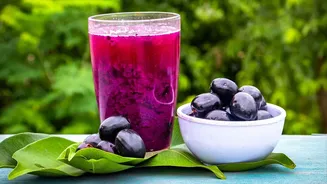






Jamun (Black Plum)
This purple fruit is a quintessential monsoon treat for good reason. Jamun is packed with essential nutrients like vitamins A and C, iron, and potassium. Its potent antioxidants, particularly anthocyanins, help protect the body from oxidative stress and support
a robust immune system. Traditionally used in Ayurvedic practices, jamun also aids digestive health with its astringent properties, which can help manage common monsoon ailments like diarrhoea. Its high fibre content further promotes a healthy gut, making it a valuable addition to your seasonal diet.
Turmeric (Haldi)
A staple in every Indian kitchen, turmeric becomes even more crucial during the rainy season. Its active compound, curcumin, is a powerful anti-inflammatory and antioxidant agent that helps modulate the immune response. This golden spice has natural antibacterial and antifungal properties, offering protection against the infections that are more common in damp weather. A daily dose, whether in a comforting glass of 'haldi doodh' at night or added to your regular cooking, can significantly strengthen your body's defences.
Ginger (Adrak)
Ginger is a go-to remedy for coughs and colds, which are frequent visitors during the monsoon. Its main bioactive compound, gingerol, has powerful anti-inflammatory and antiviral effects. Ginger is also excellent for digestion, helping to soothe the stomach and alleviate nausea, which can be common when the digestive system becomes sluggish in humid weather. Starting your day with a warm cup of ginger tea or grating it into your meals can help keep your body warm and fight off seasonal infections.
Garlic (Lahsun)
Garlic's potent health benefits are primarily due to a sulfur compound called allicin, which has strong antibacterial and antiviral properties. Incorporating garlic into your diet is a simple yet effective way to bolster your immune system against monsoon-related illnesses. It stimulates the production of white blood cells, which are essential for fighting off infections. Adding it to dals, soups, and vegetable preparations not only enhances flavour but also provides a protective shield for your health.
Bottle Gourd (Lauki)
This humble vegetable is a nutritional powerhouse, especially during the monsoon. Composed of about 96% water, lauki is incredibly hydrating and cooling for the body. It is light, easy to digest, and rich in dietary fibre, which helps prevent constipation and keeps the digestive system running smoothly. Lauki also helps in flushing out toxins and is gentle on the stomach, making it an ideal vegetable for the season when digestion can be weak.
Bitter Gourd (Karela)
While its bitter taste may not be for everyone, the health benefits of karela are undeniable, particularly in the rainy season. It is loaded with Vitamin C and antioxidants that give your immune system a significant boost. Bitter gourd helps promote the secretion of digestive enzymes, which is beneficial when the digestive fire ('Agni') is low. Its antimicrobial properties can also help combat skin problems like acne and infections that often flare up in the humid weather.
Pomegranate (Anaar)
Pomegranates are another excellent fruit for the monsoon. They are rich in Vitamin C and powerful antioxidants that help fortify your immune system. These nutrients are vital for fighting off the common cold and flu viruses that circulate during this time. Regular consumption of pomegranate can also aid in digestion and help maintain good gut health, which is a cornerstone of strong immunity. Enjoying the fresh arils or a glass of its juice is a delicious way to stay protected.