

The Humble Hero's Arrival
Instant noodles were invented in post-war Japan by Momofuku Ando, who wanted to create a cheap, quick, and tasty meal for the masses. This revolutionary food item landed on Indian shores in 1983 with the launch of Nestlé's Maggi. Initially, the market
was slow to adopt this unfamiliar '2-minute' concept in a country accustomed to traditional meals. However, a smart advertising shift targeting working mothers and children transformed the product from a curiosity into a household staple. The promise of a quick, yummy, and easy-to-prepare snack resonated deeply, positioning Maggi not as a replacement for dal-roti but as a reliable friend for those in-between moments.
More Than Just a Snack
What began as an after-school treat quickly wove itself into the fabric of Indian life. For students in hostels and young professionals living away from home, it became the first meal they learned to 'cook,' a gateway to culinary independence. Its affordability and accessibility made it a staple across all economic strata. This humble packet of noodles even created its own ecosystem. The ubiquitous 'Maggi Points' that dot the Himalayan tourist trails, serving steaming bowls to weary travellers, are a testament to its cultural entrenchment. From a high-altitude military checkpoint in Siachen to a remote South Indian village, instant noodles became a tangible, unifying reality in a nation of immense diversity.
The Great Indian Noodle 'Jugaad'
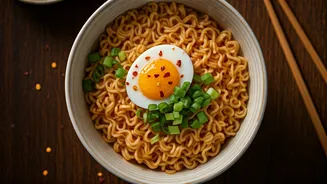
While the packet provides instructions, for many Indians, that's just a starting point. The real magic happens with customisation. Indians have a knack for 'jugaad'—innovative and frugal improvisation—and instant noodles are a prime canvas for this creativity. Adding chopped onions, tomatoes, and green chillies is the classic first step. From there, the possibilities are endless. Many toss in a handful of vegetables for a touch of nutrition, crack an egg into the boiling broth, or melt a slice of cheese on top for extra indulgence. Others get more adventurous, creating everything from crispy noodle 'bhel' to Schezwan-style stir-fries and even Italian-inspired noodle dishes with pasta sauce and oregano. This act of personalising a mass-produced product makes every bowl uniquely one's own.
A Bowl of Pure Comfort
Beyond its convenience and versatility, the enduring appeal of instant noodles lies in its role as comfort food. It’s the go-to meal during late-night study sessions, a warm hug on a rainy day, and the first thing you crave when you're feeling unwell but don't have the energy to cook. This emotional connection is powerful. The 2015 ban on Maggi due to safety concerns triggered a nationwide wave of nostalgia and longing, demonstrating its deep-seated place in India's collective consciousness. When it returned, consumers welcomed it back with open arms. While many brands like Sunfeast's Yippee!, Top Ramen, Wai Wai, and Ching's Secret now compete for market share, the category itself represents reliability.
The Future of the Noodle Bowl
The instant noodle market in India is booming, projected to grow significantly in the coming years. This growth is fuelled by increasing urbanisation and a demand for convenient foods. While the classic masala flavour remains king, the Indian palate is also becoming more adventurous. Brands are responding by introducing new and bold flavours, from fiery Schezwan and Korean spicy noodles to more regional tastes. Furthermore, recognising the growing health consciousness among consumers, companies are launching variants made from whole wheat (atta), oats, and millets, and offering fortified options. This evolution ensures that the humble instant noodle, while staying true to its budget-friendly roots, continues to adapt and win over new generations.