




India's Giant Leap into Space
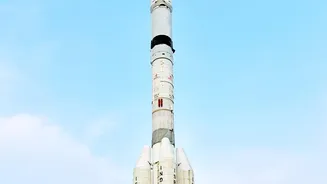
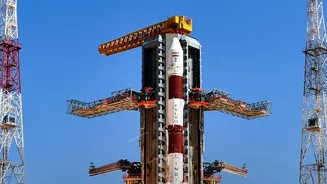
The Gaganyaan programme is one of India's most ambitious scientific undertakings, aiming to send a crew of three astronauts into a low Earth orbit of 400 kilometres for a three-day mission. Successfully achieving this goal would make India only the fourth
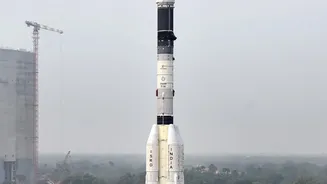
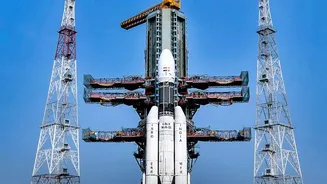
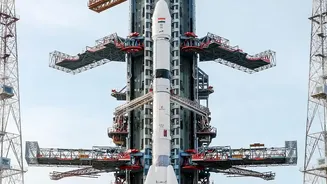
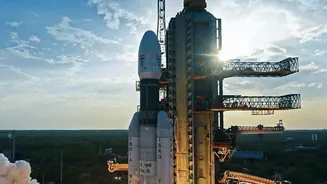
nation in the world—after the United States, Russia, and China—to have independent human spaceflight capability. The project, which translates to "sky craft" in Sanskrit, involves developing a suite of complex technologies, from a human-rated launch vehicle (a modified LVM3 rocket) to a habitable crew module and the life support systems needed to sustain life in the harsh environment of space. Before any astronaut boards the spacecraft, however, ISRO must prove every system is as safe as humanly possible.
The Eject Button for Astronauts
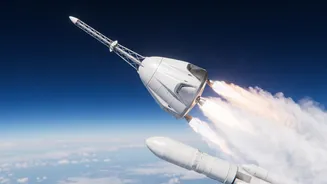
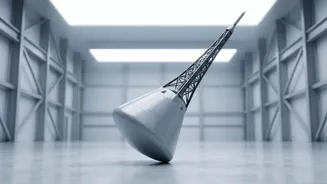
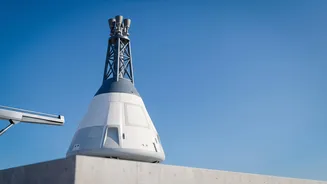
In human space missions, ensuring the safety of the crew is the absolute highest priority, taking precedence even over mission success. The most dangerous phase of any space journey is the launch, when the rocket is a barely controlled explosion of immense power. A failure during ascent requires an instantaneous escape route. This is the job of the Crew Escape System (CES), a specialised rocket-powered mechanism designed to pull the crew capsule away from a failing launch vehicle in the blink of an eye. Think of it as a highly advanced ejection seat, not for a single pilot, but for the entire capsule containing the astronauts. This system must be capable of activating from the launch pad all the way through the rocket's atmospheric flight, pulling the crew to a safe distance for a parachute-assisted landing.
A Picture-Perfect Failure
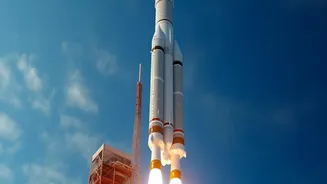
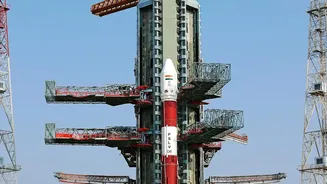
To prove the Crew Escape System works, ISRO has designed a series of 'abort tests'—missions designed to fail on purpose. The most significant of these so far has been the Test Vehicle Abort Mission-1 (TV-D1). In this test, a specially designed single-stage liquid rocket launched with a full-scale, unpressurised Gaganyaan crew module. At an altitude of about 17 kilometres and travelling faster than the speed of sound, the mission simulated a launch failure. The on-board systems triggered the abort sequence, firing powerful motors in the CES to violently rip the crew module away from the test vehicle. The escape system performed flawlessly, pulling the capsule clear. The sequence continued with the deployment of parachutes to slow the descent, culminating in a gentle splashdown in the Bay of Bengal, where it was recovered by the Indian Navy.
Proving the Escape Plan Works
The success of the TV-D1 test and other related evaluations, like Pad Abort Tests and parachute drop tests, is a monumental step for the Gaganyaan programme. These tests provide real-world data showing that in a catastrophic emergency, the escape system can indeed save the crew. The TV-D1 mission specifically validated the system's performance during the 'transonic' phase of flight—a period of maximum aerodynamic stress on the rocket, making it a particularly risky moment. By successfully simulating an abort in these conditions, ISRO has built enormous confidence in the robustness of its safety protocols. Each successful test validates the complex engineering and integration of hundreds of components that must work in perfect harmony within seconds. This progress moves the mission from theoretical designs to proven, flight-ready hardware.
The Road Ahead to Orbit
While a major hurdle has been cleared, the path to the first crewed flight is still methodical and deliberate. ISRO has planned several more tests to validate the Crew Escape System under different flight conditions and altitudes. Following the series of abort tests, the next major steps involve uncrewed orbital flights. The first of these, Gaganyaan-1 (G-1), is planned to launch and will test the entire mission profile, from launch to orbital manoeuvres and re-entry, but without astronauts. It will carry a humanoid robot named Vyommitra to collect data on conditions inside the capsule. Only after these uncrewed flights demonstrate the reliability and safety of every system will ISRO commit to launching Indian astronauts, with the first crewed mission currently anticipated around 2027.