





An Eruption of Epic Proportions
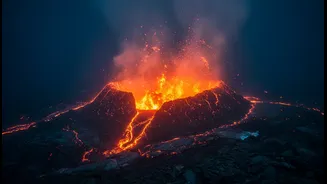
In a remote part of the southern Indian Ocean, along a tectonic boundary known as the Southeast Indian Ridge, researchers captured a dramatic geological event. Beginning on April 26, 2024, a swarm of earthquakes signalled that something major was happening
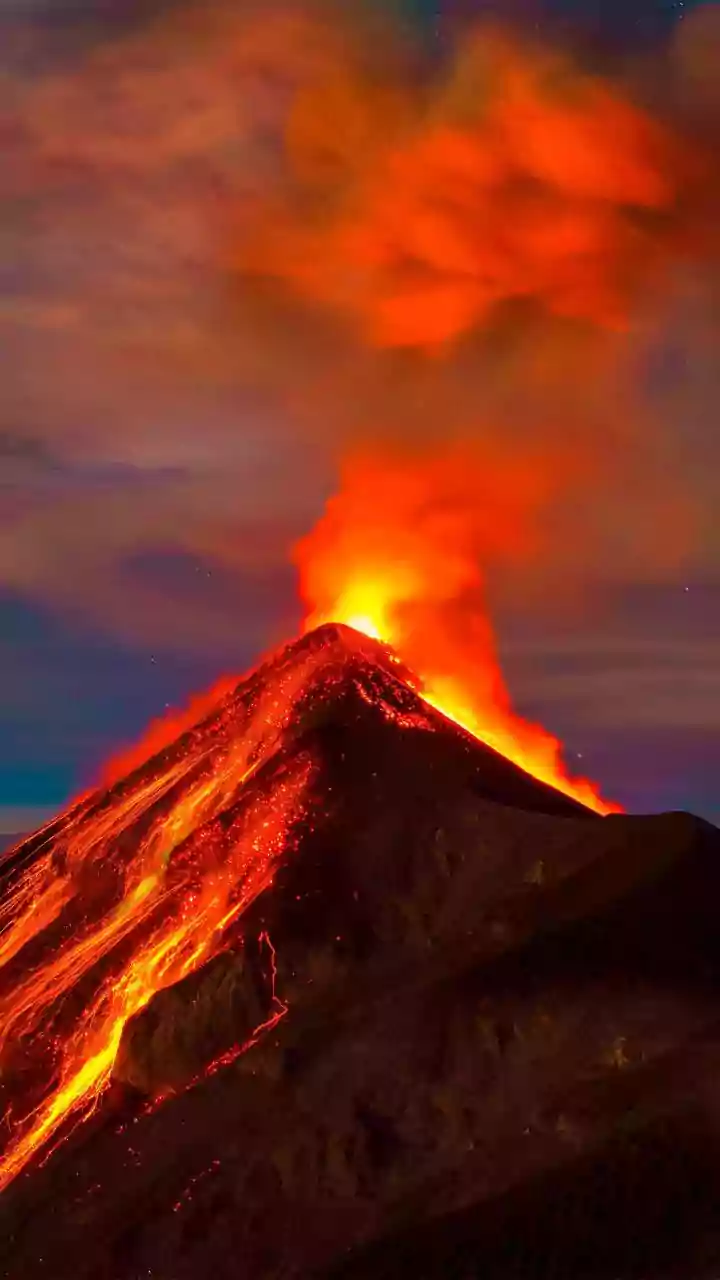
deep below the waves. Over a period of just six days, the seafloor tore apart, with sections moving a total of 4.2 metres. This rupture was caused by the deflation of a massive magma reservoir located about 3.6 kilometres beneath the crust. The event unleashed an estimated 160 million cubic metres of lava onto the ocean floor, enough to build a new layer of Earth's crust, with some deposits reaching over 90 metres in thickness.
Listening to the Planet Being Born
This groundbreaking observation was made possible by incredible timing and advanced technology. A team of French-led scientists had deployed an underwater observatory just two months before the event. This network, comprising over 20 monitoring stations including sensitive hydrophones and seafloor beacons, was perfectly positioned to 'listen' and track the changes. The instruments recorded the initial earthquake swarm, the rapid movement of the seafloor—which peaked at a blistering 5 centimetres per minute—and the distinctive acoustic signals of superheated lava meeting near-freezing seawater. It was the first time a complete seafloor spreading episode has been captured from start to finish, providing an unprecedented look into one of the planet’s most fundamental creative forces.
Rewriting the Textbooks on Tectonics
For decades, the prevailing model of crust formation at mid-ocean ridges assumed a relatively steady, continuous process. Molten rock from the mantle was thought to well up consistently as tectonic plates slowly drifted apart. This new research demonstrates that the process can be far more episodic and violent. The study suggests that stress accumulates along these plate boundaries for decades, like a loaded spring, before being released in sudden, short-lived bursts of activity. The observed separation of several metres is equivalent to what would normally be 30 to 60 years of slow, continuous spreading. This finding fundamentally changes our understanding of how two-thirds of the Earth's surface has been created.
Beyond the Volcano Model
While this event was driven by a massive volcanic eruption, other research in the Indian Ocean highlights a different, stranger way that crust can form. Along 'ultra-slow-spreading' ridges, like parts of the Southwest Indian Ridge, there is sometimes very little magma. In these zones, the crust doesn't just spread apart volcanically; it's pulled apart by enormous faults known as 'oceanic detachment faults'. These faults can actually rip mantle rocks from deep within the Earth and drag them onto the seafloor, creating a bizarre landscape of 'oceanic core complexes' where the crust is thin or even non-existent. Scientists have even found ancient continental rock fragments, billions of years old, that have been transported vast distances and churned up at these ridges, a discovery that challenges core tenets of plate tectonics.