








Prepare Your Vehicle Before You Leave
Safety begins before you turn the key. The most critical check is your tyres. Ensure they have adequate tread depth (use a one-rupee coin; if the head is visible, you need new tyres) and are properly inflated. Worn-out tyres can't channel water away effectively,
drastically increasing the risk of skidding. Next, check your wiper blades. If they leave streaks or make scraping noises, replace them immediately. Clear visibility is non-negotiable. Finally, test all your lights: headlights (low and high beam), tail lights, and indicators. In a downpour, being seen is as important as seeing.
Halve Your Speed, Double Your Distance
This is the golden rule of wet-weather driving. Water on the road surface dramatically reduces tyre grip, which means your braking distance can more than double. Driving at 80 km/h on a wet road can feel like 120 km/h on a dry one in terms of control. Reduce your speed significantly, especially on curves and bridges. Equally important is increasing your following distance. The standard 'three-second rule' should become a 'six-second rule' in the rain. This gives you the buffer time needed to react to sudden braking from the vehicle ahead or navigate an unexpected obstacle.
Understand and Avoid Hydroplaning
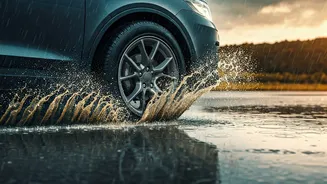
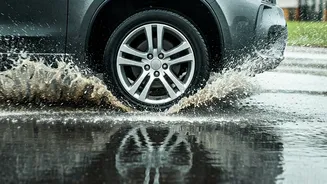
Hydroplaning is a terrifying experience where your tyres lose contact with the road and skim over a layer of water, causing a complete loss of steering and braking control. It can happen at speeds as low as 50 km/h with enough water. To avoid it, steer clear of large puddles and waterlogged lanes. If you do feel the car start to hydroplane (a light or loose feeling in the steering wheel), your instincts might scream 'brake hard!' but you must fight that urge. Instead, ease your foot off the accelerator smoothly and steer straight until your tyres regain traction. Slamming the brakes or turning the wheel sharply will only make the skid worse.
Lights On, Cruise Control Off
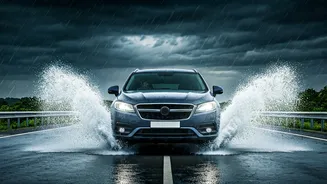
Even during the daytime, driving with your low-beam headlights on in the rain is a crucial safety habit. It does little to help you see better, but it makes your vehicle significantly more visible to other drivers, especially in the grey, misty conditions of a downpour. On the other hand, one feature you must switch off is cruise control. On a wet road, cruise control can cause your wheels to spin too fast if you hydroplane, making it harder to regain control. You need to be in complete manual control of your speed to react to changing road conditions instantly.
Beware the Hidden Dangers
Indian highways in the monsoon are notorious for hidden threats. A seemingly small puddle can conceal a bone-jarring, tyre-bursting pothole. Never drive through standing water if you can avoid it. If you can't, approach it very slowly. Be extra vigilant for two-wheelers, cyclists, and pedestrians seeking shelter under flyovers or trees, as they may dart into traffic unexpectedly. Also, be aware of oil and grime on the road surface. The first rain after a dry spell is often the most dangerous, as it lifts months of accumulated oil, making the road exceptionally slick.
Stay Focused and Patient
Driving in heavy rain is mentally taxing. The constant noise of the rain, the poor visibility, and the need for heightened concentration can lead to fatigue. Minimise all distractions. Put your phone away, turn the music down, and avoid engaging in complex conversations. If the rain becomes too intense and visibility drops to near zero, it is not a weakness to pull over. Find a safe spot well off the highway, away from trees, and wait for the worst of the downpour to pass. Your destination will still be there; the most important thing is to ensure you get there in one piece.