


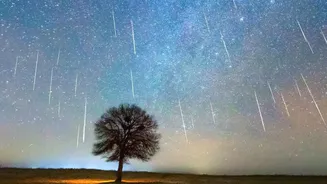
A Celestial Promise
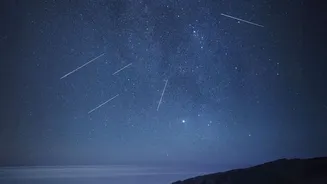
Hopes were high for the night of August 12-13, 2026. This was the peak of the Perseid meteor shower, an annual event that can produce up to 100 shooting stars per hour under ideal conditions. What made this year special was the absence of moonlight. The
new moon on August 12 ensured the sky would be at its darkest, making even faint meteors visible. Astronomers and enthusiasts across India had marked their calendars, preparing for a dazzling display that would be best viewed in the hours between midnight and dawn. The Perseids are known for their bright, fast meteors, many of which leave persistent trails of light, making them a favourite for skywatchers.
The Science of the Spectacle
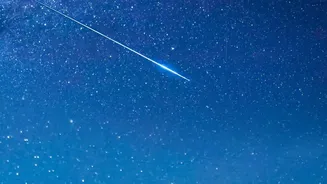
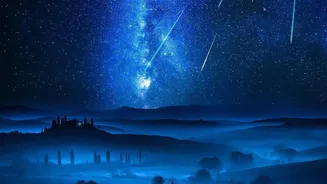
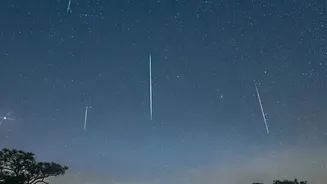
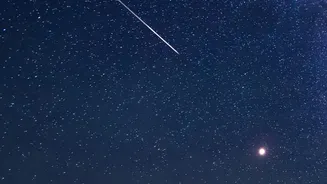
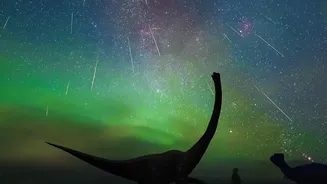
These celestial fireworks are not stars at all. They are tiny fragments of debris—most no larger than a grain of sand—left behind by the comet 109P/Swift-Tuttle. Every August, Earth's orbit takes it through this trail of cosmic dust. As the particles enter our atmosphere at incredible speeds of nearly 60 kilometres per second, they burn up due to friction, creating the brilliant streaks of light we call meteors. The shower gets its name from the constellation Perseus, as the meteors appear to radiate from this point in the northeastern sky. However, you don't need to find the constellation to enjoy the show; the meteors can appear anywhere in the sky.
An Unwanted Blanket of Clouds
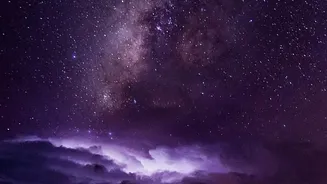
Unfortunately, the biggest variable in stargazing is often the one we can't control: the weather. For a majority of India, the peak of the Perseids coincided with the thick of the monsoon season. Across vast swathes of the country, from the Western Ghats to the plains of the north, heavy cloud cover and intermittent rain showers thwarted the plans of would-be observers. The very same weather system that brings life-giving rain to the subcontinent proved to be the villain of this astronomical story, drawing a curtain over what should have been a perfect cosmic performance. Despite below-normal rainfall forecasts for August in some regions, the cloud cover remained stubbornly persistent in many areas.
Pockets of Wonder
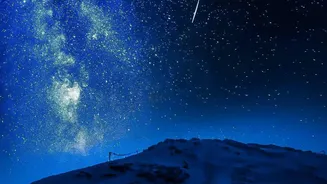
Not all was lost, however. A few determined—and lucky—stargazers in specific parts of the country were rewarded with clearer skies. The rain-shadow regions of India, which receive significantly less monsoon rainfall, became prime viewing locations. Reports from Ladakh and Spiti Valley in the high Himalayas spoke of breathtaking views, with the high altitude and dry air providing exceptional clarity. Similarly, parts of the Thar Desert in western Rajasthan and the Rann of Kutch in Gujarat offered a chance to witness the spectacle away from the monsoon's grip. For those in these areas, the show was everything that was promised, with dozens of meteors streaking across pristine, dark skies.
Hope for a Clearer Sky
If the monsoon clouds left you disappointed, don't despair. The post-monsoon period of October and November often brings some of the clearest, most transparent skies of the year for much of India, as the rains wash dust and pollutants from the atmosphere. The next major meteor shower to look forward to is the Geminids, which peaks around December 13-14. In 2026, the Geminids are expected to be the year's best and most reliable shower, with up to 120 meteors per hour and favourable moon conditions. It offers a fantastic opportunity to try your luck again under what are typically India's clearest winter skies.