






A Quiet Revolution on the Mat
Across India’s cities, a significant trend is reshaping the wellness landscape. Yoga studios, once primarily the domain of young, flexible practitioners, are now seeing a notable increase in classes tailored specifically for ‘healthy ageing’. This isn't
just a niche offering anymore; it's a response to a growing demand from a generation of older adults who are proactively rewriting the script on ageing. They are trading sedentary lifestyles for slow, mindful movement, seeking not just physical fitness but a holistic sense of well-being. These classes are often filled with individuals in their 60s, 70s, and even 80s, discovering the profound benefits of a practice adapted to their needs.
Why Now? A Shift in Mindset
Several factors are fuelling this surge. Firstly, there's a major cultural shift. The post-liberalisation generation is now entering their senior years with a different outlook—they are more health-conscious, financially independent, and socially active than their predecessors. The recent global pandemic also acted as a catalyst, highlighting the importance of building physical resilience and strong immunity at any age. For many, especially empty-nesters, these classes also fill a social void, offering a sense of community and shared purpose. It's a space where they can connect with peers who have similar life experiences and wellness goals, turning a simple exercise routine into a vital part of their social fabric.
Not Your Typical Yoga Class
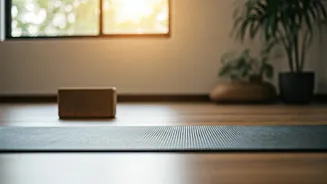
So, what exactly happens in a ‘healthy ageing’ or ‘senior yoga’ class? The key word is adaptation. The goal isn't to achieve a perfect headstand but to foster mobility, stability, and comfort in one's own body. You'll find a heavy emphasis on props. Chairs, for instance, are a central feature, used for support in standing poses, for seated stretches, and to make getting up and down from the floor optional. Blocks help bring the floor closer, and straps assist in gentle stretches, preventing over-exertion. The pacing is deliberately slow, with a focus on mindful breathing (pranayama) and coordinating breath with movement. Poses are chosen to directly address the common challenges of ageing: improving balance to prevent falls, strengthening core muscles for better posture, and increasing joint mobility to ease stiffness from arthritis.
The Science of Gentle Strength
The benefits are far from just anecdotal. Scientific research increasingly supports what these practitioners are experiencing first-hand. Studies have shown that a regular, gentle yoga practice can significantly improve balance and gait speed in older adults, which is critical for reducing the risk of falls—a major health concern for this demographic. The weight-bearing nature of certain standing poses, even when modified, can help maintain bone density and combat osteoporosis. Furthermore, the focus on pranayama and meditation has been linked to reduced stress, lower blood pressure, and improved cognitive function, helping to keep the mind as sharp as the body. It’s a low-impact, high-reward activity that addresses both physical and mental health.
Finding the Right Fit for You
For those inspired to join this movement, finding the right class is crucial. Look for studios that explicitly offer ‘Senior Yoga,’ ‘Gentle Yoga,’ or ‘Chair Yoga’. The instructor's qualification is paramount. A good teacher will have specific training in working with older adults and will always begin a class by asking about injuries or health conditions. Don't be shy about speaking to the instructor beforehand. Ask about their experience, the typical age range of the class, and their approach to modifications. The right environment will feel welcoming, non-competitive, and supportive, prioritising safety and individual comfort above all else.