



What Exactly Is Happening?
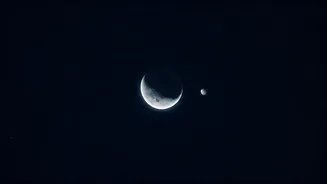
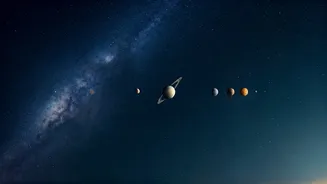
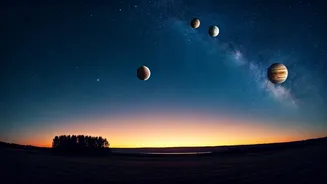
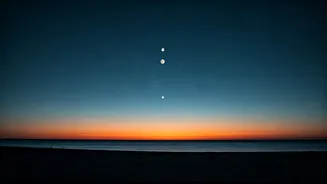
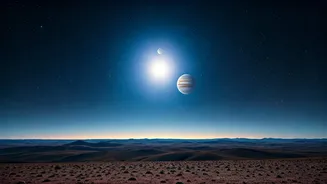
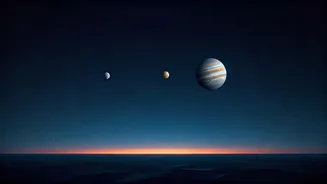
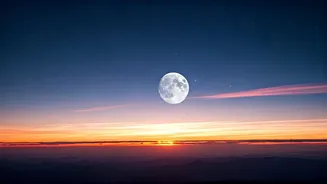
Tonight, the sky is putting on a show featuring two of its brightest objects. This event is called a conjunction, which in astronomy simply means that two or more celestial bodies appear very close to each other in the sky from our vantage point on Earth.
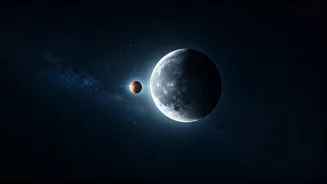
In this case, it's the Moon and Venus. While they look like they are almost touching, they are, of course, millions of kilometres apart. Venus is our nearest planetary neighbour, and the Moon is our own natural satellite. Their orbits just happen to align perfectly from our perspective tonight to create this stunning visual illusion.
Why This View Is So Special
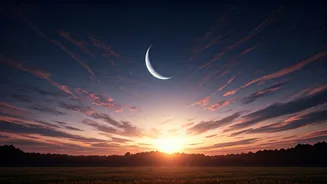
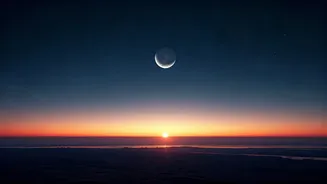
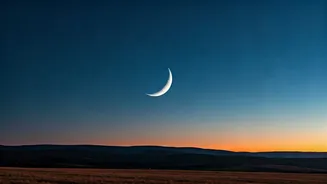
While Moon-Venus conjunctions happen with some regularity, not all are created equal. Several factors make tonight's viewing particularly special. First, the Moon will be a slender, waxing crescent, which is arguably its most photogenic phase. This delicate sliver will be beautifully illuminated, perhaps even showing a faint glow on its darkened portion—a phenomenon known as 'Earthshine'. Second, Venus is currently near its peak brightness, earning its nickname as the 'Evening Star'. The combination of a razor-thin crescent Moon next to the brightest 'star' in the sky, all set against the deep blues and oranges of twilight, is a truly breathtaking sight that photographers and sky-watchers cherish. The perceived closeness makes it a 'rare' treat in this perfect configuration.
When and Where to Look in India
The good news is that this event is incredibly easy to spot, with no special equipment needed. The key is timing. You should start looking about 30 to 45 minutes after sunset. Find a spot with a clear, unobstructed view of the western horizon. As the sky begins to darken into a deep twilight, Venus will pop into view as a brilliant, unblinking point of light. The crescent Moon will be visible very near it. For most locations in India, this prime viewing window will last for about 90 minutes to two hours before the pair sets below the horizon. Don't wait too late, or you'll miss them!
Tips for the Best Experience
To make the most of this celestial rendezvous, follow these simple steps. Firstly, get away from bright city lights if you can. While Venus and the Moon are bright enough to pierce through some light pollution, a darker sky will make the colours of twilight and the sharpness of the objects much more vivid. Secondly, give your eyes time to adapt to the dark. It takes about 15-20 minutes for your pupils to fully dilate and pick up fainter details. Finally, while the view is fantastic with the naked eye, if you have a pair of binoculars, bring them along. Binoculars will not only make the pair appear larger but may also reveal craters on the Moon and the distinct planetary disc of Venus.
Can You Photograph It?
Yes, absolutely! This is one of the easier astronomical events to capture with a smartphone. Find a stable place to rest your phone or use a small tripod to avoid blurry shots. Instead of just pointing and shooting, tap the screen on the Moon or Venus to set the focus and exposure. You may need to manually lower the brightness/exposure slider that appears, as phone cameras tend to overexpose bright objects in a dark sky. Try to include a bit of the landscape—a treetop, a building silhouette—to give your photo context and scale. Experiment with your phone’s ‘night mode’ or ‘pro mode’ if it has one, as these settings offer more control for stunning results.