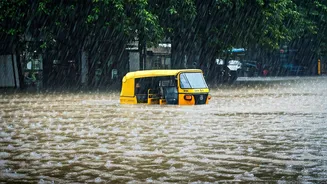







An Opening Scene Soaked in Chaos
The much-delayed monsoon announced its arrival in Mumbai with a vengeance between Tuesday, June 23, and Wednesday, June 24, 2026. [5, 7] In just 24 hours, parts of the city were drenched with over 300 mm of rain, with the Colaba observatory recording
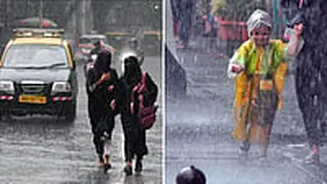
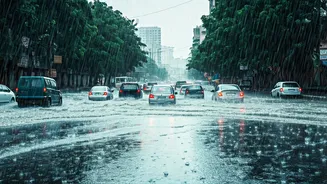
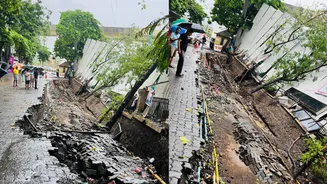
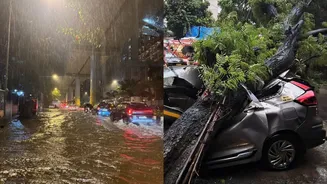
248 mm—its wettest June day in a decade and nearly 45% of its average rainfall for the entire month. [4, 6] The immediate result was a scene Mumbaikars know all too well: chaos. Low-lying areas like the Andheri subway, Hindmata, Dadar, and King's Circle were quickly submerged, bringing traffic to a standstill. [4, 7] The city’s lifeline, the local train network, was severely hit. A track cave-in on the Trans-Harbour line due to soil erosion led to the cancellation of 24 trains, leaving thousands of commuters stranded during peak morning hours. [10, 13] Services on the Central Railway also faced delays, turning the daily commute into a test of endurance. [5]
The Predictable Blame Game
With the deluge came the inevitable finger-pointing. Even as the Brihanmumbai Municipal Corporation (BMC) claimed its pre-monsoon preparedness stood the test, the ground reality told a different story. [6] A viral video captured the unfortunate—and deeply symbolic—moment a BMC supervisor fell into an open drain while accompanying Mayor Ritu Tawde on an inspection of the waterlogged Gandhi Market. [6, 7] Opposition leaders were quick to pounce. Congress MP Varsha Gaikwad called the incident a result of "inaction and corruption," while Shiv Sena (UBT) leader Aaditya Thackeray criticized the administration's priorities. [6] Even ruling party MLC Manisha Kayande publicly urged the mayor to intensify efforts to clean drains, acknowledging that inadequate desilting had contributed to the flooding. [7] Meanwhile, the BMC stated that over 7,000 employees were deployed and dewatering pumps were operational to tackle the situation. [13]
A Tale of Two Responses: Official Claims vs. Reality
Before the rains, the narrative was one of preparation. The BMC had set a May 31 deadline for pre-monsoon works, including desilting the city's nullahs and the Mithi River. [12] Reports from early June indicated that while the target for major and minor drains was met, the Mithi River desilting was only about 75% complete. [12] The civic body also announced the deployment of 547 dewatering pumps across 498 identified flood-prone spots, an increase from the previous year. [12] However, the intensity of the first major downpour quickly overwhelmed these measures. The Andheri subway was shut for hours, BEST bus services on over 24 routes were diverted, and floodwaters entered homes in areas like Malad. [5, 7, 4] This annual gap between on-paper preparedness and on-ground effectiveness remains the core of Mumbai’s monsoon struggle. [9]
The Unflappable Spirit of Mumbai
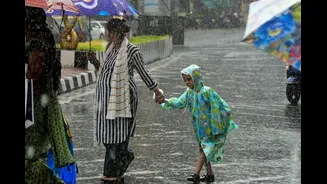
Beyond the political squabbles and infrastructural failures lies the most consistent character in this drama: the Mumbaikar. While social media was flooded with images of submerged vehicles and frustrated commuters, it also showcased the city's legendary resilience. Citizens were seen helping each other navigate flooded streets, while others took to X (formerly Twitter) with a mix of dark humour and genuine calls for help. A high tide of 3.41 metres on Wednesday morning compounded the problem, as heavy rain combined with the high tide is a known recipe for disaster in the coastal city. [5, 6] Despite the chaos, the city, for the most part, did not stop. By late morning, the IMD had downgraded its red alert to an orange one, and civic teams, along with ordinary citizens, were deep into the familiar routine of cleaning up and moving on. [11]