

India's Ambitious Voyage to Venus
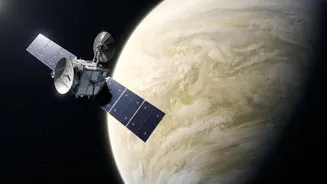
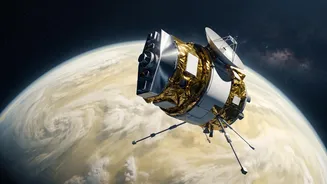
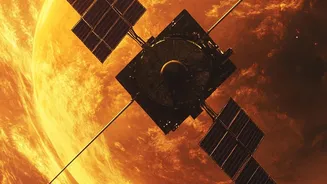
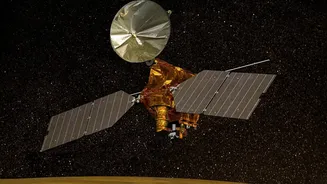
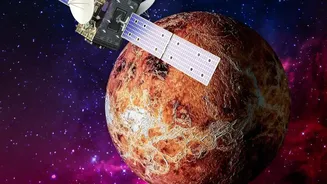
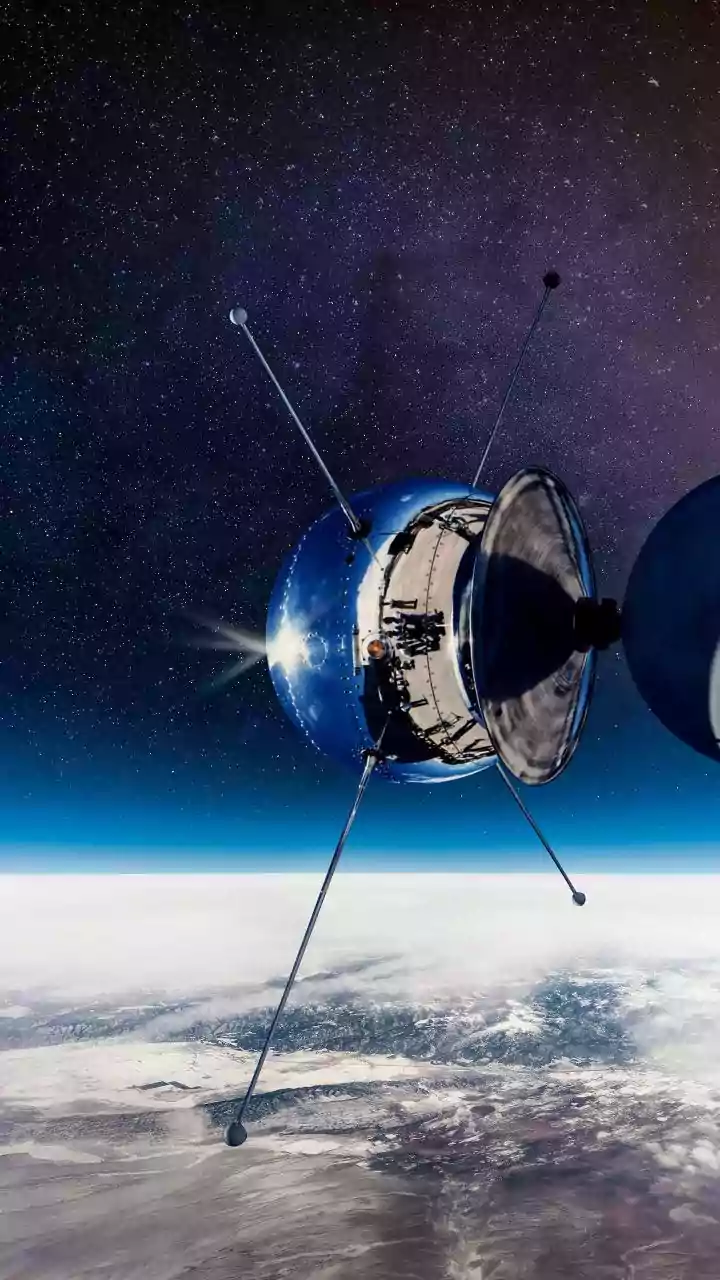
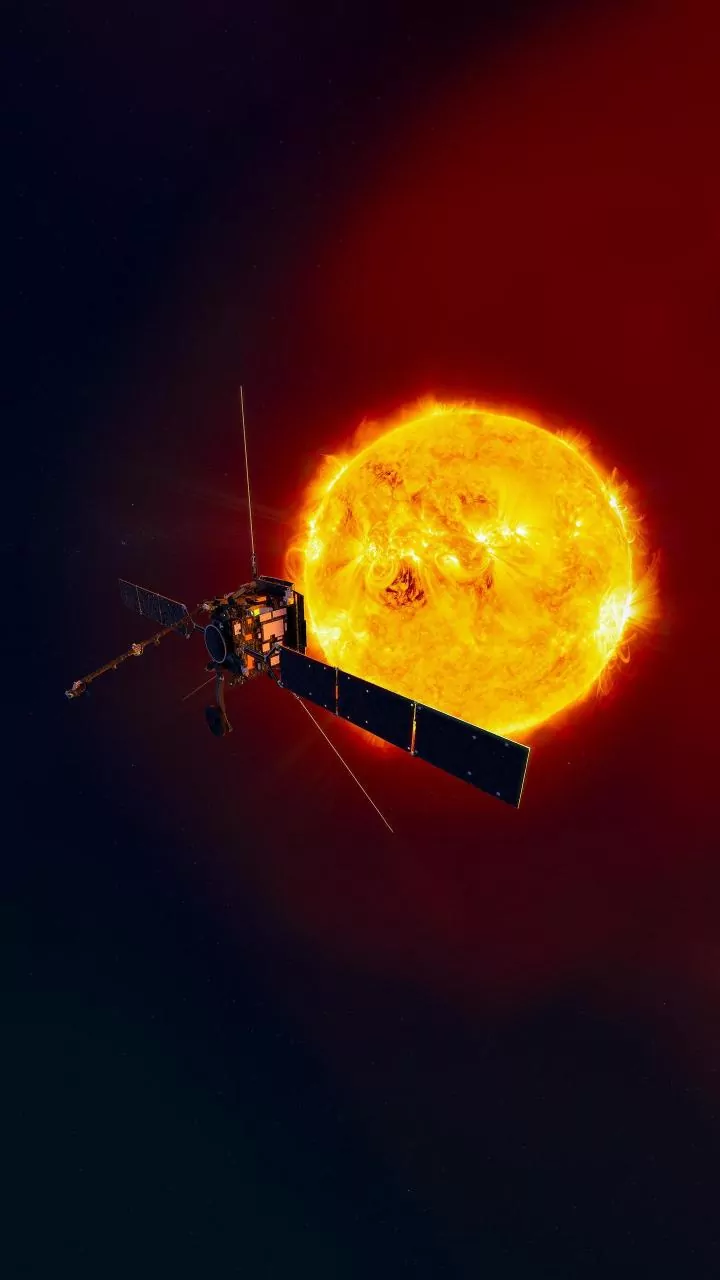
Shukrayaan, meaning 'Venus Craft' in Sanskrit, represents India's first dedicated mission to our closest planetary neighbour. Officially greenlit by the Indian government in September 2024, this Venus Orbiter Mission (VOM) follows the celebrated successes
of Chandrayaan to the Moon and Mangalyaan to Mars, marking ISRO's next great interplanetary leap. The mission is slated for a March 29, 2028 launch aboard the powerful LVM-3 rocket. After a journey of about 112 days, the spacecraft is scheduled to enter a highly elliptical orbit around Venus, beginning a new chapter in India’s space exploration story.
The Challenge of an 'Evil Twin'
Studying Venus is incredibly difficult. Its surface is completely obscured by a thick, toxic atmosphere of carbon dioxide and clouds of sulfuric acid. The atmospheric pressure at the surface is over 90 times that of Earth's, and temperatures soar to a scorching 460 degrees Celsius—hot enough to melt lead. This extreme greenhouse effect has turned a planet that may have once been similar to Earth into a hellish landscape. Understanding why Venus took such a different evolutionary path is a key scientific question that could offer profound insights into Earth's own climate and future. Peering through this dense atmospheric shroud requires technology that can see what optical cameras cannot.
Peering Through the Veil with Indian Technology
This is where ISRO's indigenous sensor technology comes into play. The headline instrument for Shukrayaan is a high-resolution Synthetic Aperture Radar (SAR). Unlike a standard camera, a SAR instrument actively sends out radio waves and analyses the echoes that bounce back. Because these radar waves can penetrate clouds, dust, and darkness, SAR is the perfect tool for mapping the surface of Venus. ISRO has gained significant expertise in this area, partly through its collaboration with NASA on the NISAR Earth-observing satellite, which also features an Indian-built S-band SAR. For Shukrayaan, the SAR will map the Venusian surface in high resolution, aiming to identify volcanic features, lava flows, and impact craters that have been hidden for eons.
A Suite of Scientific Tools
While the SAR is the star of the show for surface mapping, Shukrayaan will carry a comprehensive suite of about 19 instruments, most of which are designed and built in India. These payloads will investigate a wide range of phenomena. Some will study the complex chemistry of the atmosphere and the mysterious 'super-rotation' of its clouds, which whip around the planet in just four Earth days. Others will examine the interaction between Venus and the solar wind, helping scientists understand how the planet lost its water over billions of years. The mission also includes international collaboration, with instruments developed in partnership with agencies from Sweden, Germany, and Russia, making it a truly global scientific effort.
Why Shukrayaan Matters for India
Beyond the pure science, the Shukrayaan mission is a significant technological and strategic undertaking for India. It will demonstrate advanced mission capabilities, including aerobraking—a fuel-saving technique where the spacecraft will dip into the Venusian atmosphere to gradually lower its orbit. This complex manoeuvre has never been attempted by ISRO before. Success would not only place India in the elite club of nations that have orbited Venus but also enhance its reputation as a cost-effective and innovative leader in space exploration. By aiming to answer fundamental questions about planetary evolution, the mission cements India's position as a major contributor to global scientific knowledge, inspiring a new generation of scientists and engineers back home.