



A New Frontier in Diagnostics
The concept sounds like science fiction: a breathalyser that doesn't check for alcohol, but for serious illness. Yet, researchers across India are turning this idea into reality. At recent technology conferences, such as Bengaluru India Nano 2026, scientists
have showcased innovations that use nanotechnology and artificial intelligence to make healthcare more accessible and effective. These devices work by analysing the complex mix of chemicals in our exhaled breath. Our bodies release thousands of volatile organic compounds (VOCs) as byproducts of metabolic processes. The specific combination and concentration of these VOCs can create a unique 'breathprint' that changes when disease is present, acting as powerful biomarkers for conditions long before physical symptoms appear.
The 'Nano AI' Advantage
Two key technologies make this revolution possible: nanotechnology and artificial intelligence. Nanosensors, materials engineered at an incredibly small scale, provide the extreme sensitivity needed to detect trace amounts of specific VOCs in a breath sample. For instance, researchers at IIT Jodhpur have developed sensors using metal oxides and nano silicon that can operate at room temperature, a significant advancement over older technologies. But detecting these compounds is only half the battle. The real breakthrough comes from pairing these sensors with AI. An artificial intelligence platform analyzes the complex data from the sensor, identifying subtle patterns in the 'breathprint' that are invisible to the human eye. This AI-driven analysis compares the patient's breath signature to vast databases of known disease markers, allowing it to classify a sample with high accuracy — sometimes in under a minute.
Made in India, For the World
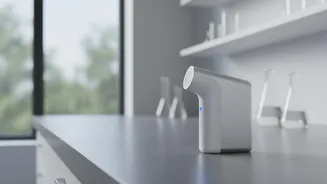
This wave of innovation is distinctly Indian, with institutions like the IITs and research wings of major corporations leading the charge. One team from TCS Research has developed an AI-enabled nanosensor focused on screening for pre-diabetes, a condition affecting an estimated 136 million people in India. The handheld device provides a classification of non-diabetic, pre-diabetic, or diabetic in seconds, offering a crucial window for early intervention through lifestyle changes. Similarly, a deep-tech startup from Kerala, Accubits Invent, secured a patent for its 'VolTrac' technology, which can detect markers for cancer and tuberculosis with a reported 98.5% accuracy. These efforts are not just about technological prowess; they are driven by a mission to create affordable, non-invasive tools that can be deployed even in resource-scarce rural settings, tackling some of India's most pressing public health challenges.
Beyond the Hype: The Road Ahead
While the potential is immense, the journey from laboratory prototype to a device in every clinic has its hurdles. The headline-grabbing accuracy rates are often achieved under controlled conditions. The next critical steps involve extensive clinical trials to validate these devices across diverse populations and real-world settings. Researchers must also ensure the sensors can consistently distinguish between different diseases and account for variables like diet and environment that can affect breath composition. Furthermore, navigating the regulatory pathway for medical devices, even non-invasive ones, is a complex process. Standardizing data, ensuring the ethical use of AI, and scaling up manufacturing are all significant challenges that must be overcome before these breath sensors become a mainstream diagnostic tool.