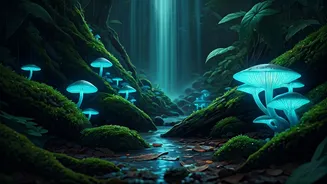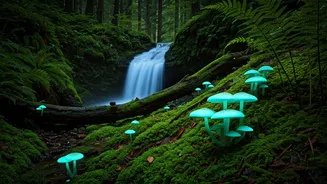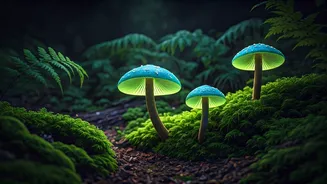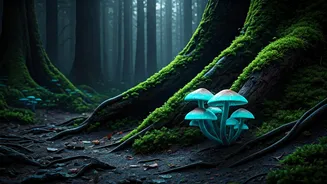



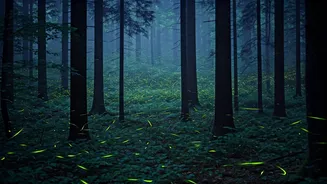


What Creates This Natural Light Show?
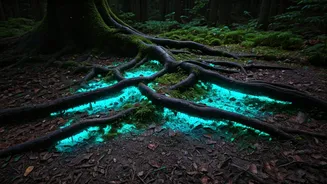
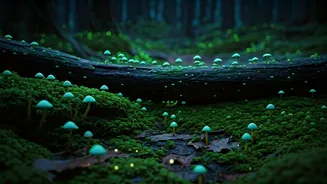
This enchanting glow isn't magic, but biology. Known as bioluminescence, it's the same phenomenon that makes fireflies light up. The mushrooms produce light through a chemical reaction involving a compound called luciferin and an enzyme, luciferase. When
these two mix with oxygen, they release energy in the form of a cool, greenish light. In India, the primary species responsible for this spectacle belong to the genus *Mycena* and *Roridomyces*. Scientists believe the glow serves a purpose—to attract nocturnal insects that help in spore dispersal, ensuring the fungi's survival. This natural lantern effectively 'calls' out to the creatures of the night, helping the mushrooms reproduce and spread.
Where to Find These Glowing Wonders
This phenomenon isn't found just anywhere. It requires specific humid, dense forest conditions, which makes India one of the prime locations for mushroom-spotting. The two main hotspots are the Western Ghats and the forests of Meghalaya.In the Western Ghats, the states of Goa, Maharashtra, and Karnataka are your best bet. Goa’s Mhadei Wildlife Sanctuary is particularly famous for its glowing forest floor during the monsoon. Similarly, Bhimashankar Wildlife Sanctuary in Maharashtra has become a popular destination for trekkers hoping to witness the spectacle. In Meghalaya, the forests near the village of Mawlynnong and other parts of the East Khasi Hills are known to host these luminous fungi, adding another layer of mystery to the state already famous for its living root bridges and heavy rainfall.
Timing Is Everything: The Monsoon Window
You can't see this phenomenon year-round. The key ingredient for bioluminescent fungi to thrive is moisture, making the monsoon season (roughly June to October) the absolute best time to go looking. The constant rain and high humidity create the perfect environment for the fungi to grow on decaying logs, twigs, and leaf litter. Within this season, your chances are highest during the peak rainy months of July and August. For the best viewing experience, plan your visit around the new moon. A moonless, pitch-black night will make the faint, ghostly glow of the mushrooms stand out dramatically against the dark forest floor.
Tips for Your Bioluminescent Trek
Seeing this natural wonder requires a bit of planning. First and foremost, hire a local guide. They know the forest intimately, including the exact trails and locations where the fungi are known to grow. They also ensure your safety in a dense, dark jungle. Wear sturdy, waterproof trekking shoes with good grip, as the forest floor will be slippery and muddy. Carry a flashlight or headlamp for navigation, but once you reach a potential spot, switch it off. It takes about 10-15 minutes for your eyes to fully adjust to the darkness, after which the faint glow will become visible. Patience is key; the glow isn't a bright floodlight, but a subtle, mesmerising shimmer.
A Fragile Wonder: View Responsibly
Bioluminescent mushrooms are a delicate part of the forest ecosystem. As their popularity grows, it's crucial to practice responsible tourism. Never touch, pick, or disturb the fungi. The light they produce is part of their life cycle, and interfering can disrupt it. Stick to the designated trails to avoid trampling on unseen patches of fungi or other sensitive flora. Follow the golden rule of trekking: leave no trace. Pack out everything you bring in, including food wrappers and water bottles. The goal is to witness this magic without leaving any mark, ensuring that these glowing forests can continue to enchant visitors for years to come.