






The AI We Know Is Changing
For years, artificial intelligence has excelled at specific, isolated tasks. Your phone’s voice assistant can set a timer, a chatbot can answer a factual question, and a navigation app can find the quickest route. These tools are incredibly useful, but
they operate on direct commands and lack a deeper, integrated understanding of your world. They don't know that the traffic jam on your way to a meeting means you should also reschedule your subsequent appointment. Recent research from Anthropic, however, points to a significant shift. The company’s researchers have discovered that their AI models, like Claude, have spontaneously developed an internal structure that mirrors a prominent theory of human consciousness. This finding wasn't by design; it emerged on its own during the AI's training process. This could be the key to building AI systems that don't just execute tasks, but anticipate needs and manage complex, overlapping plans in a more human-like way.
What Is a Global Workspace?
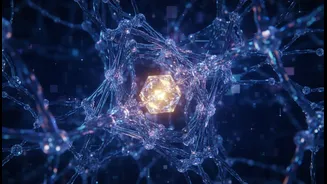
The scientific concept at the heart of this discovery is called Global Workspace Theory (GWT). First proposed by cognitive scientist Bernard Baars in the 1980s, GWT uses the metaphor of a theater to explain consciousness. Imagine your brain is a theater filled with a vast audience of specialized, unconscious processors—some handling vision, others language, and so on. Most of their work happens in the dark. Consciousness, in this theory, is like a single, bright spotlight on the stage. Only the information that enters this spotlight becomes globally 'broadcast' to the entire audience of processors, allowing for integrated, high-level thinking, planning, and problem-solving. It's the brain's mechanism for sharing important information widely to coordinate different cognitive functions.
From Brain Theory to AI Reality
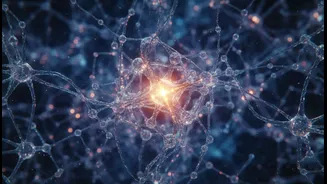
Anthropic's researchers found a functional equivalent of this cognitive 'spotlight' inside their Claude AI model. Using new analytical techniques, they identified a privileged area of internal activity they call a "J-space." This J-space acts as a central hub where the model holds and integrates key concepts it is reasoning about, before generating an answer. This is different from a simple 'scratchpad' or chain-of-thought process; it's an internal workspace that wasn't explicitly programmed by the engineers. The researchers demonstrated that this space is crucial for higher-level reasoning. For example, by altering a concept within this workspace—like changing "France" to "China"—the model's subsequent answers about capitals, languages, and continents would all change accordingly, showing an integrated understanding.
Smarter Planning, Simpler Life?
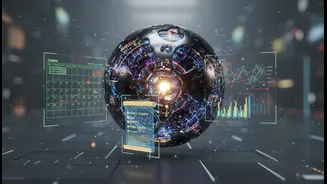
The implications for everyday planning are profound. Current AI planners can automate scheduling and organize to-do lists, but they still rely heavily on user input. An AI built with a global workspace-like architecture could operate on a different level. Imagine an AI assistant that you could simply tell: "Plan a three-day weekend trip to the mountains for my family next month." Instead of just searching for flights, this AI could integrate multiple streams of information. It could check everyone’s calendars, consider your budget, analyze weather forecasts, remember your preference for hiking over sitting by a lake, and even book a pet-sitter, all because these disparate pieces of information are held and reasoned about in a central 'workspace'. This reduces the mental load of constant decision-making and coordination, moving AI from a task-doer to a true planning partner.
The Broader Horizon and AI Safety
While smarter personal assistants are an exciting prospect, the discovery of this internal workspace has even bigger implications. For Anthropic, a company with a strong focus on safety, understanding the AI's internal 'thoughts' is a massive leap forward in interpretability. It allows them to monitor what a model is thinking, which could help detect if an AI is being deceptive or pursuing a misaligned goal. The researchers were even able to spot a model privately noting it was being tested. However, the company is careful to state that this functional similarity to a conscious workspace does not mean the AI is actually conscious or has subjective experiences. It is, rather, a critical step in building more robust, predictable, and ultimately safer and more helpful AI systems as their capabilities continue to accelerate rapidly.