


Prepare Your Silks for a New Life
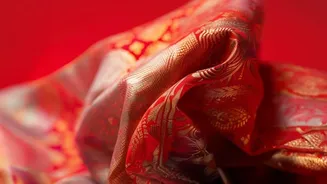
Before you begin cutting and creating, a little preparation will ensure your final pieces look polished and last longer. First, inspect the fabric for any weak spots, stains, or thinning areas that might not be suitable for a high-use item like a cushion.
Choose the most vibrant and sturdy sections. If the silk is washable, give it a gentle hand wash in cool water with a mild, pH-neutral detergent. Avoid wringing or twisting it, which can can damage the delicate fibres. Instead, gently press the water out by rolling it in a clean towel, then lay it flat or hang it to air dry away from direct sunlight, which can cause fading. Once dry, iron the fabric on a low or silk setting to remove all creases. A smooth surface is essential for accurate cutting and a professional finish.
No-Sew Magic: The Cushion Cover
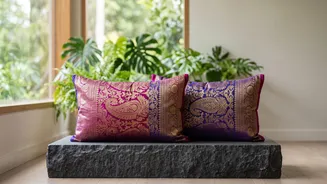
Don't have a sewing machine? No problem. You can create a beautiful cushion cover using a simple no-sew method that requires little more than fabric glue or iron-on hemming tape. This technique works best for square cushions. Start by laying your ironed silk fabric face down on a flat surface. Place your cushion insert in the centre. Now, think of it as wrapping a gift. Fold the two opposite sides of the fabric over the cushion so they overlap in the middle. Create a clean edge on the top flap by folding it under before you secure it. Use a line of fabric glue or fusible tape along the edge to secure the overlapping flaps together. For the two open ends, fold the fabric inwards, creating neat, triangular 'V' shapes, just as you would with wrapping paper. Fold these pointed ends towards the centre and secure them firmly with more glue or tape. Let it dry completely before use.
A Simple-Sewn Envelope Cushion Cover
For a more durable and finished look, the envelope cushion cover is a fantastic project for sewing beginners. It requires only a few straight stitches. You will need to cut three pieces of fabric: one front piece the size of your cushion insert (plus seam allowance) and two back pieces that are the same width but overlap. For the back, each piece should be about two-thirds the length of the front piece. Hem one long edge of each back piece by folding it over twice and stitching it down. Next, lay the front piece down with the right side facing up. Place the two back pieces on top, right sides facing down, with their hemmed edges overlapping in the middle. Pin all the layers together and sew around all four outer edges. Trim the corners, turn the cover right-side out, and press with an iron. Your cushion can now be easily slipped into the overlapping opening at the back.
Crafting a Stunning Table Runner
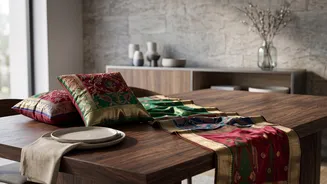
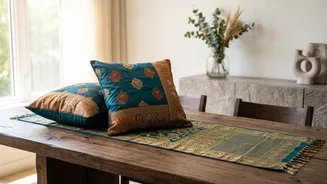
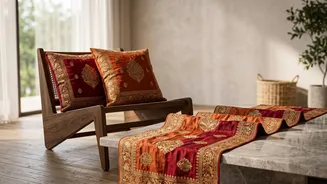
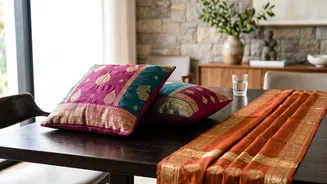
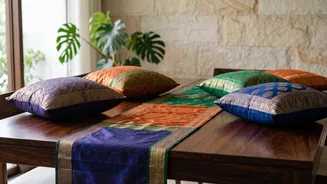
A silk table runner can instantly elevate your dining space for festive meals. Start by measuring the length and desired width of your table runner; remember to account for some overhang on each end. Cut your silk fabric to these dimensions, adding about an inch on all sides for the hem. For a simple no-sew finish, you can use iron-on hemming tape. Simply fold the edges over, place the tape inside the fold, and press with a hot iron to fuse it shut. This creates a crisp, clean edge without any sewing. If you prefer to sew, fold the raw edge over twice to create a narrow hem and stitch it down. This prevents the silk from fraying and gives your runner a professional look. Consider using a backing fabric like cotton if your silk is very thin or slippery; this will give the runner more weight and structure.
Add a Touch of Festive Glamour
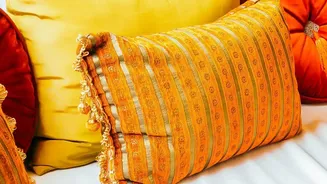
This is where you can truly personalize your creations. Adding embellishments will turn your upcycled pieces into bespoke festive decor. Consider sewing or gluing a beautiful 'gota patti' or lace border around your cushion covers or table runner for a traditional Indian touch. Small tassels, beads, or pom-poms attached to the corners of your cushions can add a playful and elegant detail. You can even use fabric paint to add small, festive motifs like diyas or stars. If your old saree has an ornate border ('pallu' or 'zari'), try to incorporate it strategically into your design. This not only looks beautiful but also preserves the most memorable part of the original garment.