



The Prized Hilsa of Bengal
For Bengalis, the monsoon is synonymous with Ilish, or Hilsa. This prized fish, known for its rich flavour and delicate texture, migrates from the Bay of Bengal to rivers like the Ganga and Padma to spawn during the rains. This annual journey makes it the star
of monsoon feasts. Entire festivals, known as 'Ilish Utsav', are dedicated to it in places like the Sundarbans and Diamond Harbour. Kitchens come alive with preparations like Ilish Bhapa (steamed in a potent mustard-chilli paste), Ilish Paturi (wrapped and steamed in banana leaves), and the simple but sublime Ilish Bhaja (fried fish). It is more than just food; it is an emotion and a cultural celebration of the season's bounty.
Rajasthan’s Sweet Welcome to the Rains
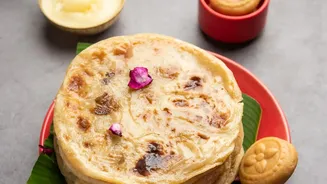
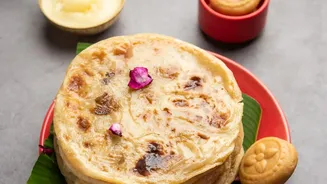
In the arid landscapes of Rajasthan, the monsoon is a cause for grand celebration, marked by the Teej festival. The centerpiece of this festival is Ghevar, a spectacular disc-shaped sweet that is only available during the rainy season. Made from a batter of flour and ghee fried into a honeycomb-like cake and soaked in sugar syrup, its preparation requires the high humidity that the monsoon provides. Topped with rabri (thickened sweet milk) or malai and garnished with nuts, Ghevar is a rich, symbolic treat shared among families, representing the sweetness and abundance the rains bring.
Kerala’s Ayurvedic Monsoon Porridge
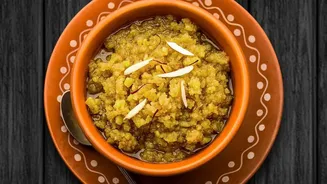
In Kerala, the monsoon is a time for rejuvenation, guided by ancient Ayurvedic wisdom. During the month of Karkidakam (mid-July to mid-August), a special medicinal rice gruel called Karkidaka Kanji is consumed. This isn't just a simple porridge; it's a therapeutic meal made with Njavara rice, coconut milk, and a blend of herbs and spices like fenugreek and dry ginger. Ayurveda holds that the body's digestive fire (Agni) is weakest during the monsoon. This easily digestible kanji is designed to boost immunity, aid detoxification, and restore balance to the body, making it a cornerstone of seasonal wellness.
Maharashtra’s Crunchy Colocasia Rolls
The monsoon brings a burst of green across Maharashtra, including the large, heart-shaped leaves of the colocasia (arbi) plant. This marks the season for Patra, also known as Aluvadi, a beloved snack. Fresh colocasia leaves are layered with a thick, tangy, and sweet paste made from gram flour (besan), tamarind, jaggery, and spices. The layered leaves are then rolled, steamed, and finally sliced into rounds. These can be eaten as is or shallow-fried until the edges are irresistibly crisp. This dish is a masterful blend of textures and a perfect tea-time companion on a rainy evening.
Goa’s Fresh River Catch
While the annual monsoon fishing ban limits deep-sea trawling, Goan kitchens turn to the bounty of the swollen rivers and estuaries. This is the best time for fresh river fish like Shevto (grey mullet) and crustaceans like sweet river clams (Tisreo) and crabs (Kullyo). These are cooked into fragrant local curries and preparations. Because fresh sea fish is scarce, it is also the time when preserved dry fish preparations like Kismur—a 'salad' of dried prawns with coconut and onions—truly shine, showcasing a resourceful food culture shaped by the seasons.
The Universal Joy of Pakoras and Chai
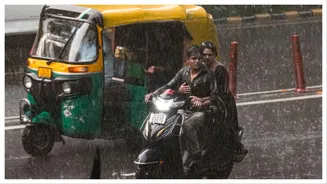
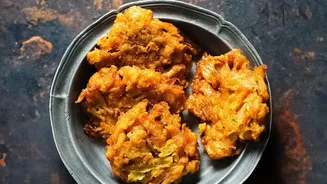
Across every regional boundary, if there is one food experience that unites India during the monsoon, it is the combination of hot, crispy pakoras and a steaming cup of masala chai. Whether it's the Kanda Bhaji (onion fritters) of Maharashtra, the Mirchi Vada of Rajasthan, or simple potato and paneer pakoras in the north, these deep-fried delights are the ultimate comfort food. Eaten fresh from the frying pan, often from a roadside stall while sheltering from a downpour, this humble snack offers a moment of pure, unadulterated bliss.
The Roasted Bhutta Experience
The smoky aroma of corn on the cob being roasted over hot coals is an integral part of the Indian monsoon streetscape. Known as Bhutta, this isn't just about the corn itself, but the entire ritual. Hand-fanned embers char the kernels to perfection, and the vendor then rubs the hot cob with a slice of lemon dipped in a mix of salt and chilli powder. It's a simple, rustic, and interactive snack that engages all the senses—warm, spicy, tangy, and sweet—encapsulating the very essence of a rainy day.