


The Mysterious Monsoon Jewel
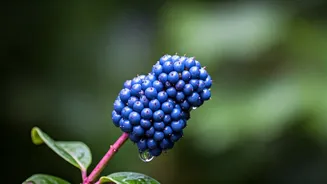
The fruit in question is the phalsa, or Grewia asiatica. For those who grew up enjoying it, the name alone conjures images of street vendors with baskets piled high with these small, dark-purple berries. Smaller than a jamun and bigger than a pea, the phalsa is a powerhouse
of flavour packed into a tiny sphere. Unlike the straightforward sweetness of a mango or the tartness of a lemon, the phalsa offers a complex taste experience. It hits the palate with a sharp, tangy burst that quickly mellows into a subtle sweetness, with an astringent finish that leaves you wanting more. This unique profile is what makes it so memorable. It’s not a fruit you eat absent-mindedly; it demands your full attention.
A Taste of Childhood Summers
For generations of Indians, phalsa is inextricably linked to the cusp of summer and the arrival of the monsoon. Its season is brutally short, lasting just a few precious weeks from late May into June. This scarcity is central to its appeal. It’s the taste of school holidays, of pocket money spent on a paper cone filled with berries, and of the ritual of sprinkling the fruit with a pinch of black salt and chilli powder to heighten its sweet-and-sour notes. Many remember grandmothers patiently squeezing the pulp to make a deep magenta sherbet, a traditional coolant believed to combat the oppressive pre-monsoon heat. This drink, both refreshing and deeply flavourful, was the ultimate seasonal treat, a luxury that couldn't be replicated at any other time of the year.
Why We 'Miss' the Phalsa
The headline's claim that everyone “misses” this fruit isn't just about nostalgia; it’s rooted in a tangible reality. Phalsa is becoming increasingly hard to find. The primary reason is its delicate nature. The fruit has a very short shelf life, often lasting less than two days after being picked. This makes it a nightmare for modern supply chains that prioritise durability and long-distance transport. It bruises easily, and its thin skin offers little protection. As a result, large-scale commercial farming is rare. Most phalsa comes from small, local orchards or even backyard trees, sold in markets close to where it was grown. In an era of year-round apples from Washington and kiwis from New Zealand, the hyper-seasonal, hyper-local phalsa is an anomaly.
A Nutritional Powerhouse
Beyond its incredible taste, traditional wisdom has long valued the phalsa for its health benefits, many of which are now being supported by science. It's a natural coolant, making its arrival during the hottest time of the year no coincidence. The fruit is rich in antioxidants, particularly anthocyanins, which give it its deep purple colour and help fight inflammation and oxidative stress. It’s also a good source of Vitamin C, iron, and minerals like potassium and phosphorus. Its juice was traditionally used as a remedy for digestive issues and respiratory ailments. In essence, it was the original superfood, perfectly adapted to the Indian climate and seasonal health needs, long before the term became a marketing buzzword.
The Hunt for a Fading Flavour
As cities expand and agricultural land use shifts towards more profitable and less perishable crops, the space for fruits like phalsa is shrinking. Younger generations in urban centres may have never even tasted it, their palates shaped by the homogenised offerings of supermarkets. This is why the act of finding and eating phalsa feels like a small rebellion against the modern food system. It’s a conscious choice to embrace seasonality and support local growers. Spotting a vendor with a basket of fresh phalsa feels like discovering a hidden treasure, a direct link to a simpler time and a more diverse culinary landscape. The experience is about more than just consumption; it’s about participation in a tradition.