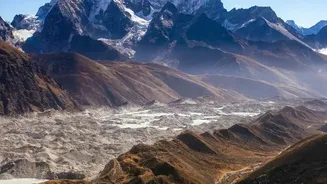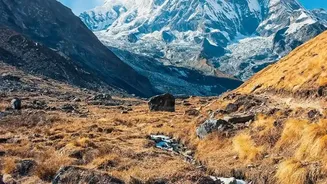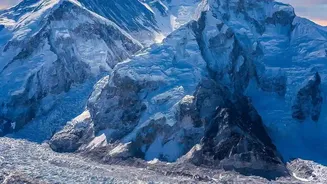






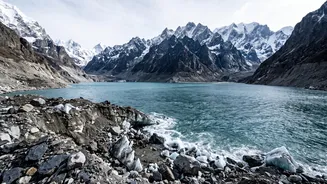
The Himalayas, often called the 'Third Pole', are warming faster than the global average. This is creating a silent, growing threat high in the mountains: unstable glacial lakes that can burst without warning, with catastrophic consequences.
What is a Glacial Outburst Flood?
A Glacial
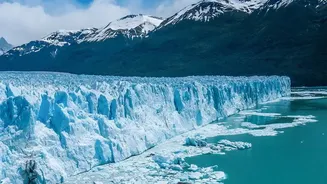
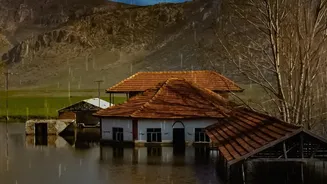
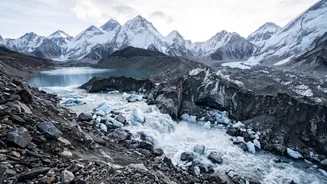
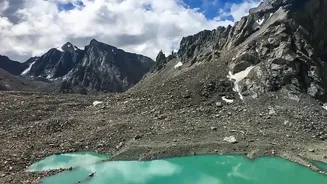
Lake Outburst Flood, or GLOF, is a sudden and powerful release of water from a lake formed by melting glacier ice. Imagine a natural dam made of rock and ice holding back a massive volume of water. As temperatures rise, glaciers melt faster, feeding these lakes and simultaneously weakening the fragile dams holding them in place. When the dam fails, it unleashes a torrent of water, mud, and debris downstream, often with the force of an inland tsunami. These events can destroy entire villages, bridges, and critical infrastructure in minutes, leaving little time for evacuation.
A Ticking Time Bomb in the Mountains
The Hindu Kush Himalaya region is a hotspot for GLOF risks. According to reports released ahead of the COP31 climate summit, these mountains are warming at an accelerated rate. A global temperature rise of 1.5°C could mean warming of up to 2.2°C in the Himalayas. This rapid warming is causing glaciers to lose mass 65% faster than just a decade ago, feeding thousands of glacial lakes. Studies show the number and size of these lakes have grown rapidly, and the frequency of GLOF events has increased fivefold since 1950, primarily driven by climate change. Ice avalanches and intense rainfall are the most common triggers. With over 400 potentially dangerous glacial lakes identified across the region, many communities live under a constant, often unknown, threat.
The UN's Grave Assessment for India
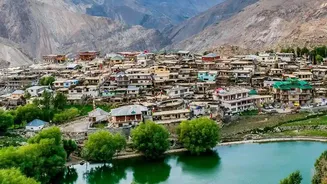
While the threat is regional, recent UN-linked studies highlight India's extreme vulnerability. A pre-publication study examining the Hindu Kush Himalaya region found that although India ranks third in the number of GLOF events, it has suffered the highest number of deaths, with over 6,100 fatalities reported between 1835 and 2025. Globally, 15 million people are at risk from GLOFs, with over half living in just four countries: India, Pakistan, China, and Peru. The UN has warned that millions of people and critical infrastructure along Himalayan riverbanks are at risk, with entire areas potentially becoming uninhabitable. Recent events, such as the October 2026 GLOF in Bhutan that put downstream areas in West Bengal and Assam on high alert, serve as a stark reminder of this transboundary danger.
A Race Against a Deluge of Water
The warnings are not just about future risk; they are a call for immediate action. The UN and other international bodies emphasise the urgent need for better monitoring and early warning systems. Currently, only a tiny fraction of the estimated 40,000 glaciers in the Himalayas are regularly monitored. Experts stress that without comprehensive mapping of high-risk areas and robust warning networks, predicting these disasters in time is nearly impossible. Some mitigation efforts are underway. In Nepal, for example, a project is set to begin in 2026 to lower the water levels of four high-risk lakes. However, adaptation efforts across the region are considered inadequate, hampered by funding gaps and a lack of transboundary coordination to address floods that don't respect international borders.