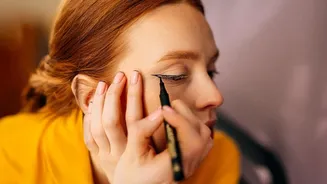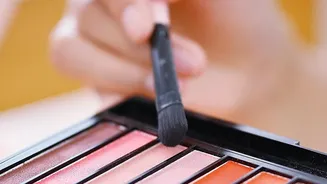







Diwali's bright lights are best enjoyed with sparkling eyes, not irritated ones. Long celebrations with heavy makeup can lead to redness and discomfort. Here’s how to keep your eyes safe and comfortable from the first puja to the final party.
Preparation Is Your First Defence
Before you
even pick up a brush, eye safety begins with smart choices. Always start with a clean base by washing your hands and face. This simple step prevents the transfer of bacteria to your products and, ultimately, your eyes. If you're trying a new product for your festive look, perform a patch test on your wrist to check for allergic reactions before applying it to the delicate eye area. Opt for products that are labelled 'hypoallergenic' or 'ophthalmologist-tested', especially if you have sensitive skin. These are formulated to minimize the risk of irritation. And remember, your tools matter too. Ensure your brushes and applicators are clean before every use.
Safe Application for a Flawless Look
How you apply your makeup is just as important as what you use. One of the most crucial rules recommended by eye care professionals is to avoid applying eyeliner or kajal directly on your waterline—the inner rim of your eyelid. This can block the tiny oil glands that are essential for healthy tears and eye lubrication, leading to dryness and irritation. When using glitter or shimmer eyeshadows, be extra cautious. Loose particles can easily fall into the eye, causing a scratching sensation or even a corneal abrasion. Cream-based shadows are often a safer alternative to loose powders. Finally, never apply makeup in a moving vehicle; a sudden bump could lead to an accidental poke in the eye.
Do Not Share Your Sparkle
During festive get-togethers, it might be tempting to share a kohl pencil or mascara with a friend or family member, but this is a major risk. Sharing eye makeup is one of the fastest ways to spread bacteria and viral infections, like conjunctivitis (pink eye). Every time a mascara wand or eyeliner tip touches someone's skin or lashes, it picks up bacteria. Using someone else's products—or letting them use yours—introduces foreign germs to your eye area. Keep your makeup personal to ensure you're only sharing the joy of the festival, not an eye infection.
The All-Important Removal Process
After a long night of celebrations, it's essential to remove every trace of makeup before sleeping. Sleeping in eye makeup can clog glands, leading to styes, blepharitis (eyelid inflammation), and significant irritation. The key is to be gentle. Aggressively rubbing or scrubbing the delicate skin around your eyes can cause damage and lash breakage. Opt for a remover designed for waterproof or longwear makeup, like an oilbased cleanser or a biphase remover. Apply the remover to a soft cotton pad, hold it over your closed eye for 10–15 seconds to dissolve the makeup, and then gently wipe downwards. This allows the product to do the work, not forceful rubbing. Follow up with a gentle face cleanser to wash away any remaining residue.
Know the Warning Signs
Your eyes will tell you when something is wrong. If you experience symptoms like persistent redness, itching, burning, excessive watering, swelling, discharge, or blurred vision, stop using all eye makeup immediately. These could be signs of an allergic reaction, irritation, or a developing infection. Do not try to mask the problem with more makeup. If the symptoms persist for more than a day or two after you've stopped using the products, it's time to consult an eye doctor for a proper diagnosis and treatment. It's also wise to discard any products you were using when the irritation started to avoid re–infection.