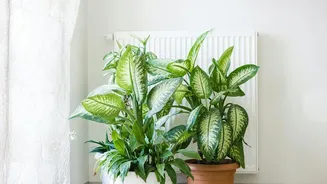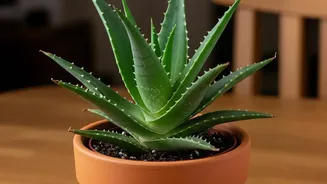





Ever notice your favourite houseplant starting to lean, looking a bit lopsided with all its best leaves facing the window? This common issue has a simple fix: rotation. Learning to turn your plants consistently is key to balanced, healthy growth.
Why Rotation Is a Plant's Best Friend
The tendency
for a plant to grow towards its light source is a natural survival instinct called phototropism. This process is driven by plant hormones called auxins, which accumulate on the shadier side of the stem. These auxins cause the cells on the darker side to grow longer, effectively making the plant bend and stretch toward the light to maximise its energy absorption. While brilliant for survival, this can result in an uneven, sparse, or 'leggy' appearance in our homes. Regular rotation counteracts this by distributing sunlight evenly to all parts of the plant. This ensures that growth is strong and symmetrical, leading to a fuller, healthier, and more aesthetically pleasing plant.
Creating a Consistent Rotation Schedule
The key to successful plant rotation is consistency. While some sources suggest a turn every few days, a widely recommended and easy-to-remember schedule is to give your plant a quarter turn (90 degrees) every time you water it. For many common houseplants, this translates to a rotation every one to two weeks, which is frequent enough to prevent a strong lean from developing. Faster-growing plants or those in lower light might need more frequent turns. The goal is to make it a seamless part of your plant care routine. Pick a direction—clockwise or counter-clockwise—and stick with it. Some owners even place a small sticker or mark on the pot to keep track of which side was last turned away from the light.
The Right Way to Rotate
For most plants, a simple quarter turn is ideal. A sudden 180-degree turn can be a shock, forcing the plant to drastically reorient all its leaves, which may cause unnecessary stress. If you have a plant that has already developed a significant lean, you can correct it over time. Start by turning the neglected, less-developed side to face the light source. The plant will gradually begin to straighten out and fill in as that side receives more light and energy. Beyond just turning, use this time as an opportunity to inspect your plant. Check for pests, dust on the leaves, or any signs of distress, which helps you catch potential issues before they become major problems.
Are There Plants You Shouldn't Rotate?
While most houseplants benefit from rotation, there are some exceptions. Certain plants are sensitive to changes in their orientation, especially once they've established a 'front' and 'back'. Flowering plants that have already set buds, like some orchids and Christmas cacti, should not be rotated. Changing their orientation to the light source can cause them to drop their buds before they have a chance to bloom. Additionally, some vining or climbing plants like Monstera and certain Philodendrons develop a clear growth pattern based on their light source; rotating them can disrupt this natural structure. For these plants, it's often better to accept their natural asymmetry or place them where they get overhead light, such as directly under a grow light, which reduces the need for rotation.