

Early Month Moon and Planet Dances
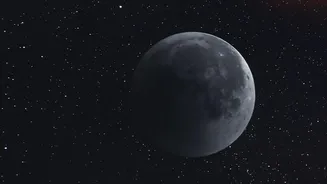
The month begins with a series of beautiful pre-dawn encounters. Keep an eye on the eastern sky about three in the morning on September 6 and 7, where the waning crescent Moon will appear very close to Mars. The pairing will be close enough to cover with three fingers
held at arm's length. Just 90 minutes later, the giant planet Jupiter will rise, adding to the spectacle. On the morning of September 8, the Moon continues its journey, passing close to Jupiter. For some observers in eastern Russia, the Moon will actually pass in front of Jupiter in an event called an occultation. For most, it will simply be a stunningly close pairing visible from around 4 a.m. until sunrise.
The Best Nights for Deep Sky Views
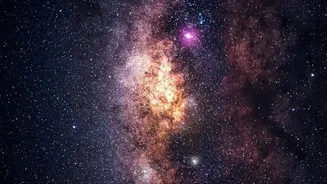
For those who love a truly dark sky, circle September 11 and 12 on your calendar. This is the New Moon, when the sky is at its darkest and free from moonlight. It’s the perfect opportunity to head away from city lights to a national park or other dark-sky location. These nights offer one of the last best chances of 2026 to see the bright core of our own Milky Way galaxy before it sinks below the horizon for the winter. With binoculars or a small telescope, you can also hunt for faint galaxies and nebulae.
Dazzling Venus Reaches Peak Brightness
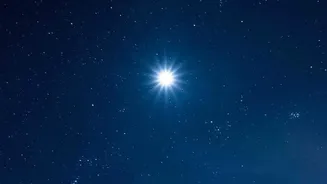
The brilliant 'Evening Star', Venus, will be unmissable throughout September. On September 14, a thin crescent Moon will join Venus in the western sky just after sunset, a beautiful sight even in twilight. Then, on September 18, Venus reaches its greatest brilliancy for the year, shining at a stunning magnitude of -4.8. It will appear as a blazing point of light low on the western horizon shortly after the sun goes down. Interestingly, through a telescope, the planet would appear as a thin crescent, its brightness a result of its relative closeness to Earth.
A Minor Meteor Shower
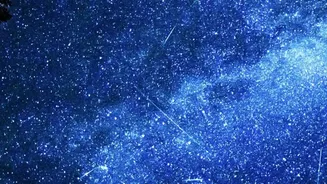
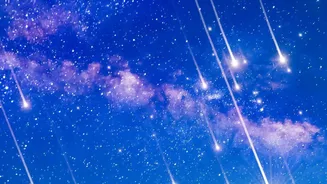
While September doesn't host a major meteor shower like August's Perseids, it does offer a minor one worth noting. The September Epsilon Perseids will be active from September 5 to 21, with its peak activity expected on September 9. Because the peak occurs near the New Moon, the sky will be dark and viewing conditions will be excellent. From a dark location, you might spot up to five faint meteors per hour emanating from the constellation Perseus. It's a subtle shower, but a rewarding one for patient observers.
Autumn Arrives with the Equinox
The official start of autumn in the Northern Hemisphere arrives on September 22. The autumnal equinox will occur at 00:06 UTC on September 23, which corresponds to the evening of September 22 for observers in the Americas. On this day, the Sun shines directly over the Earth's equator, and day and night are of approximately equal length across the globe. This astronomical event also marks the beginning of spring for the Southern Hemisphere. For skywatchers, the equinox periods are often associated with an increased chance of seeing auroras.
The Famous Harvest Moon
September's full moon, which peaks on Saturday, September 26, is the famous Harvest Moon. This name is given to the full moon that falls closest to the autumnal equinox. The Moon will officially be at its fullest during the daytime for North American observers, but it will appear perfectly full on the nights of both September 26 and 27. Look for it rising in the east around sunset, when it may appear especially large and golden due to the 'moon illusion'. This year, the Harvest Moon will have a companion: the ringed planet Saturn will rise shortly after the Moon and travel alongside it throughout the night.
Constellations to Find
As the sky darkens earlier, it becomes a great time to learn some new constellations. Look for the distinctive 'W' shape of Cassiopeia high in the northeastern sky. In the south, you can find the 'Teapot' asterism within the constellation of Sagittarius. The Andromeda Galaxy, the most distant object you can see with the naked eye, is also well-placed for viewing all night long. Finding these celestial landmarks is a rewarding way to get to know the map of the night sky.