





In a major stride for Indian biotechnology, Hyderabad startup PopVax has launched its 'RNA Foundry', a facility dedicated to creating personalised cancer vaccines using AI and mRNA technology, a combination that promises to reshape cancer treatment.
A New Frontier in Cancer Treatment
Hyderabad-based
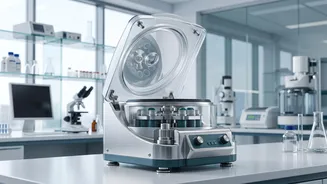
biotechnology startup PopVax has opened a new research, development, and manufacturing facility aimed at one of medicine's greatest challenges: cancer. Called the RNA Foundry, this hub will focus on developing personalised cancer vaccines by harnessing the power of messenger RNA (mRNA) and artificial intelligence (AI). Unlike traditional preventative vaccines, these are therapeutic vaccines designed to treat existing cancer by training a patient's own immune system to identify and destroy tumour cells. The facility, launched in collaboration with Stochastic Sciences, aims to produce over 100 patient-specific vaccine candidates in the next year, marking a significant step for India's role in cutting-edge medical research.
The Science: How AI and mRNA Team Up
The technology at the heart of PopVax's work became a household name during the COVID-19 pandemic. An mRNA vaccine works by delivering a set of genetic instructions to our cells. For cancer treatment, instead of instructing cells to build defenses against a virus, the mRNA tells them to produce specific proteins, called neoantigens, that are found on the surface of a patient's unique cancer cells. The immune system then learns to recognise these markers and attack the cancer. This is where AI becomes crucial. Every tumour is genetically different. PopVax uses AI and machine learning to rapidly analyse the genetic data from a patient's tumour, predict which neoantigens will trigger the strongest immune response, and then design the optimal mRNA sequence to encode them. This AI-driven process dramatically speeds up the design phase, making personalised treatment feasible.
Why Hyderabad’s Genome Valley Is the Perfect Hub
The choice of Hyderabad for the RNA Foundry is no coincidence. The city is home to Genome Valley, India's first and largest organised life sciences cluster. This sprawling hub hosts over 200 biotech and pharmaceutical companies and produces roughly one-third of the world's vaccine doses. By setting up shop in Genome Valley, PopVax taps into a rich ecosystem of talent, infrastructure, and supply chains. The Telangana government has actively promoted the region as a global hub for drug discovery and development, fostering an environment where innovative startups can thrive. This strategic positioning allows PopVax not only to conduct advanced research but also to handle manufacturing inhouse, a critical advantage in the fast-moving field of personalised medicine.
The Promise of Personalised Medicine
The approach taken by PopVax represents a paradigm shift from one size fits all cancer treatments to highly individualised therapies. Because each vaccine is tailored to the specific mutations in a patient's tumour, it promises a more targeted attack on cancer cells while sparing healthy tissue. This method has shown significant promise in early clinical trials for cancers like melanoma and pancreatic cancer. PopVax founder Soham Sankaran, partly inspired by a personal family experience with cancer, aims to make this advanced therapy more accessible. The company's platform uses a fridge stable lipid nanoparticle (LNP) formulation, which bypasses the ultra cold storage requirements that limited early mRNA vaccines and could be a game changer for distribution.
The Road Ahead: Challenges and Hopes
While the potential is enormous, the journey for personalised cancer vaccines is just beginning. Each vaccine is essentially a new drug, requiring rigorous testing and clinical trials to establish safety and effectiveness before it can be widely used. The process, from sequencing a tumour to delivering a finished vaccine, is complex and costly, though PopVax aims for a turnaround time of just eight to ten weeks. However, the launch of the RNA Foundry is a clear signal of intent. It positions India not just as the 'pharmacy of the world' for generic drugs but as a key player in developing the next generation of innovative, life saving therapies. This facility represents a powerful fusion of data science and biology that brings new hope to the fight against cancer.