


A Frozen Treasure in Perpetual Night
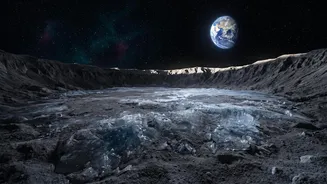
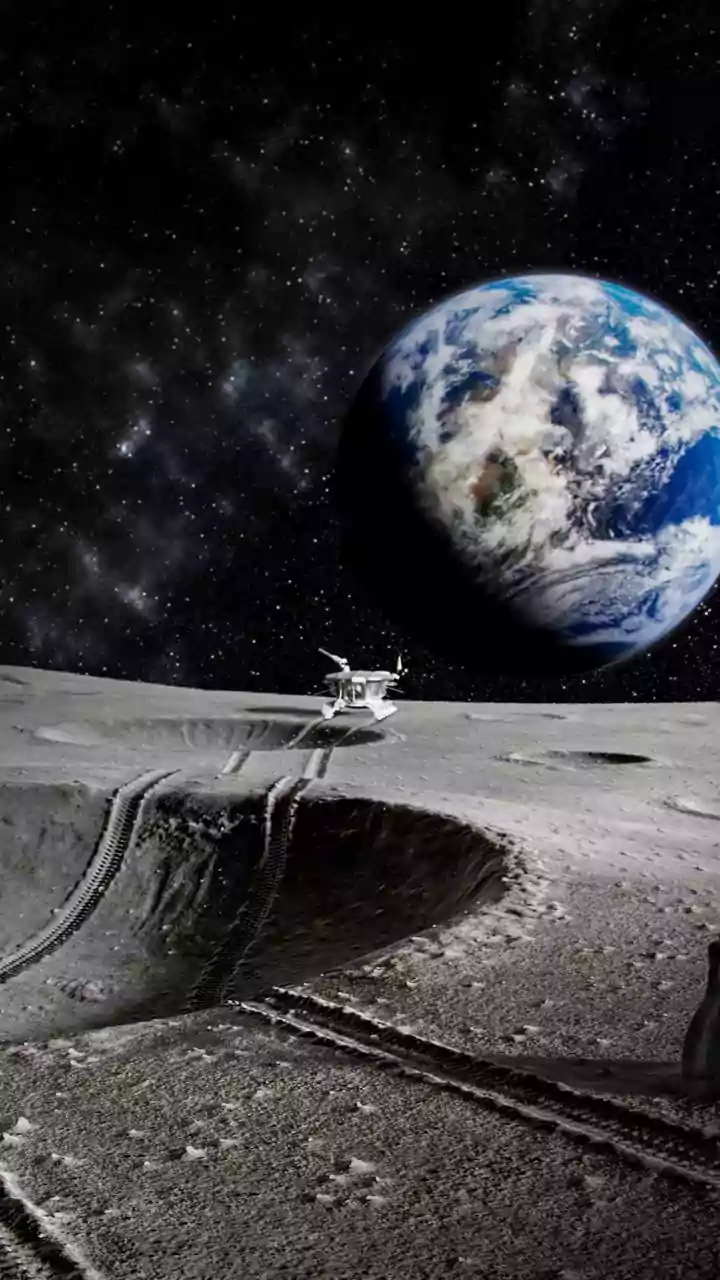
The key to the Moon's future lies in its coldest, darkest places. At the lunar poles, the sun's angle is so low that the floors of some craters have not seen sunlight for billions of years. These permanently shadowed regions (PSRs) are incredibly cold,
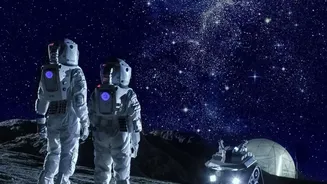
with temperatures dipping below -230°C. In these frigid traps, water, likely delivered by comets and asteroids over eons, has accumulated as ice mixed in with the lunar soil, or regolith. While initial estimates of vast, thick sheets of ice have been tempered by recent studies suggesting the deposits might be patchier, the presence of water is confirmed. This isn't just a scientific curiosity; for programs like NASA's Artemis, which aims to establish a long-term human presence on the Moon, this ice is the most valuable local resource imaginable.
From Lunar Ice to Rocket Fuel
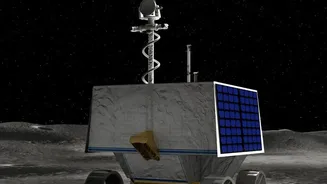
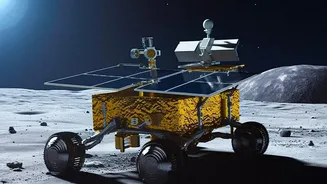
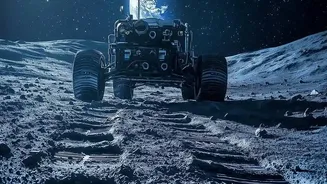
So, how does frozen dirt become rocket fuel? The process is a brilliant application of chemistry known as in-situ resource utilization, or ISRU. First, robotic rovers would excavate the ice-rich regolith from the shadowed craters. This material is then heated in a reactor, causing the ice to sublimate—turn directly from a solid into water vapor. The vapor is captured and then condensed back into liquid water. From there, a well-known process called electrolysis takes over. An electric current is passed through the water, splitting the H₂O molecules into their constituent parts: hydrogen and oxygen. These two elements, when cryogenically cooled into liquids, are the most powerful and efficient chemical rocket propellant known. The oxygen also serves a dual purpose, providing breathable air for astronauts.
The Game-Changing Economics of Space
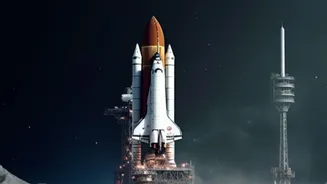
The primary reason lunar water is so revolutionary comes down to one thing: weight. Launching anything from Earth is incredibly expensive due to our planet's strong gravity. Every kilogram sent to the Moon has a staggering price tag. Some estimates place the cost of launching a single gallon of water at over $80,000. A spacecraft heading to Mars needs a massive amount of propellant, which means most of its launch weight is just the fuel needed for the journey. This is known as the tyranny of the rocket equation. But if you can manufacture that propellant on the Moon, the entire economic model of space travel flips on its head. The Moon has only one-sixth of Earth's gravity, making launching from its surface far easier and cheaper. Instead of hauling tonnes of water and fuel from Earth, future missions could simply stop at a lunar base to top up their tanks.
The Moon as a Gateway to the Solar System
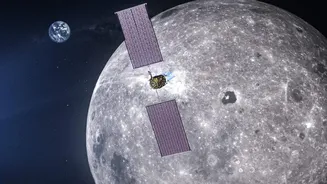
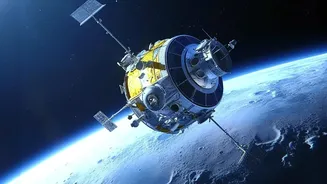
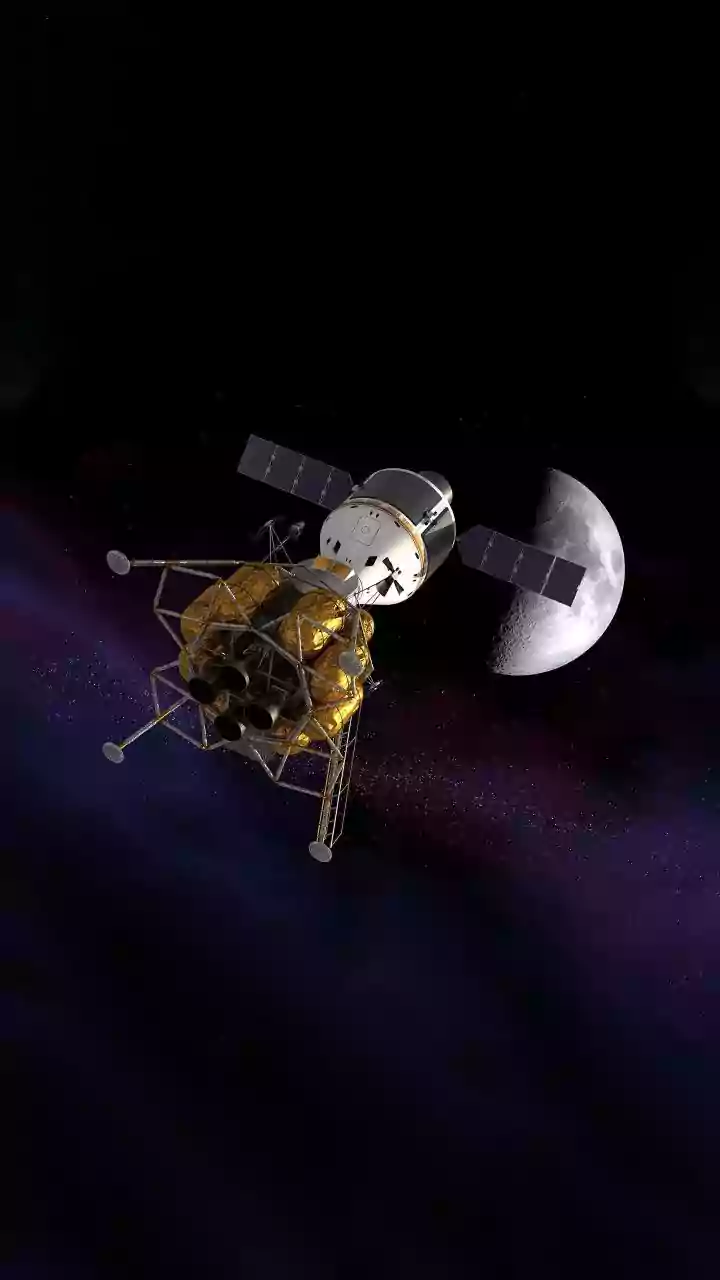
With the ability to refuel, the Moon transforms from a destination into a critical piece of infrastructure—a cosmic gas station. This makes ambitious, long-duration missions to Mars and beyond far more feasible. A crewed mission to Mars could launch from Earth with only enough fuel to get to the Moon, pick up the propellant needed for the long voyage to the red planet, and potentially refuel again for the return journey. This dramatically reduces the initial launch mass required from Earth, allowing for larger habitats, more scientific equipment, and enhanced crew safety systems. Agencies like NASA are actively developing the technologies to make this happen, from rovers designed to operate in extreme cold to advanced electrolysis and liquefaction systems that can reliably produce and store propellant on the lunar surface.
Challenges on the Horizon
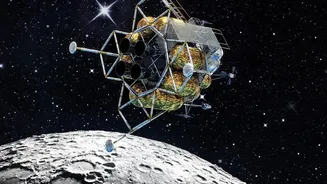
The vision is compelling, but the path is not without its difficulties. The technology for mining and processing lunar ice must be robust enough to operate in one of the most hostile environments imaginable: a near-perfect vacuum with abrasive dust, extreme temperature swings, and high radiation. Engineers must design robotic systems that can function for long periods in the pitch-black, ultra-cold craters without direct human intervention. Furthermore, we still need more detailed maps of where the most concentrated, accessible ice deposits are located. Upcoming missions, including robotic landers and rovers, are designed specifically to prospect these polar regions, drilling into the regolith to quantify the water reserves and pave the way for future ISRU operations.