






The Unseen Contributor to Urban Flooding
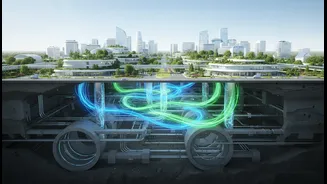
When we think about heavy rainfall, we focus on the water. But beneath our feet, another element plays a crucial role: air. This isn't just the air we breathe, but pockets of air trapped within the soil and, critically, in our urban drainage systems.
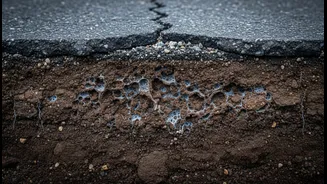
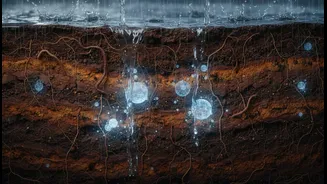
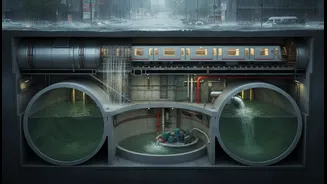
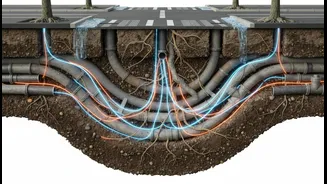
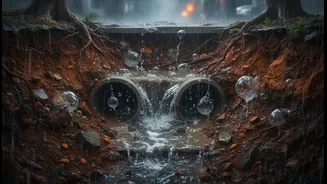
During a sudden downpour, water rushes to enter the ground and storm drains. However, the air already present in these spaces needs to escape to make way for the water. If this air can't get out fast enough, it gets compressed, creating back-pressure that can dramatically slow down or even block water from entering the soil and drains. This phenomenon, known as air entrapment, essentially creates an invisible barrier that forces rainwater to stay on the surface, leading to faster and more severe flooding.
How Trapped Air Makes a Bad Situation Worse
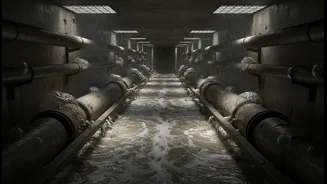
The mechanics are surprisingly simple. Imagine trying to pour water quickly into a bottle with a narrow opening; the air inside struggles to get out, causing the water to gurgle and spill. A similar thing happens underground on a massive scale. Research has shown that when air is confined, the rate at which water can infiltrate the soil can decrease by three to ten times. The trapped air builds up pressure, and in some cases, this pressure becomes so great that it can violently erupt from manholes, creating dangerous geysers of air and water. This not only prevents drainage but can also cause structural damage to the drainage infrastructure itself. The water that is unable to penetrate the ground or enter the drains has nowhere to go but sideways, rapidly inundating streets, homes, and businesses.
Why Modern Cities Are More Vulnerable
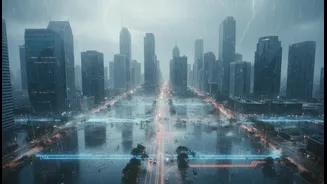
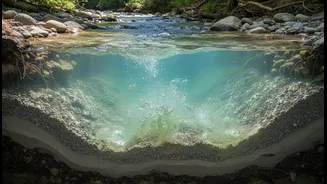
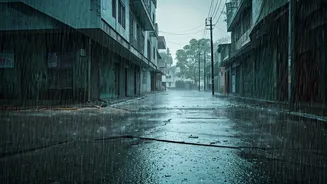
This problem is particularly acute in urban environments. The proliferation of impermeable surfaces like concrete and asphalt means that rainwater has fewer places to naturally soak into the ground. In natural landscapes, about 80% of rainwater infiltrates the soil, but in heavily built-up areas, that number can flip, with 80% becoming surface runoff. This directs massive volumes of water into drainage systems that were often not designed to handle such rapid inflow while also venting huge amounts of air. As cities expand, we replace natural, porous ground with compact surfaces, increasing both the volume and speed of runoff, which overwhelms drainage systems and worsens the air entrapment effect.
Rethinking Urban Design for a Wetter Future
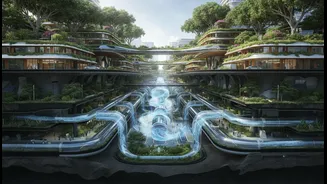
Understanding the role of trapped air is forcing urban planners and engineers to rethink how we design our cities. The solution isn't just about bigger pipes; it's about smarter design. One key area of focus is on improving ventilation in drainage systems to allow trapped air to escape more easily. Another, more holistic approach, involves what are known as 'sponge city' concepts. This means integrating more green infrastructure into the urban fabric. Solutions like permeable pavements, which allow water to seep through, rain gardens, and green roofs all help to reduce the volume of water rushing into drains at once. These nature-based solutions slow down runoff, allowing more time for water to infiltrate the ground naturally and reducing the pressure on our underground drainage networks.