



The Sun’s Invisible Threat
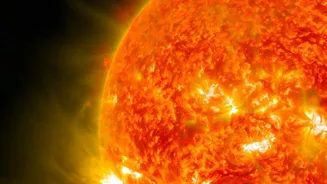
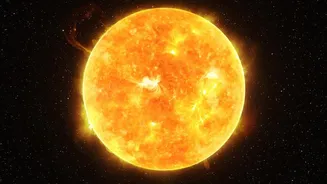
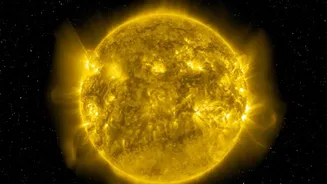
Our sun is not always the calm, steady presence it appears to be. It undergoes an approximately 11-year cycle of activity, and during its more active periods, it can unleash powerful eruptions. Two major types of eruptions pose a threat: solar flares
and coronal mass ejections (CMEs). A solar flare is an intense burst of radiation that reaches Earth in about eight minutes, capable of disrupting radio communications. The bigger danger to our power grid comes from CMEs—giant clouds of solar plasma and magnetic fields that travel more slowly through space. If a CME is aimed at Earth, it can slam into our planet's protective magnetic field, the magnetosphere, triggering a geomagnetic storm.
A Cosmic Overload on the Grid
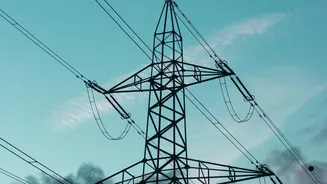
When a powerful CME interacts with Earth's magnetic field, it causes rapid fluctuations that create electrical currents on the planet's surface. These are known as geomagnetically induced currents, or GICs. These low-frequency currents seek out long conductors to travel through, making our sprawling high-voltage transmission lines perfect pathways. The problem arises when these GICs flow into the massive transformers at electrical substations. These transformers are designed for alternating current (AC), but GICs are more like direct current (DC). This unwanted current can saturate the transformer's core, causing it to overheat, absorb excess power, and inject harmful harmonics into the grid. In a worst-case scenario, this can lead to physical damage to transformers—which are difficult and time-consuming to replace—and trigger a cascade of failures resulting in widespread, long-lasting blackouts.
Our Eyes on the Sun
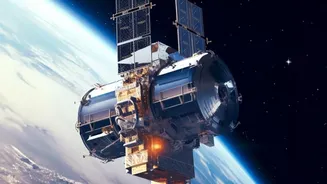
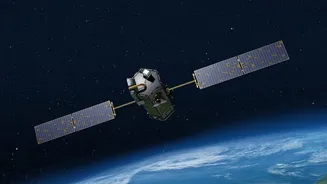
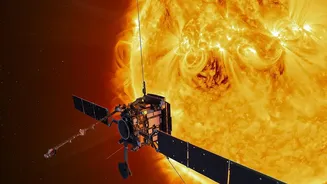
Preventing a blackout starts with seeing the storm coming. Scientists use a network of satellites and ground-based observatories to constantly monitor the sun. Key to this effort is NOAA’s Space Weather Prediction Center (SWPC), the official source for space weather forecasts in the United States. Satellites like the Deep Space Climate Observatory (DSCOVR) are positioned a million miles from Earth, directly in the path of any incoming solar wind. This gives forecasters a crucial 15- to 60-minute warning before a CME hits our planet. Other satellites in the GOES series monitor the sun’s activity, capturing real-time imagery of solar flares and CMEs as they erupt. On the ground, a vast network of magnetometers monitors changes in Earth's magnetic field, providing data to help model the storm's impact.
From Forecast to Action
Once the SWPC detects a threat, it doesn't just admire the view. Forecasters issue watches, warnings, and alerts, much like the National Weather Service does for terrestrial storms. These alerts are sent directly to critical infrastructure operators, including power companies. Using sophisticated models, like the U.S.-Canada Geoelectric Field Model, forecasters can now provide regional assessments, predicting which specific areas of the power grid are most likely to experience dangerous GICs. This level of detail allows grid operators to move from general awareness to targeted, preventative action, turning a broad threat into a manageable operational challenge.
Bracing for Geomagnetic Impact
Armed with a forecast, power grid operators aren't helpless. They have a playbook of actions to mitigate the storm's effects. Depending on the severity of the forecast, operators can re-route power, reduce the load on vulnerable parts of the system, or temporarily take sensitive equipment, like large transformers, offline to protect them from the damaging currents. This reduces the stress on the grid and prevents the kind of cascading failure seen during the 1989 Quebec blackout, which left millions in the dark. In some cases, physical hardware like neutral blocking devices can be installed to physically block GICs from entering transformers, offering another layer of defense.