







The Golden Rule of UPI Security
Let’s be direct: You NEVER need to enter your UPI PIN to receive money. Not for a refund, not for a prize, not from a buyer on a marketplace. Never. Your PIN is a key that unlocks your account to let money out. It is exclusively used for authorising payments
from your account—sending funds, paying a merchant, or checking your balance. Incoming transactions are automatic credits that require no action or approval on your part. Remembering this single distinction is the most powerful shield you have against the most common UPI scams.
How Scammers Exploit This Knowledge Gap
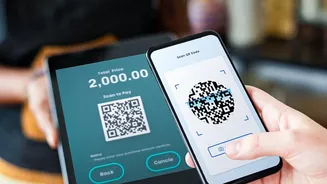
Fraudsters thrive by creating confusion between sending and receiving money. Their entire playbook is built on social engineering—tricking you into believing an outgoing payment is an incoming one. They create a sense of urgency, excitement, or fear to rush you into making a mistake. Some of the most prevalent scams include the QR Code scam, where a fraudster sends you a QR code and asks you to scan it and enter your PIN to receive a payment. In reality, scanning a QR code is always for making a payment. Another common method is the fake payment request, where a scammer uses the 'Request Money' feature on a UPI app. The notification on your phone might be cleverly worded to sound like you are about to get money, but approving it and entering your PIN actually sends your money to them.
The Anatomy of a UPI Transaction
To understand why the golden rule works, it helps to know what happens behind the screen. When you send money, you initiate a 'debit' transaction. Your UPI app asks for your 4 or 6-digit PIN to get your authorisation. The app encrypts this PIN and sends a request to your bank, which verifies it. If the PIN is correct, the bank debits your account and transfers the funds. Conversely, when someone sends money to you, it is a 'credit' transaction. The sender is the one authorising a debit from their account. Your bank simply receives the funds and credits your account. No action, and most importantly, no PIN is required from you to complete this process.
Other Scams to Watch For
While exploiting the PIN-to-receive confusion is the most common tactic, scammers have other methods. Phishing scams involve sending fake links via SMS or email that lead to counterfeit websites designed to steal your UPI credentials. Fraudsters also create fake customer care numbers for popular services and post them online; when you call for help, they persuade you to share your PIN or OTP, or to install a screen-sharing app like AnyDesk, which allows them to see everything you do on your phone. Official banks, the NPCI, and genuine companies will never call or message you to ask for your UPI PIN or OTP.
Your Complete UPI Safety Checklist
Beyond the golden rule, embedding a few simple habits can further secure your digital financial life. First, always verify the recipient's name in your UPI app before confirming a payment. Second, decline all unknown or unexpected payment requests. If you didn't initiate a transaction, don't approve it. Third, use the security features on your phone and within your UPI app, such as biometric locks (fingerprint or face ID), and keep your apps updated. Finally, be wary of anyone creating false urgency. Scammers pressure you to act before you can think. If a deal or situation feels too rushed or too good to be true, pause and double-check everything.