







The Deceptive Danger of Humidity
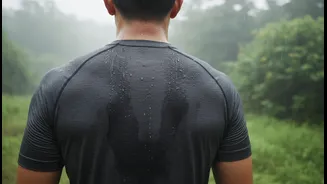
The primary danger on a rainy or overcast day is not the temperature on the thermometer, but the humidity in the air. Your body’s main cooling mechanism is sweat. As sweat evaporates from your skin, it takes heat with it, lowering your body temperature.
However, when the air is already saturated with water vapor—as it is on a humid, rainy day—your sweat has nowhere to evaporate. Instead, it just clings to your skin, leaving you feeling sticky and preventing your body from cooling itself effectively. This forces your internal systems, especially your heart, to work much harder to regulate your temperature, significantly increasing the risk of overheating.
Rethink 'Feels Like' Temperature
This is why meteorologists and health experts emphasize the Heat Index, or the 'feels like' temperature. This measurement combines air temperature with relative humidity to give you a much more accurate idea of how the weather will affect your body. For instance, an air temperature of 30°C might feel manageable, but if the humidity is at 80%, the Heat Index can make it feel like 38°C or higher. This difference is critical. Your body is responding to that higher, effective temperature, putting it under far more stress than the thermometer reading alone would suggest. More advanced metrics, like the Wet Bulb Globe Temperature (WBGT), are even used by athletes and occupational health experts to assess environmental stress, as they factor in temperature, humidity, wind, and solar radiation.
Know the Warning Signs
Because the danger is less obvious without the blazing sun, it's crucial to recognize the symptoms of heat-related illnesses. The first stage is often heat cramps, which are painful muscle spasms, usually in the legs and abdomen. This can progress to heat exhaustion, which is marked by heavy sweating, dizziness, fatigue, a fast but weak pulse, nausea, and headache. Your skin might feel cool and clammy. If you experience these symptoms, you must stop exercising immediately, move to a cooler place, and rehydrate. Left untreated, heat exhaustion can escalate to heatstroke, a life-threatening emergency where the body's temperature regulation system fails completely. Symptoms include confusion, a high body temperature (above 103°F or 40°C), hot and red skin (which may be dry or damp), a rapid pulse, and potential loss of consciousness.
Smarter Exercise Strategies for Humid Days
Exercising safely in humid conditions requires a different approach. First, always check the humidity and Heat Index, not just the temperature. If possible, exercise during the coolest parts of the day, which are typically early in the morning or later in the evening. Proper clothing is also key. Avoid cotton, which absorbs sweat and holds it against your skin. Instead, opt for lightweight, loose-fitting, moisture-wicking synthetic fabrics like polyester or nylon in light colors. These materials pull sweat away from your skin to the fabric's surface, where it has a better chance of evaporating. Hydration is non-negotiable. Drink plenty of water before, during, and after your workout. For longer sessions, a sports drink can help replace lost electrolytes. Finally, be prepared to adjust your workout. Reduce the intensity and duration, and take frequent breaks. A shorter, less intense workout is better than risking a heat-related illness.