




The Crimson Spice Explained
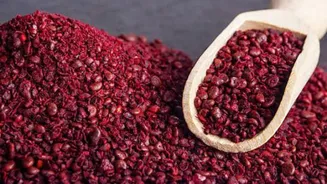
Sumac is a coarse powder made from the dried and ground berries of the wild sumac shrub, Rhus coriaria, which is common in the Mediterranean and Middle East. For centuries, it has been a staple in cuisines from Lebanon and Turkey to Iran. The berries are
harvested, dried, and ground to create the beautiful crimson-coloured spice you’ll find in stores. It’s also a key ingredient in the popular Middle Eastern spice blend za'atar. It’s important to note that this culinary sumac is completely different from poison sumac, which is a separate, non-edible plant.
A Zesty Flavour You Already Know
The magic of sumac lies in its taste: a bright, tangy flavour that is most often compared to lemon. However, it’s a more balanced and less sharp tartness than lemon juice, with subtle fruity and earthy undertones. Its primary flavour comes from malic acid, the same acid found in apples, which gives it a rounder sourness than the citric acid in lemons. The biggest advantage of sumac is that it delivers this acidic punch in a dry form. This means you can add brightness and cut through rich flavours without adding extra liquid, which can make salads soggy or change the texture of a dish.
Elevating the Humble Chickpea Salad
A sprinkle of sumac is transformative in a chickpea salad. Its acidity provides a perfect counterpoint to the earthy taste of the chickpeas and the richness of an olive oil or tahini-based dressing. Many recipes suggest massaging sliced red onions with salt and sumac before adding them to the salad. This not only softens the onions' bite but also infuses them with a tangy flavour that permeates the entire dish. For a simple but effective chickpea salad, combine chickpeas, diced tomatoes, bell peppers, fresh parsley, and the sumac-infused onions. Then, toss it all with a simple lemon juice and olive oil dressing for a refreshing and hearty meal.
More Meat-Free Magic
Sumac's versatility extends far beyond chickpea salads. Use it as a finishing spice on almost any vegetable dish. It’s particularly delicious on roasted vegetables like cauliflower, carrots, and Brussels sprouts, where it balances their caramelised sweetness. Sprinkle it generously over dips like hummus or baba ghanoush to add colour and a zesty finish. Mix it into Greek yogurt with a bit of garlic and lemon juice for a quick, tangy sauce perfect for dolloping on grain bowls or serving with grilled halloumi. You can even use it in marinades for tofu or paneer, or toss it through a warm pasta dish with tahini for a creamy, savoury sauce.
How to Buy and Use Sumac
When shopping for sumac, look for a vibrant, deep red or purplish colour, which indicates freshness. A dull, brownish powder may be old and will have lost much of its flavour. Some commercially available sumac includes added salt as an anti-caking agent, so it's a good idea to taste it before adding more salt to your dish. To get the most out of its bright flavour, it’s often best to add sumac towards the end of cooking or to use it as a finishing garnish. Heat can diminish its potency and vibrant colour. Stored in an airtight container in a cool, dark place, it will keep its flavour for several months.