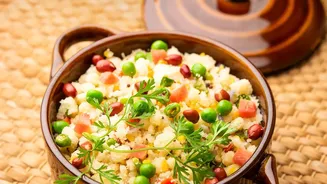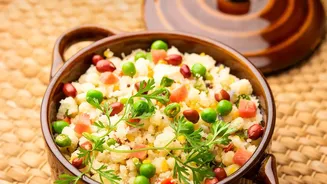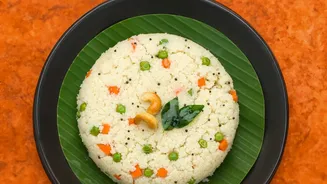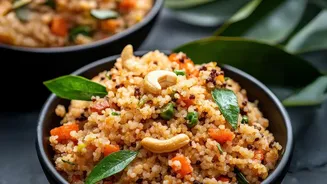






A warm bowl of upma is a comforting classic in many Indian homes. But a delicious debate lies at its heart: should it be plain and simple, or loaded with vegetables? This choice often comes down to regional traditions and personal taste.
The Soul of a Simple Dish
Upma is a thick,
savoury porridge, traditionally made from dry-roasted semolina, or rava. Its genius lies in its simplicity and speed. The basic process involves creating a flavourful tempering (tadka) of mustard seeds, lentils, curry leaves, and ginger in oil or ghee, to which water and the roasted rava are added. The semolina absorbs the water and fluffs up into a soft, satisfying meal. This humble dish, believed to have originated in South India, is known by many names—uppittu in Karnataka, uppumavu in Kerala, and upit in Maharashtra. While its core is straightforward, the beauty of upma is its incredible adaptability, which has led to countless variations across the country.
A Journey Through Regional Kitchens
The question of vegetables in upma is largely a regional affair. In Tamil Nadu, a traditional upma is often kept elegantly simple, focusing on the flavour of the roasted rava, onions, and tempering, sometimes with a garnish of grated coconut. Travel to neighbouring Karnataka, and you'll find 'Khara Bath', a popular and spicier version that is almost always cooked with a mix of vegetables like carrots, beans, and peas. This dish gets its distinct flavour from the addition of a special masala powder, such as vangi bath powder or sambar powder. In Maharashtra, 'upit' can also feature vegetables, but the emphasis is often on achieving a perfectly fluffy, non-sticky texture where every grain is separate. These regional preferences highlight a culinary divide: some view upma as a canvas for vegetables, while others believe its perfection lies in its unadorned form.
The Great Vegetable Debate
For purists, adding vegetables is a distraction. The argument is that they can interfere with the soft, delicate texture of the semolina and overpower the subtle flavours of the tadka. A well-made plain upma, perfectly roasted and seasoned, is a masterpiece of texture and taste that needs no additions. However, for many others, vegetables are not an addition but an integral part of the dish. They argue that vegetables like carrots, peas, beans, and tomatoes add moisture, flavour, and vibrant colour, transforming a simple grain dish into a complete, one-pot meal. This approach sees upma as a versatile base, perfect for incorporating seasonal produce and enhancing nutritional value.
The Uneniable Nutritional Facts
From a nutritional standpoint, the facts are clear: adding vegetables significantly boosts the health profile of upma. While plain semolina upma provides carbohydrates for energy, it's relatively low in fibre and micronutrients. Incorporating a variety of vegetables like carrots, peas, beans, and capsicum enriches the dish with essential vitamins, minerals, and dietary fibre. Fibre aids in digestion, helps regulate blood sugar levels by slowing down the release of energy, and promotes a feeling of fullness, which can help with weight management. Adding vegetables turns a carb_centric breakfast into a more balanced and nutrient_dense meal, making it a healthier choice to start your day.
Tips for the Perfect Vegetable Upma
If you're on team vegetables, a few tips can ensure a delicious outcome without making the upma sticky or mushy. It’s best to finely chop hard vegetables like carrots and beans so they cook quickly and evenly. Sauté the vegetables in the tempering after the onions become translucent but before adding the water. This allows them to soften and release their flavours. Be mindful of the water_to_rava ratio, which is key to a fluffy texture; a common ratio is between 2.5 to 3 cups of water for every 1 cup of rava than you may need to adjust slightly depending on the vegetables used. Roasting the rava properly until it is fragrant is a non_negotiable step to prevent lumpiness.