


Beyond 'Just Right' Temperatures
The habitable zone, first conceptualized in the 1950s, remains a crucial first-pass filter for astronomers. It narrows down the search from billions of planets to a more manageable number of candidates that could potentially host liquid water, which is
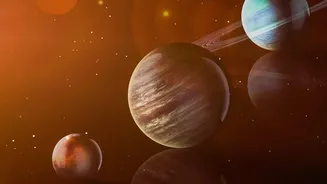
considered essential for life as we know it. If a planet is too close to its star, any water would boil away; too far, and it would freeze into a permanent sheet of ice. Our own solar system demonstrates this concept perfectly: Earth sits comfortably in the habitable zone, while Venus is a scorching greenhouse and Mars is a frozen desert, despite being on the zone's inner and outer edges, respectively. Finding a planet in this orbital sweet spot is an exciting first step, but it's far from a guarantee of habitability. In fact, relying on it alone can be misleading.
The Star of the Show
A planet's habitability is deeply connected to the star it orbits. Not all stars are created equal. Large, massive stars burn hot and die young, possibly not giving complex life enough time to evolve. Conversely, smaller, cooler stars like red dwarfs are incredibly long-lived but are known for their violent tempers. They can emit powerful flares and stellar winds, especially in their youth, that can strip a nearby planet of its atmosphere and bombard its surface with harmful radiation. Scientists now carefully study a star's stability, age, and magnetic activity. A calm, middle-aged star like our Sun provides a much more stable environment, making its planetary system a more promising place to look for life.
An Atmosphere of Importance
A planet in the right place needs the right wardrobe: an atmosphere. An atmosphere does much more than provide chemicals for life; it acts as a protective blanket. It traps heat to keep surface temperatures stable, shields the surface from dangerous cosmic rays and solar radiation, and can distribute heat around the planet. A planet that is too small may not have enough gravity to hold onto its atmosphere, which will slowly leak into space. A planet that is too large might accumulate a crushingly thick gas envelope like Jupiter. Using tools like the James Webb Space Telescope (JWST), scientists can now analyze the chemical makeup of exoplanet atmospheres. They look for gases like water vapor, methane, and carbon dioxide, which can provide clues not only about the planet's climate but also about potential biological or geological activity.
Planetary Bodyguards and Inner Life
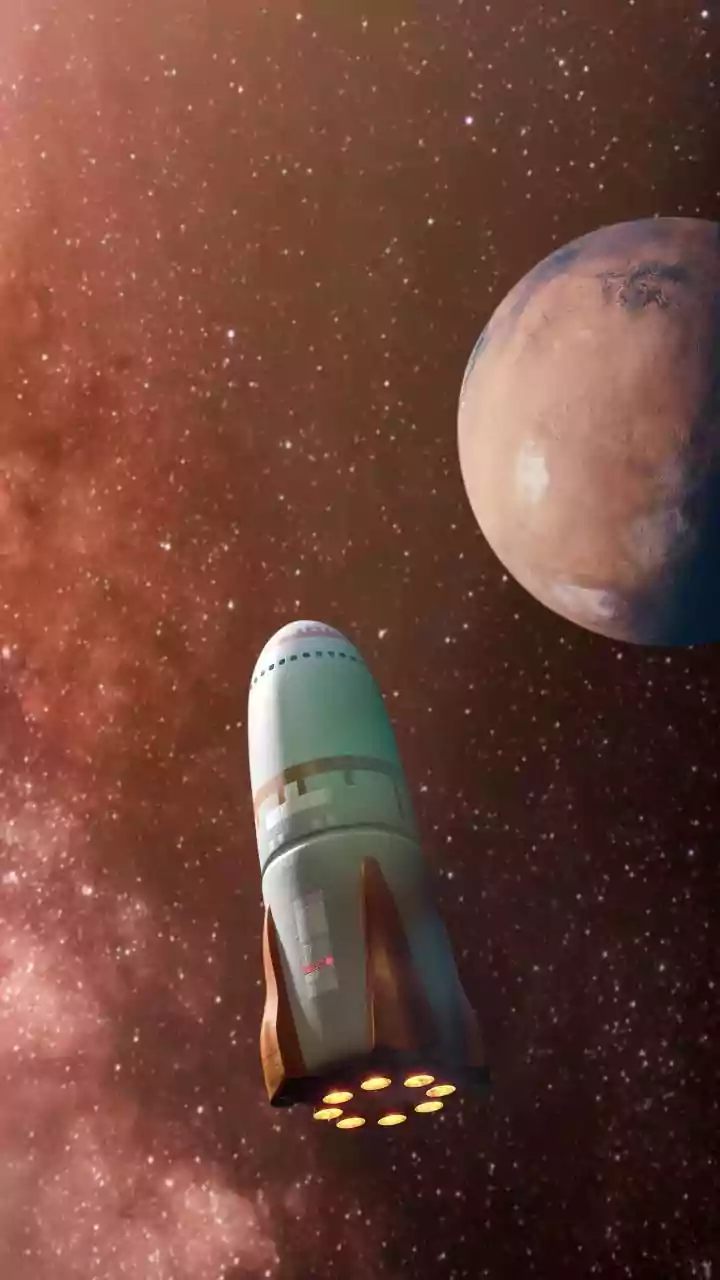
Just as important as a protective atmosphere is a planetary magnetic field. Generated by a rotating, molten core, a magnetosphere acts like an invisible shield, deflecting the worst of the stellar wind. Without a robust magnetic field, a planet's atmosphere can be slowly eroded over time, which is what scientists believe happened to Mars, turning it from a potentially watery world into the arid planet we see today. Furthermore, a planet's internal geology plays a vital role. Plate tectonics, the movement of a planet's surface crust, is crucial for recycling nutrients and regulating climate over geological timescales. It prevents a planet's climate from getting stuck in an extreme state. This combination of external shielding and internal dynamism is now seen as essential for sustaining a stable, habitable environment over the billions of years needed for life to emerge and thrive.