


The New Creative Co-Pilot
Across industries, from marketing to filmmaking, AI has become a powerful collaborator. It functions as a tireless assistant, capable of generating dozens of logo concepts, refining ad copy, or even brainstorming plot points in seconds. This automates
repetitive and time-consuming tasks, freeing up human professionals to focus on higher-level strategic thinking, ideation, and execution. Much like the calculator didn't eliminate mathematicians but instead allowed them to tackle more complex problems, AI is not erasing creatives; it's augmenting their capacity. Studies show that teams combining human insight with AI tools can see significant boosts in productivity and the quality of their creative output.
Where The Machine Falls Short
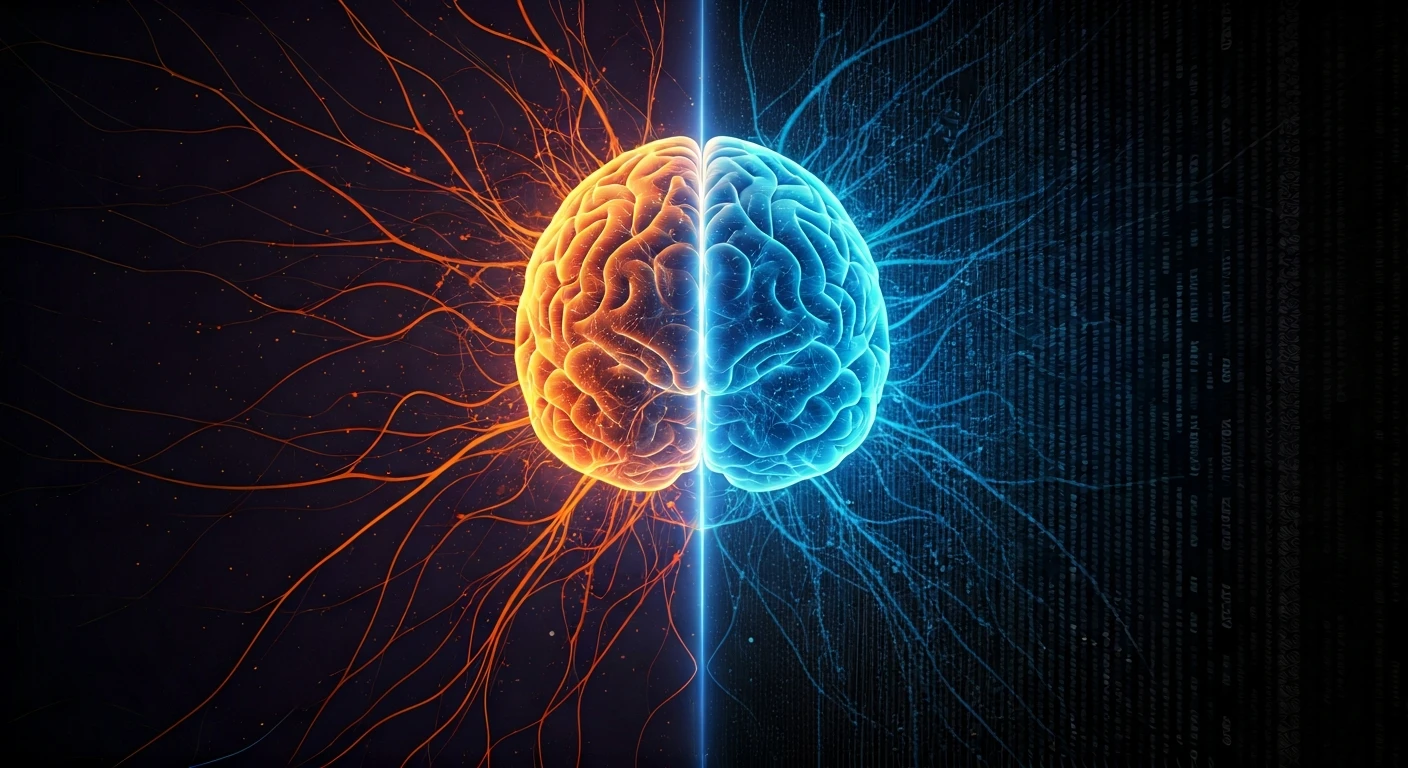
For all its computational power, AI has fundamental limitations. Current models generate outputs by recognizing and recombining patterns from vast datasets of existing human-created work. They do not create from lived experience, emotion, or consciousness. An AI can write a sad song by analyzing the characteristics of other sad songs, but it has never felt heartbreak. This is why AI-generated content can sometimes feel technically flawless yet hollow. It lacks what experts call emotional resonance, cultural nuance, and authentic connection—the very soul of impactful creative work. As one OpenAI leader noted, it's harder for AI to grade 'good design' because it involves taste and judgment, which are not as easily quantifiable as whether code compiles.
The Irreplaceable Human 'Edge'
The true 'edge' lies in the uniquely human qualities that AI cannot replicate: taste, intuition, ethical judgment, and storytelling. AI can produce a thousand images, but a human curator provides the vision and selects the one that tells the right story. It can generate data-driven insights, but a human strategist interprets that data through a lens of cultural context and brand identity. This human element is responsible for originality in the truest sense—creating something distinctive that stems from a unique perspective, not just a novel combination of existing patterns. Recent research comparing AI-generated images to those made by artists and the general public found that human creations were consistently rated as more original and interesting, especially when the AI lacked specific human guidance.
From Prompting to True Partnership
The future of creative work, therefore, is not about fearing AI but about mastering the art of collaborating with it. This requires a new set of skills that go beyond simple 'prompt engineering'. It's about becoming a creative director for an incredibly powerful, if literal-minded, assistant. The most valuable professionals will be those who can ask the right questions, guide the technology with a clear vision, and critically evaluate the outputs to refine them into something meaningful. This synergy—where AI handles the heavy lifting of generation and automation, while humans provide the direction, context, and final creative touch—has the potential to produce breakthroughs neither could achieve alone.