

A New Window to the Cosmic Dawn
For decades, our understanding of the early universe was based on a simple, elegant idea: that things started small and grew slowly. After the Big Bang, matter gradually clumped together, forming the first simple stars, which then assembled into small,
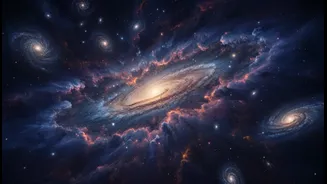
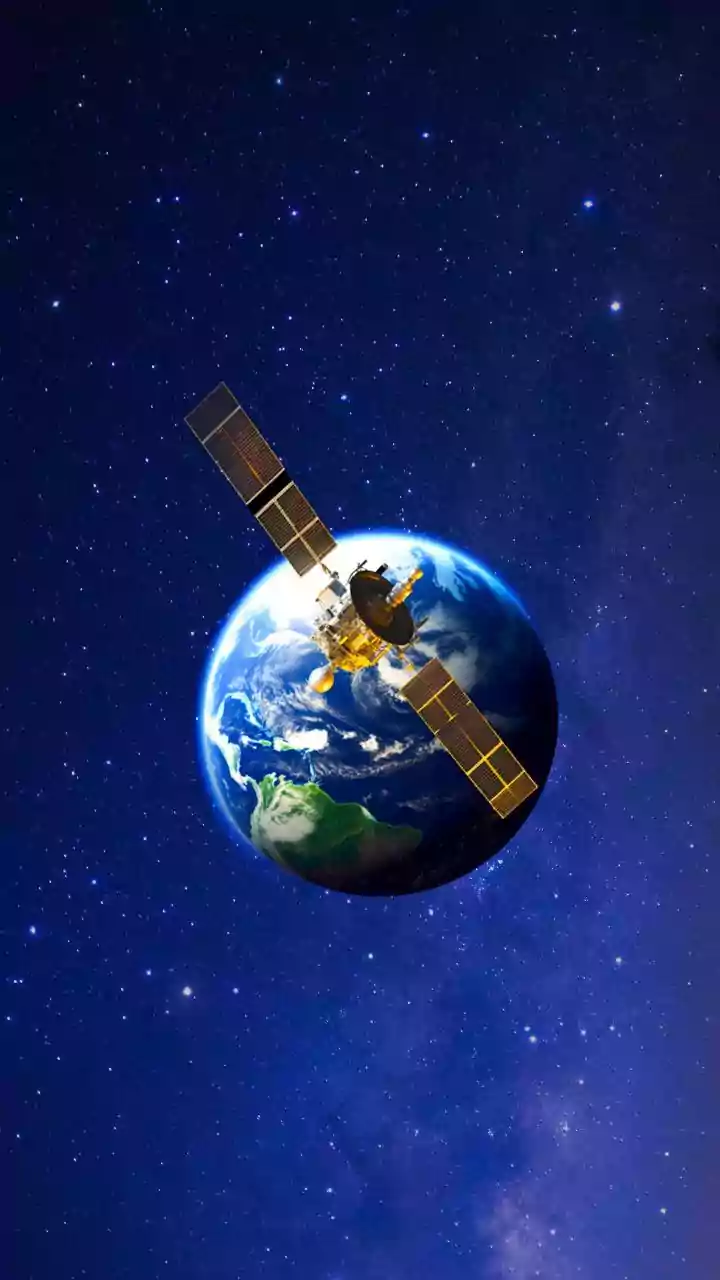
messy galaxies. Over billions of years, these early structures would merge and evolve, eventually creating the grand, well-ordered galaxies like our own Milky Way. But the James Webb Space Telescope (JWST) is showing us that this story might be missing a crucial chapter. With its powerful infrared eyes, Webb can peer back across more than 13 billion years of cosmic history, capturing light from the universe's infancy. And the pictures it's sending back are full of surprises.
Sophistication Where Simplicity Was Expected
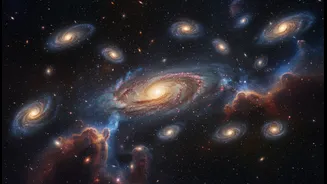
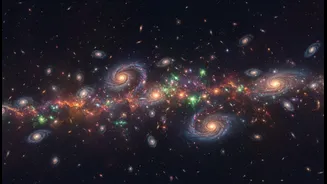
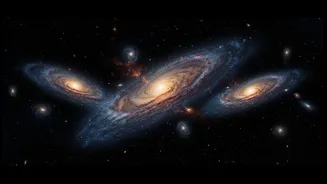
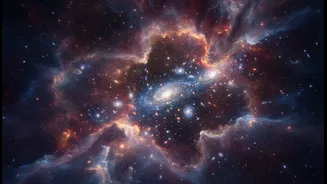
Astronomers expected to find small, clumpy, and chaotic galaxies in the early cosmos. Instead, Webb is revealing structures that look remarkably mature. Some of the earliest galaxies observed, existing when the universe was just a fraction of its current age, are unexpectedly bright and massive. More shockingly, some show evidence of complex features like ordered rotating disks and even the chemical signatures of heavy elements — materials that should have taken much longer to form and accumulate. In one instance, researchers found a group of at least five galaxies already merging just 800 million years after the Big Bang, a complex process thought to occur much later. In another, a galaxy seen just 330 million years after the Big Bang was already clearing the cosmic fog around it, a sign of intense, early star formation.
The Puzzle of Precocious Black Holes
Perhaps the most baffling discoveries relate to supermassive black holes. The standard model suggests that these cosmic giants grow in tandem with their host galaxies over billions of years. Yet, Webb has found evidence of enormous black holes, some hundreds or thousands of times more massive than the one in our galaxy, inside what should be 'baby' galaxies. This is like finding a fully grown adult living in a nursery; it just doesn't fit the expected timeline. Some observations have even shifted ideas about how black holes form, suggesting some were enormous right from their beginnings, without needing a massive host galaxy to nurture them. These findings challenge the fundamental idea that galaxies slowly build themselves and their central black holes over eons.
What 'Faster Evolution' Really Means
This flood of new data points to a 'faster cosmic evolution'. This doesn't mean time itself was flowing differently, but rather that the processes of building complex structures happened much more rapidly than our models predicted. Galaxies were seemingly able to organize themselves, form massive stars, and grow supermassive black holes far more efficiently in the harsh conditions of the early universe than previously thought. This forces scientists to reconsider some of their core assumptions. Were the first stars more massive and hotter than expected? Did galaxy mergers and interactions play an even bigger role from the very beginning? The current leading theory of the universe's evolution, known as the Lambda-CDM model, has been incredibly successful, but these new findings suggest it may be incomplete.