


Why Sitting Stiffens Your Body
Our bodies are designed for movement, not for being held in a static position for hours on end. When you sit for most of the day, a few things happen that lead to that stiff, achy feeling. Your hip flexors and hamstrings remain in a shortened position,
which can cause them to become tight and weak. Meanwhile, your glute muscles can effectively 'switch off' from lack of use. This muscular imbalance puts extra strain on your lower back and can lead to poor posture as your shoulders round forward. This prolonged inactivity also impacts the fascia, a web of connective tissue that surrounds all your muscles. Without regular movement, this tissue can become rigid and develop adhesions—often called 'knots'—which restrict flexibility and cause that sensation of deep stiffness.
The Science of the Roll
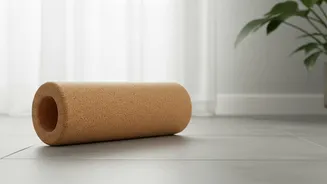
A foam roller is a tool for what’s known as self-myofascial release (SMR). While it might seem like you’re just rolling over sore spots, there are a few key mechanisms at play that help reduce stiffness. First, the direct pressure helps to mechanically break up those fascial adhesions, or knots. Think of it like a deep-tissue massage you give yourself; this process helps restore the normal, pliable texture of the tissue, allowing muscles to move more freely. Secondly, foam rolling significantly increases blood flow and circulation to the targeted areas. This rush of fresh, oxygenated blood helps nourish the muscle tissue and flush out metabolic waste products that can accumulate during periods of inactivity, thereby reducing soreness and improving recovery. Finally, there is a neurological benefit. Applying sustained pressure to a tight muscle stimulates sensory receptors that tell the nervous system to relax the muscle's tension, helping to release the chronic tightness developed over a day of sitting.
Key Areas for Desk Workers to Target
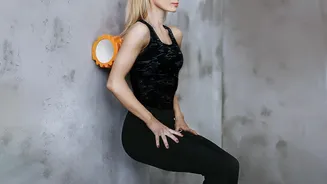
To get the most benefit, focus your foam rolling on the muscles most affected by sitting. The key areas for any desk worker are the upper back, glutes, hamstrings, and hip flexors. Rolling your upper back (thoracic spine) can help counteract the slouching posture many of us adopt at a computer. This helps to open up the chest and relieve tension in the shoulders and neck. Targeting the glutes is crucial for 'waking up' these powerful muscles after they’ve been inactive all day. From there, move to the hamstrings, which become notoriously tight from being in a flexed position. Finally, don't forget your quadriceps and hip flexors. Releasing tightness in the front of your hips can help restore proper pelvic alignment and relieve a common source of lower back strain.
Best Practices for Effective Rolling
To get started, remember that more pain doesn't equal more gain. The goal is to release tension, not punish your muscles. Move slowly over the muscle, and when you find a particularly tender spot, pause there for 20 to 30 seconds. Breathe deeply and try to relax into the pressure until you feel the tension start to dissipate. Avoid rolling directly over joints like your knees or, importantly, your lower back, as this can cause strain. For lower back relief, it's more effective to roll the surrounding muscles like the glutes and hips. If you're new to foam rolling, the initial discomfort is normal, but it should never be a sharp or unbearable pain. Start with a softer foam roller and sessions of just five to ten minutes, a few times a week, to allow your body to adapt.