




Bengal's Winter Delight: Nolen Gurer Payesh
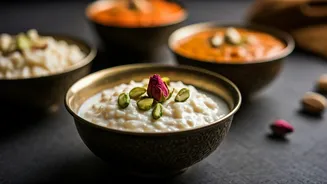
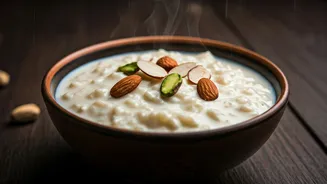
In West Bengal, the arrival of winter is synonymous with the arrival of Nolen Gur, or fresh date palm jaggery. This seasonal ingredient is the star of Nolen Gurer Payesh, a regional variation of kheer. [18, 31] The payesh, as kheer is known in Bengal, is typically
made with fragrant Gobindobhog rice, slow-cooked in full-fat milk until creamy. [26, 31, 32] What sets it apart is the addition of Nolen Gur, which imparts a uniquely smoky, caramel-like sweetness and a divine aroma that sugar simply cannot replicate. [18, 26] This dessert is a winter specialty, capturing the rustic, earthy flavours of the season in every spoonful. [18, 34]
Kerala's Festive Special: Palada Pradhaman
Travel south to Kerala, and you'll find payasam, the regional term for kheer. [14] During festivals like Onam, no sadya (feast) is complete without Palada Pradhaman. [7, 12] This dessert is made from 'ada,' which are small, sun-dried rice-flour flakes or pasta-like chunks. [12, 20] These are cooked in milk with sugar until the mixture becomes rich and creamy. [7, 20, 28] The authentic version gets its characteristic pale pink hue not from additives, but from the milk caramelizing during a long, slow-cooking process. [12, 27] Unlike many other kheers, traditional Palada Pradhaman is beautifully simple and doesn't typically include nuts or cardamom, letting the flavours of reduced milk and soft rice ada shine. [20]
The Creamy North Indian Classic: Phirni
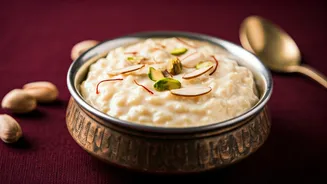
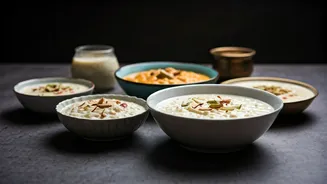
A beloved dessert across North India, especially in Punjab and Kashmir, is Phirni. [36, 43] While often compared to rice kheer, Phirni has a key difference: it's made with ground rice rather than whole grains. [36, 42] This creates a smoother, creamier, and more pudding-like texture. [36, 43] The milk is simmered until thick and then flavoured with cardamom and saffron, and garnished with pistachios and almonds. [36, 41] Traditionally, Phirni is served chilled in small earthen clay bowls called 'shikoras', which absorb excess moisture, making the dessert even thicker and infusing it with a subtle, earthy aroma. [36, 41] The Kashmiri version, known as Kong Phirin, often uses semolina (suji) instead of rice. [40]
Hyderabad's Eid Tradition: Sheer Khurma
A rich and festive dessert, Sheer Khurma is central to Eid celebrations in Hyderabad and across many Muslim households. The name itself is Persian, with 'sheer' meaning milk and 'khurma' meaning dates. [17] This celebratory dish is made with fine vermicelli (seviyan) cooked in milk. [19, 21] It’s generously loaded with dates, and a variety of fried nuts like almonds, pistachios, and cashews, which add richness and texture. [17, 19, 30] Flavoured with cardamom and sometimes saffron, Sheer Khurma is a luxurious, aromatic dessert that can be enjoyed either warm or cold. [19, 21]
Odisha's Baked Wonder: Chhena Poda
While not a kheer in the traditional sense of a milk pudding, Odisha's Chhena Poda deserves a special mention for being a milk-based dessert that is utterly unique. The name translates to 'burnt cheese', and it is essentially a baked dessert made from chhena (fresh cottage cheese), sugar, and flavourings. [5, 8, 10] Its origin is a tale of happy accident, credited to a confectioner in the early 20th century who left sweetened leftover chhena in a warm oven overnight. [5, 6, 8] The result was a stunning dessert with a caramelized, slightly burnt crust and a soft, delicate interior. It holds a sacred place in Odia culture and is even offered to Lord Jagannath in Puri. [6]