
The Sun’s Violent Outbursts
Our Sun might seem like a steady, benevolent star, but it has a dynamic and often violent nature. It goes through an approximately 11-year cycle of activity, moving from a quiet period to a turbulent 'solar maximum'. During these peaks, the Sun's tangled
magnetic fields can unleash tremendous energy in two main forms: solar flares and coronal mass ejections (CMEs). A solar flare is an intense burst of radiation that reaches Earth in about eight minutes. A CME, on the other hand, is a slower but more massive eruption, flinging a giant cloud of charged particles and magnetic fields into space that can take one to three days to arrive. Both phenomena are a major source of what scientists call 'space weather', and they pose a significant risk to technology both in orbit and on the ground.
How Space Weather Disrupts Satellites
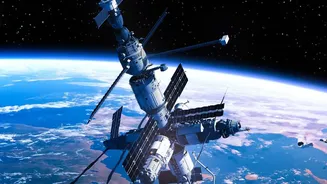
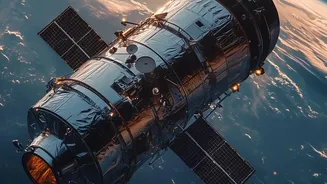
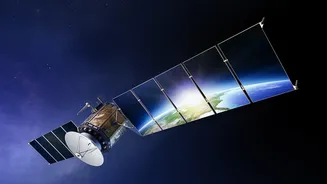
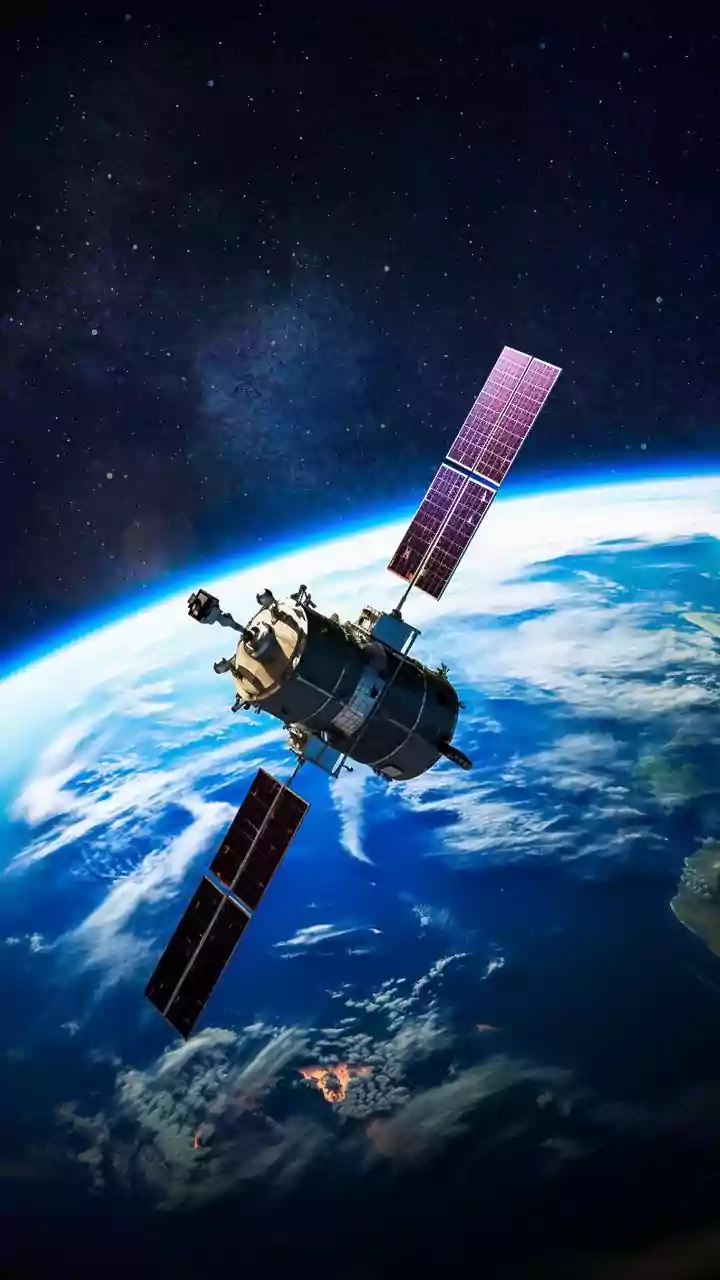
When a solar storm hits Earth, it can wreak havoc on our satellite fleet in several ways. The high-energy particles from a flare can directly damage sensitive electronics, causing malfunctions or even permanent failure—think of it like an overwhelming power surge for a delicate computer. These particles also interfere with the radio signals that satellites use to communicate with ground stations and with your devices. This can degrade or entirely block GPS signals, leading to navigation errors of 50 feet or more, and disrupt DTH television or satellite phone services. Furthermore, CMEs heat and expand Earth's upper atmosphere. This expansion increases the atmospheric drag on satellites in low-Earth orbit, which can slow them down, cause their orbits to decay, and increase the risk of collisions.
India’s Eye on the Sun: Aditya-L1
Recognising the threat, the Indian Space Research Organisation (ISRO) has taken a major step with its Aditya-L1 mission, India's first dedicated solar observatory. Launched in September 2023, Aditya-L1 is strategically positioned at Lagrange Point 1 (L1), a gravitationally stable spot about 1.5 million kilometres from Earth. From this vantage point, it gets a constant, uninterrupted view of the Sun, allowing it to detect solar storms heading our way. The spacecraft is equipped with seven distinct payloads designed to study the Sun's atmosphere, solar flares, and CMEs. By observing these phenomena before they reach Earth, Aditya-L1 provides crucial data that serves as an early warning system, helping to protect our vital space assets and ground-based infrastructure.
The Future of Solar Forecasting
Better monitoring is about more than just one observatory. The future of space weather forecasting lies in combining data from multiple sources and using advanced technology to create more accurate and timely predictions. Scientists are increasingly using artificial intelligence and machine learning algorithms to analyse vast amounts of solar data and predict the behaviour of phenomena like 'killer electrons' that damage satellite electronics. Global collaboration, such as with ESA's future Vigil mission, will create a network of observatories providing a more complete, 3D view of solar eruptions. For India, the vision is to develop indigenous state-of-the-art prediction models for flares and CMEs within the next decade, a crucial step for achieving self-reliance in protecting its national infrastructure.
The Payoff for a Digital India
So, why does this matter for the average person? Strengthening our satellite communication network has tangible benefits. It means more reliable navigation for cab drivers and delivery services, fewer dropped signals for satellite phone users in remote areas, and uninterrupted streaming of important events on your DTH connection. For the nation, it's even more critical. Protecting our satellites safeguards everything from military communications and disaster management systems to the power grid and the digital economy. As India's reliance on space technology for everything from agriculture to national security grows, a robust space weather prediction system is no longer a scientific luxury—it is an essential component of our national resilience.