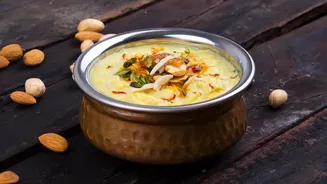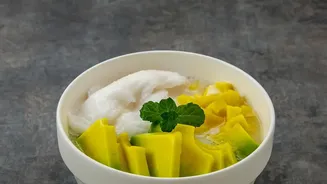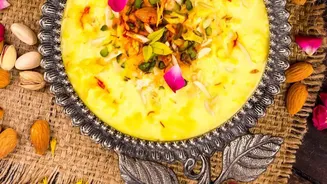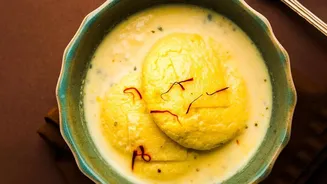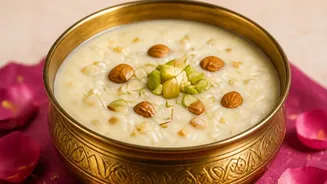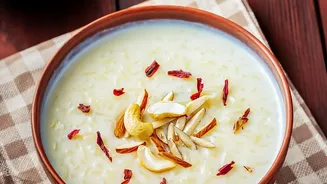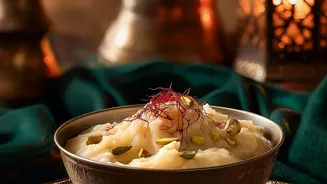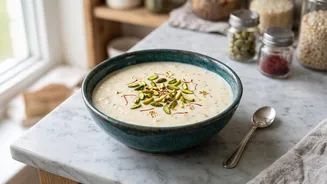



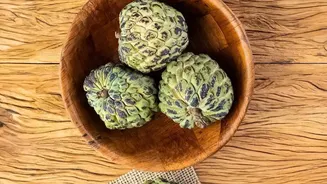


The arrival of Sitaphal (custard apple) season brings with it the opportunity to create some truly special desserts. This creamy, fragrant fruit transforms the classic phirni into an indulgent treat that is both refreshing and deeply comforting.
A Dessert with Royal Roots
Phirni
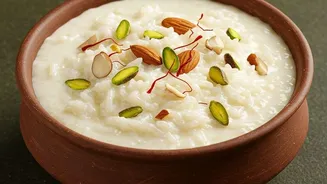
is a timeless Indian dessert with a history that traces back to the Mughal era, where it was considered a royal delicacy. Unlike kheer, which uses whole grains of rice, phirni is made with finely ground rice, giving it a distinctively smooth and velvety texture. The ground rice is slow-cooked in milk until it thickens into a luxurious pudding, traditionally flavoured with cardamom and saffron. Its origins are often linked to ancient Persian milk puddings, which were adapted and refined in the grand kitchens of the Indian subcontinent. This process created a dessert that is simple in its ingredients but sophisticated in its final form.
The Star of the Show: Selecting Your Sitaphal
The key to an exceptional Sitaphal Phirni is, of course, the fruit itself. Custard apples have a sweet, creamy pulp that is perfect for desserts. When selecting a sitaphal, look for one that feels slightly soft when you gently press it. A fruit that is too hard will be underripe, while one that is overly mushy may be past its prime. Before cutting the fruit, you can gently roll it on a countertop to help loosen the pulp from the skin and seeds. This small step can make the deseeding process much smoother, allowing you to extract the delicious flesh with ease.
The Essential Ingredients
To create this delightful dessert, you will need a handful of core ingredients. For the Phirni Base: - 1 litre full-fat milk - 1/4 cup Basmati rice, soaked for at least 30 minutes - 1/2 cup sugar (adjust to taste) - 1/2 teaspoon green cardamom powder - A pinch of saffron strands (optional) For the Sitaphal Pulp: - 2 large, ripe custard apples (should yield about 1 cup of pulp) For Garnish: - 2 tablespoons slivered pistachios and almonds
Step-by-Step Guide to Preparation
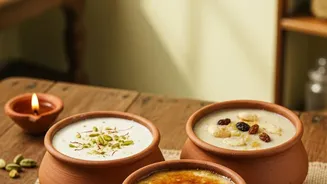
1. Prepare the Fruit: Start by extracting the pulp from the sitaphal. Cut the fruits in half and scoop out the flesh into a bowl. A simple trick to separate the seeds is to place the pulp in a chopper or food processor and pulse it for just one or two seconds at a time. This loosens the seeds without crushing them. You can then easily pick them out, leaving you with a creamy pulp. Set this aside. 2. Create the Rice Paste: Drain the soaked Basmati rice and grind it into a coarse, grainy paste using a little milk or water. Be careful not to grind it too fine, as a slightly granular texture is characteristic of authentic phirni. 3. Cook the Phirni: In a heavy-bottomed pan, bring the milk to a boil. Once it boils, reduce the heat to low and slowly add the rice paste, stirring continuously to prevent any lumps from forming. Cook this mixture on low heat for 15–20 minutes, stirring frequently, until the rice is fully cooked and the milk has thickened considerably. 4. Sweeten and Flavour: Add the sugar and cardamom powder to the thickened mixture, and stir until the sugar dissolves completely. If you are using saffron, you can add it at this stage as well. Continue to cook for another 5 minutes. 5. Cool and Combine: Turn off the heat and let the phirni cool down. It's important that the mixture is warm, not hot, when you add the fruit. Once it has cooled slightly, gently fold in the sitaphal pulp until it is well combined. 6. Chill and Serve: Pour the Sitaphal Phirni into traditional earthenware bowls (shikoras) or any serving dishes. Chilling the phirni in clay bowls helps absorb excess moisture, making it thicker and imparting a subtle earthy aroma. Garnish with slivered pistachios and almonds before refrigerating for at least 3–4 hours. Phirni is always best served chilled.
Tips for Perfect Phirni
For the creamiest texture, always use full-'fat' milk.' Remember that phirni thickens significantly as it cools,' so it is best to take it off the heat when it is still of a slightly pouring consistency—it should coat the back of a spoon.' Continuous stirring,' especially after adding the rice paste,' is crucial to achieve a smooth,' lump-'free' consistency.' Finally,' adding flavourings like cardamom powder and the fruit pulp towards the end of any cooking process helps retain their fresh aroma and taste.