




A New Look at Lunar Ice
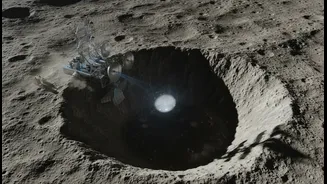
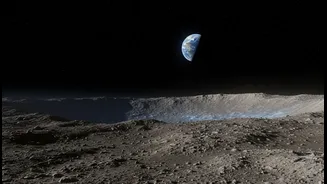
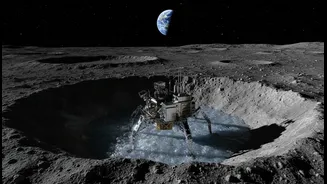
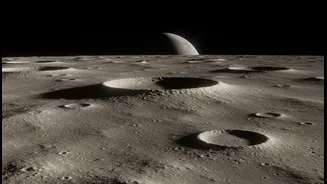
For years, scientists have theorised that water ice could be trapped in the Moon's polar regions, in craters so deep and dark they haven't seen sunlight in billions of years. These permanently shadowed regions (PSRs) are unimaginably cold, hovering around
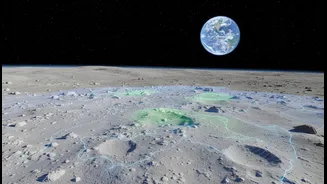
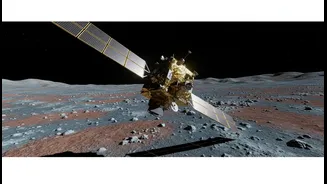
minus 248 degrees Celsius. While previous missions hinted at ice, the Chandrayaan-2 orbiter, equipped with its advanced Dual-frequency Synthetic Aperture Radar (DFSAR), has provided some of the most compelling evidence yet. Unlike optical cameras, this radar can peer below the surface in total darkness, firing signals and reading the echoes to distinguish different materials. Scientists from the Physical Research Laboratory in Ahmedabad used this unique capability to analyse some of the coldest places in the solar system: 'doubly shadowed' craters, which are shielded from both direct and reflected sunlight.
The Good News and the Complication
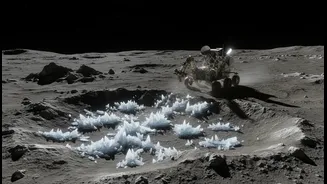
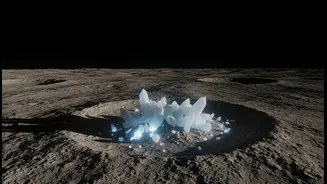
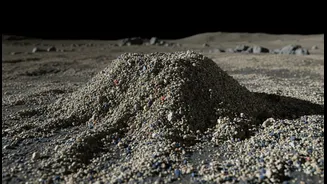
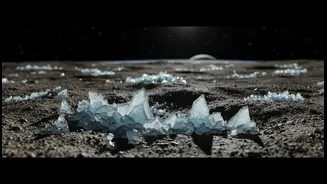
The good news from the DFSAR data is that there appears to be a significant amount of subsurface ice. The radar signatures are consistent with ice deposits beneath the floors of several craters near the lunar south pole. One 1.1 km-wide crater within the larger Faustini crater showed particularly strong evidence. But here lies the complication, the 'big question' of lunar exploration: this is not a smooth, pure ice-skating rink. The radar data suggests the ice is not in thick, easily accessible sheets. Instead, it is likely mixed in with lunar soil, or regolith, perhaps in a fine-grained, diffuse way. The unique shape of some crater rims, described as 'lobate' or flow-like, even suggests that past meteorite impacts may have struck ground containing ice, causing it to slosh outwards before refreezing. This paints a picture of a resource that is present, but much more difficult to harvest than previously hoped.
The Engineering Challenge of 'Dirty' Ice
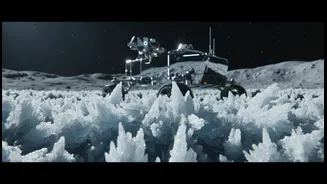
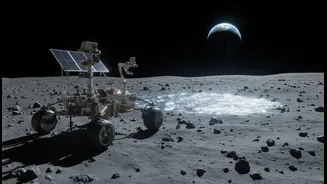
Extracting water from what is essentially frozen, dusty soil in a vacuum is a monumental engineering problem. You can't just send an astronaut with a shovel and a bucket. The ice is mixed with abrasive lunar dust and exists in some of the most extreme cold imaginable. Heating the regolith to sublimate the ice (turn it directly into vapour) and then capturing that vapour is one proposed method. However, this is incredibly energy-intensive, and doing it efficiently on the Moon is a huge hurdle. The low heat conductivity of lunar soil makes traditional heating methods slow and inefficient. ISRO's findings force mission planners to think less about drilling into a glacier and more about industrial-scale processing of vast amounts of lunar dirt to produce usable water.
Recalibrating the Lunar Roadmap
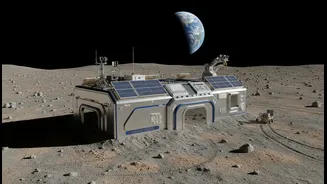
This detailed characterisation of lunar ice is a gift to the world from ISRO. While it introduces a significant challenge, it also provides the critical ground-truth needed for future missions, including NASA's Artemis program and India's own ambitious lunar plans. Knowing what you're up against is the first step in designing the right tools for the job. Space agencies can now focus on developing the specific technologies needed for in-situ resource utilisation (ISRU), like microwave heating or advanced robotic excavators, tailored for these 'dirty ice' conditions. The discovery doesn't dim the prospects of a lunar base; it brings them into sharper, more realistic focus. It means future missions can land in spots identified by Chandrayaan-2 as having high potential, armed with the right equipment to turn that potential into life-sustaining water and rocket fuel.