





An Invisible Shield Against the Sun
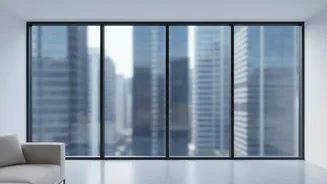
Imagine a window that’s clear on a pleasant day but automatically tints to block heat when the sun becomes intense. This is the promise of thermo-responsive glass coatings, also known as thermochromic coatings. Unlike static films or tints that offer
the same level of protection year-round, this smart material adapts to its environment. It acts like a pair of transition sunglasses for your home, dynamically adjusting to reduce solar heat gain when you need it most, without you lifting a finger. This technology is designed to let natural light in while keeping the uncomfortable, energy-draining heat out.
How Smart Glass Works Its Magic
The science behind these coatings is fascinating. Most advanced versions use a material called vanadium dioxide (VO2). At cooler temperatures, this compound remains in a state that is transparent to both visible light and the sun's heat-carrying near-infrared (NIR) radiation. However, when the glass surface heats up past a certain threshold—say, 25°C—the atomic structure of the VO2 shifts. In this new state, it becomes reflective to a significant portion of the infrared heat while still allowing most visible light to pass through. Essentially, it can tell the difference between light and heat, blocking the latter just when your home starts to feel like an oven.
The Real-World Impact on Your Bills
The primary benefit is a significant reduction in the energy needed to cool a space. By automatically blocking solar heat gain during the hottest parts of the day, these coatings can dramatically lower the workload on air conditioners. Studies have shown this can lead to substantial energy savings. One European analysis projected that while the glass is more expensive, the payback period could be as little as seven years thanks to reduced energy bills. For urban Indian homes battling scorching summers and rising electricity tariffs, a technology that passively cools the interior could be a financial game-changer, lessening the reliance on power-hungry AC units.
More Than Just Saving Money
The advantages extend beyond individual household savings. By reducing peak electricity demand from air conditioning, this technology can help ease the strain on overburdened city power grids during heatwaves. A lower reliance on AC also means a smaller carbon footprint, contributing to broader environmental goals. Furthermore, these coatings enhance indoor comfort by reducing glare and maintaining a more stable, pleasant temperature throughout the day. Unlike some heat-blocking solutions that make rooms dark, the goal of thermochromic technology is to preserve the view and access to natural daylight.
The Catch: Cost and Availability in India
While the technology holds immense promise, it is not yet a mainstream product on the Indian market for residential homes. Researchers are still working to perfect the formula, focusing on improving durability against elements like moisture and enhancing the aesthetic by removing any yellowish tint. Currently, this technology is more expensive than conventional window solutions. The most common heat-reducing products available in India are static reflective films and 'cool roof' paints, which reflect heat but do not adapt to temperature. While some Indian manufacturers produce thermochromic materials, they are often for industrial use and widespread, affordable residential options remain a future prospect.