




Beyond 'Follow the Water'
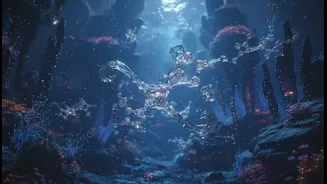
For decades, the guiding principle in the search for extraterrestrial life has been simple: 'follow the water'. This led us to Mars and, more recently, to the astonishing discovery that moons orbiting Jupiter and Saturn likely harbour vast liquid oceans
beneath their icy shells. This was a monumental step, as life as we know it requires water. However, scientists now agree that simply finding a habitable environment isn't enough. The next great leap is to find definitive, unambiguous proof of life itself. Past claims, from potential microbes on Mars in the 1970s to intriguing chemical signals on Venus, have all fallen short because non-biological processes could also explain the evidence. To avoid another false alarm, especially with a discovery as profound as alien life, the scientific community decided it needed a new, more rigorous playbook.
The New 'Confidence of Life' Scale
To standardize the process, NASA scientists developed a framework called the 'Confidence of Life Detection' (CoLD) scale. Think of it as a seven-step ladder that moves from a tantalizing hint to a confirmed biological reality. The first rung might be detecting an interesting organic molecule. But to climb higher, scientists must rule out terrestrial contamination, show that the molecule couldn't have been created by a non-living process, and find multiple, independent lines of evidence that all point to a biological origin. For example, it’s not enough to find amino acids; a mission would need to show they have a specific 'handedness' (or chirality) common in Earth-based life, something rarely produced by random chemistry. Only by methodically climbing this ladder can scientists build a case strong enough to withstand the immense scrutiny that such a claim would, and should, receive.
The Immense Engineering Challenge
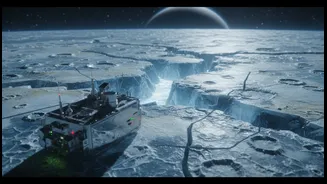
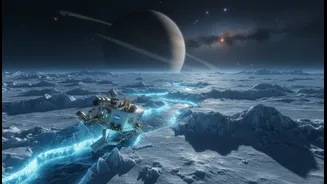
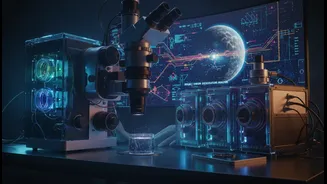
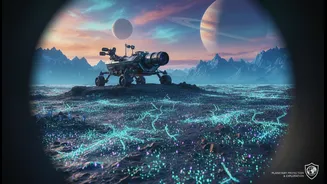
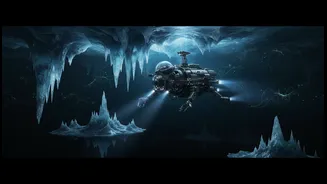
This demand for stronger evidence directly leads to much harder mission requirements. A simple flyby or orbiter might spot a plume of water vapour erupting from Enceladus, but it can't perform the detailed analysis needed to climb the CoLD scale. Future missions will need to be far more ambitious. This means developing landers that can survive the intense radiation around planets like Jupiter and touch down safely on an icy, unknown surface. It requires creating miniaturized, automated laboratories that can drill into the ice, collect sterile samples, and run complex chemical tests millions of miles from home. One of the biggest hurdles is planetary protection—ensuring our own spacecraft, teeming with earthly microbes, doesn't contaminate the very environment we're trying to study. This requires building hardware in extreme clean rooms and developing ways to sterilize the entire probe.
A Case Study in Europa and Enceladus
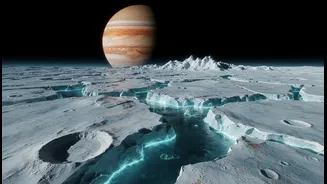
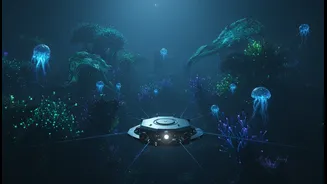
Jupiter's moon Europa and Saturn's moon Enceladus are the perfect case studies for this new approach. Both are believed to have global saltwater oceans interacting with a rocky seafloor, possibly warmed by hydrothermal vents—conditions strikingly similar to where life may have started on Earth. NASA's Europa Clipper mission, already on its way, is a reconnaissance mission. It won't detect life, but it will map the ice shell and identify promising spots for a future lander. That eventual lander would be the true test of this new philosophy. It would be equipped with a suite of instruments designed to seek multiple biosignatures and systematically rule out abiotic explanations. Getting there and successfully operating will be one of the greatest technical challenges in the history of space exploration, taking years and immense resources.