
An Art Form Born from the Desert
Lippan Kam, also known as mud and mirror work, originates from the arid Rann of Kutch in Gujarat. For centuries, communities like the Rabari, Mutwa, and Meghwal have practiced this craft, traditionally adorning the inner and outer walls of their circular
mud huts, called 'bhungas'. The term 'Lippan' itself comes from the local word for 'to plaster' or 'smear', which describes the act of applying the material to a surface. Originally, this art wasn't just decorative; it was functional. The mixture of clay and animal dung acted as a natural insulator, keeping homes cool in the blistering desert heat and warm during the winter. The intricate patterns and stories were passed down through generations, primarily by women, making it a living expression of community life.
The Magic of Natural Texture
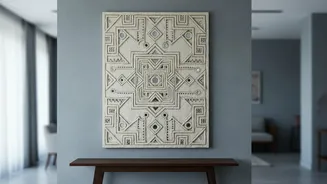
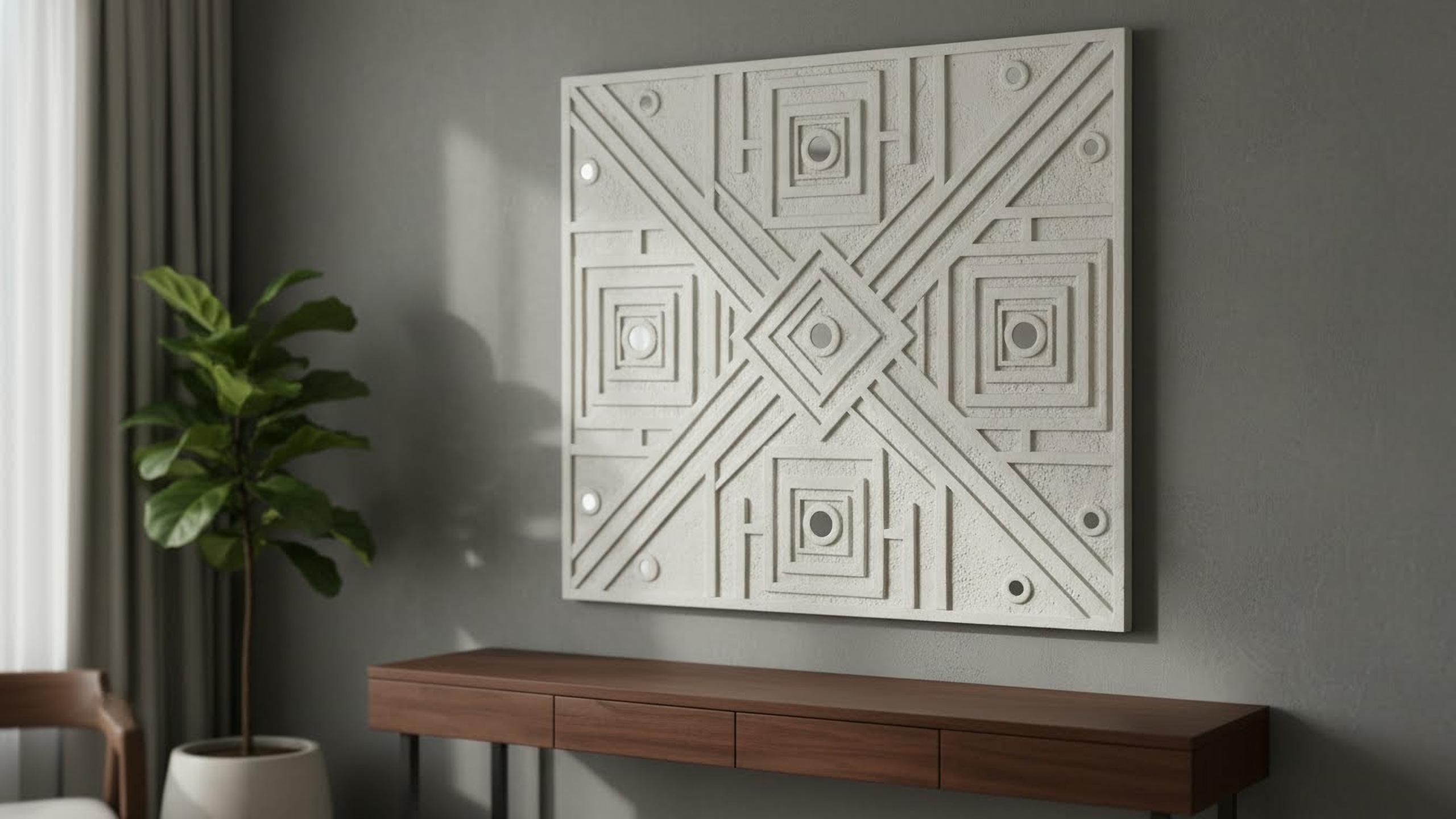
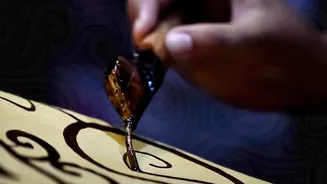
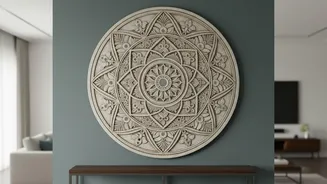
One of the most compelling features of Lippan art in a modern setting is its incredible texture. In urban apartments dominated by flat, painted drywall, the low-relief patterns of Lippan Kam introduce a tactile, three-dimensional quality that is both rustic and sophisticated. Artists create designs using a dough-like mixture, traditionally made from clay and camel or wild ass dung, which is rich in fibres. This mixture is rolled into cylindrical strips and applied by hand to form intricate motifs. These patterns, inspired by nature, embroidery, and geometry, create a play of shadow and depth on the wall, adding a layer of visual interest that paint or wallpaper simply cannot replicate. The result is an earthy, handcrafted feel that provides a welcome contrast to the clean lines of contemporary furniture.
A Masterclass in Light Reflection
The defining characteristic of Lippan Kam is its use of small, embedded mirrors, known as 'aabhla'. This is where the art truly transforms a space. In the dark interiors of traditional bhungas, these mirrors were strategically placed to catch and scatter the light from a single lamp, brightening the entire room. This same principle works wonders in urban apartments, which often struggle with limited natural light. The tiny mirrors capture ambient and artificial light, reflecting it around the room and creating a dynamic, shimmering effect. As the light changes throughout the day, the artwork seems to pulse with life, making the space feel brighter, larger, and more vibrant. It’s a passive form of lighting design, using artistry to enhance the luminosity of a room.
From Village Walls to City Apartments
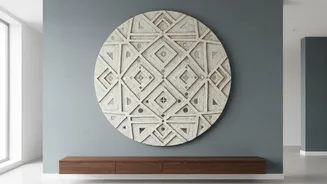
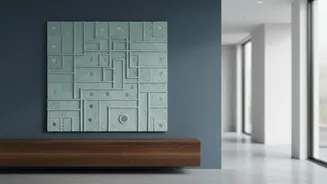
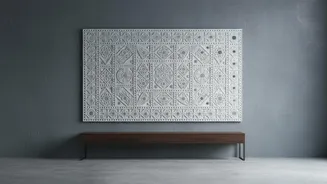
What was once confined to the walls of rural homes has found a celebrated place in contemporary interior design. Today's artists have adapted the craft for modern living. While traditionalists still use mud and dung, many now use more durable and accessible materials like air-dry clay or Plaster of Paris on portable MDF boards. This evolution makes it easy to incorporate Lippan art into any home without needing to plaster a whole wall. These pieces now appear as framed wall hangings, headboards, and large statement murals in luxury hotels and city residences. The traditional white finish remains popular for its minimalist elegance, but artists also experiment with colour, offering a wider palette to match diverse interior styles.
How to Incorporate Lippan Art
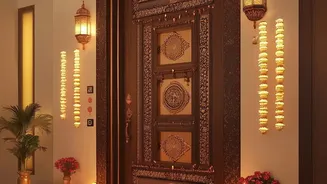
Bringing this craft into your home is about finding the right balance. For a bold statement, a single large Lippan panel can serve as the focal point of a living room or bedroom. Its texture and light-reflecting qualities work exceptionally well in entryways or hallways that may lack natural light. For a more subtle approach, consider grouping smaller pieces to create a gallery wall. This allows you to mix and match different patterns and sizes. When placing your art, think about its interaction with light sources. Position it on a wall that receives natural sunlight or opposite a window to maximize its reflective potential. The traditional white palette is versatile, pairing beautifully with minimalist, bohemian, or rustic decor schemes. It’s a way to add a piece of handcrafted heritage that feels both timeless and perfectly suited for today.