


Why Forts and Night Skies Are a Perfect Match
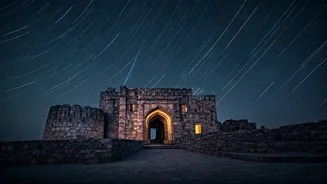
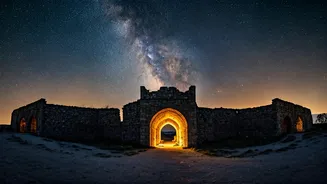
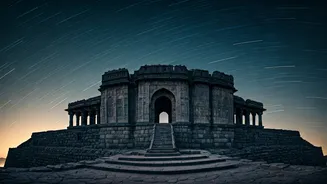
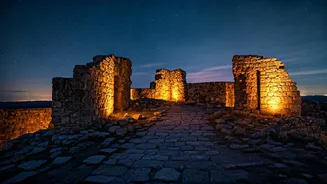
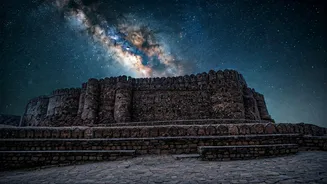
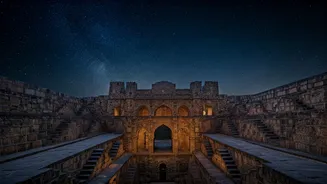
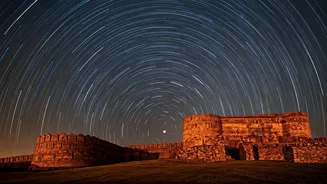
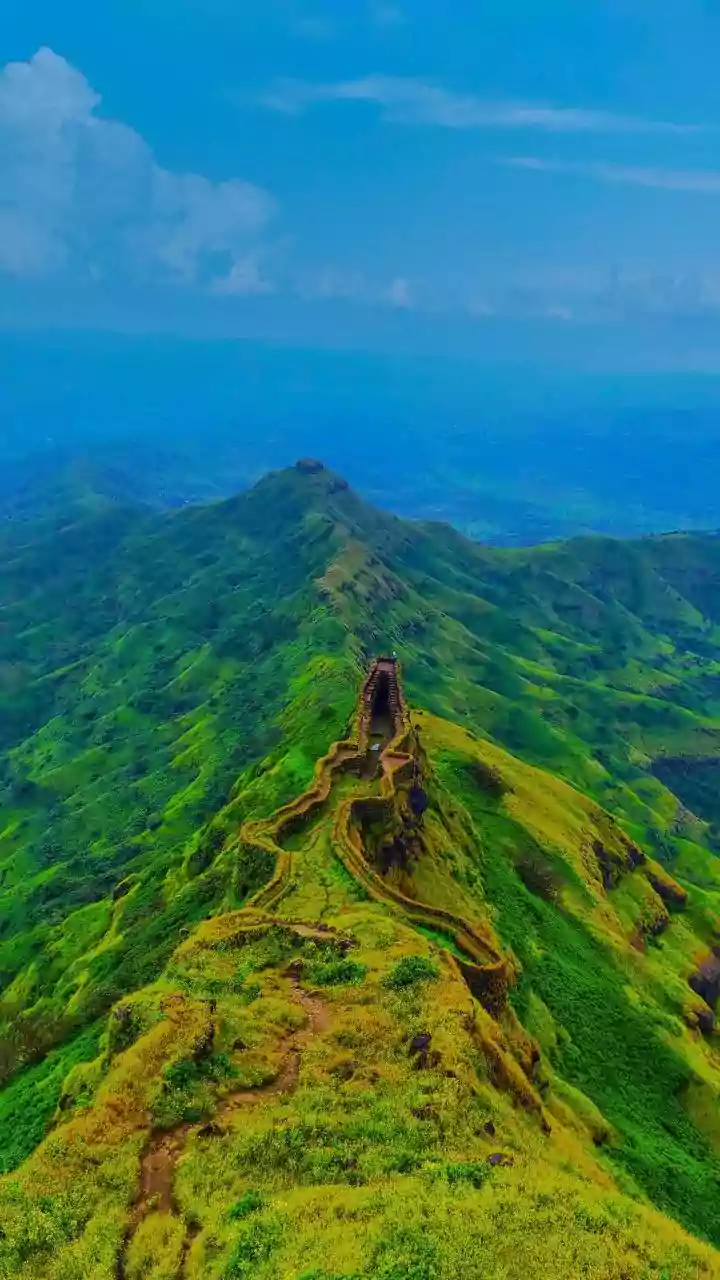
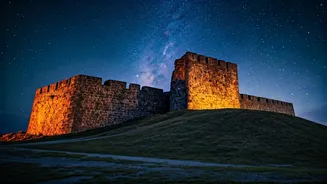
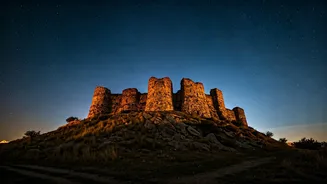
There's a unique poetry in combining the ancient, man-made grandeur of India's forts with the timeless, natural beauty of the night sky. The rugged textures and imposing silhouettes of structures that have stood for centuries provide a powerful earthly
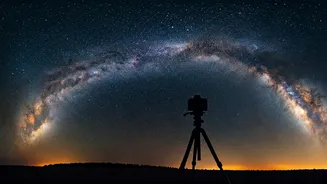
anchor for the ethereal dance of stars and galaxies. Long exposure photography allows you to capture light over time, turning a dark scene into a luminous spectacle. The camera reveals what our eyes cannot fully appreciate: the faint glow of the Milky Way, the subtle movement of stars, and the deep, silent history etched into the fort's walls. This blend of astrophotography and architectural photography creates images that are not just beautiful, but also rich with narrative and a sense of wonder.
Location, Legality, and Safety First
This is the most critical step. Most ancient monuments in India, especially those managed by the Archaeological Survey of India (ASI), close to the public at sunset. Attempting to enter after hours is illegal and unsafe. So, how do you get access? 1. **Seek Official Permission:** For serious projects, you can apply to the local ASI office for special permission for night photography. This is a formal process and not always granted, but it's the correct way. 2. **Join Photography Workshops & Tours:** Many photography groups and tour operators regularly organize astrophotography workshops at heritage sites. They handle the permits and logistics, making it a safe and legal way to access these locations at night. 3. **Choose Privately-Owned Fort-Hotels:** Several forts have been converted into heritage hotels. Staying at one gives you legitimate, 24/7 access to the property, allowing you to shoot from its courtyards and ramparts. 4. **Shoot From a Distance:** You don't always need to be inside. Some of the most dramatic shots are taken from a vantage point outside the fort, using its silhouette against the sky. Find a safe, public spot nearby with a clear view.
The Essential Photography Gear
You don't need the most expensive equipment, but a few items are non-negotiable for good results. * **A Camera with Manual Mode:** A DSLR or mirrorless camera is essential as you need full control over the settings. * **A Sturdy Tripod:** This is your most important tool. For a long exposure of 15-30 seconds, any camera shake will ruin the image. Invest in a solid tripod that won't wobble in a breeze. * **A Wide-Angle Lens:** A lens with a focal length between 14mm and 24mm is ideal for capturing both the vastness of the sky and the scale of the fort. A 'fast' lens (with an aperture of f/2.8 or f/4) is a huge advantage as it lets in more light. * **Remote Shutter Release or Self-Timer:** Pressing the shutter button directly can cause camera shake. Use your camera’s built-in 2-second timer or, better yet, a remote shutter release (wired or wireless). * **Extra Batteries and a Torch:** Cold nights and long exposures drain batteries quickly. Carry at least one spare. A torch (preferably with a red light mode to preserve your night vision) is crucial for navigating and adjusting settings in the dark.
Dialing in the Perfect Settings
Manual mode is your friend. While conditions vary, here's a reliable starting point for capturing the fort and the stars. Set your camera to Manual (M). * **Aperture:** Set your lens to its widest possible aperture (the lowest f-number, like f/2.8 or f/4). This allows the maximum amount of light to hit your sensor. * **Shutter Speed:** Start with a 20-second exposure. If the image is too dark, increase it to 25 or 30 seconds. If it's too bright, reduce it. To avoid stars turning into streaks, use the '500 Rule': divide 500 by your lens's focal length. For a 20mm lens, that’s 500/20 = 25 seconds, your maximum shutter speed. * **ISO:** Set your ISO to around 1600. Check the image on your camera screen. If it's still too dark, you can push the ISO to 3200. Be aware that higher ISOs introduce more 'noise' or grain into the photo. * **Focus:** Autofocus will fail in the dark. Switch your lens to manual focus. Aim at a distant light or a bright star, use your camera's live view to zoom in digitally, and turn the focus ring until that point of light is as sharp and small as possible. Once set, don't touch the focus ring again.
Composing a Timeless Image
With the technical side handled, focus on the art. Look for compelling compositions. Use the fort’s architecture to frame the sky—shoot through an ancient archway or a crumbling window frame. Use the lines of a wall or a pathway to lead the viewer’s eye into the scene. Don't just place the fort at the bottom of the frame; experiment with placing its silhouette on the side to balance a bright Milky Way. A fun technique to try is 'light painting'. During the long exposure, briefly shine your torch on parts of the fort's facade to gently illuminate it, making it stand out from the darkness. A quick 1-2 second sweep is often enough to add that magical touch.